

Suplementos para la fertilidad
Antes de que comience una nueva vida, empieza un viaje muy especial. Y tú puedes empezar desde ahora a cuidar activamente tu cuerpo. Especialmente en la fase previa al embarazo, tu suministro de micronutrientes juega un papel fundamental: como un complemento valioso a la actividad física, la alimentación equilibrada y un estilo de vida saludable. Para mujeres y hombres.
Filtros y ordenación
Biogena Master Collection
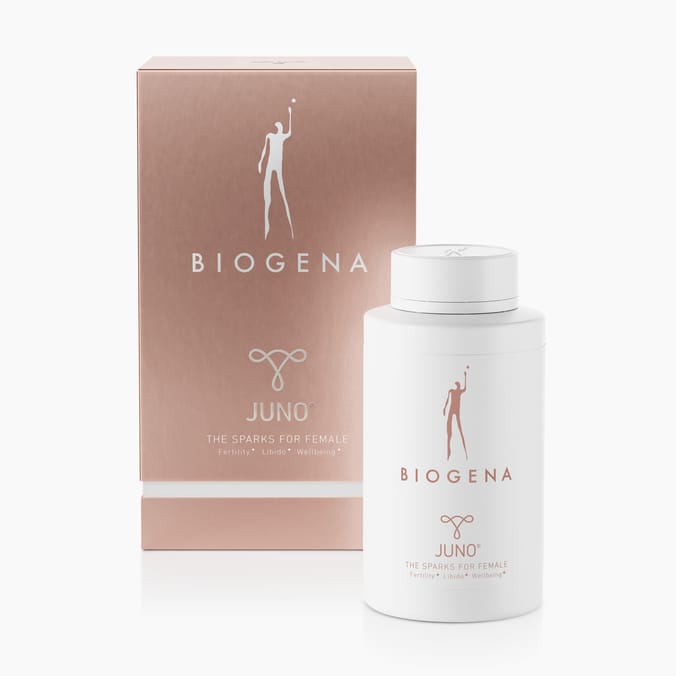
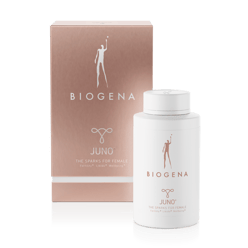
BIOGENA JUNO®Para apoyar a la mujer en su deseo de tener hijos
2460,00 € / kg159,90 €- Vegano
Biogena Essentials
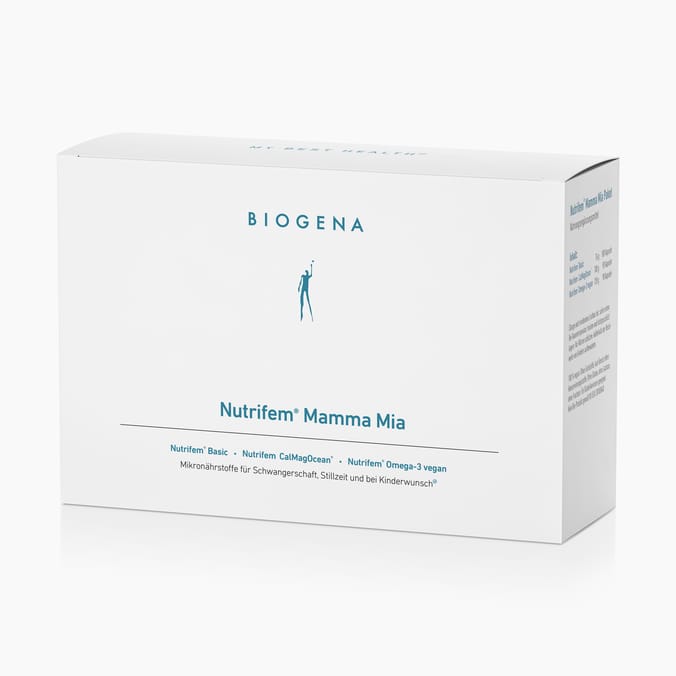
Nutrifem® Mamma Mia - Paquete de embarazoPara mamá y bebé: el completo aporte de micronutrientes desde el deseo de tener hijos hasta la lactancia.*
427,30 € / kg129,90 € 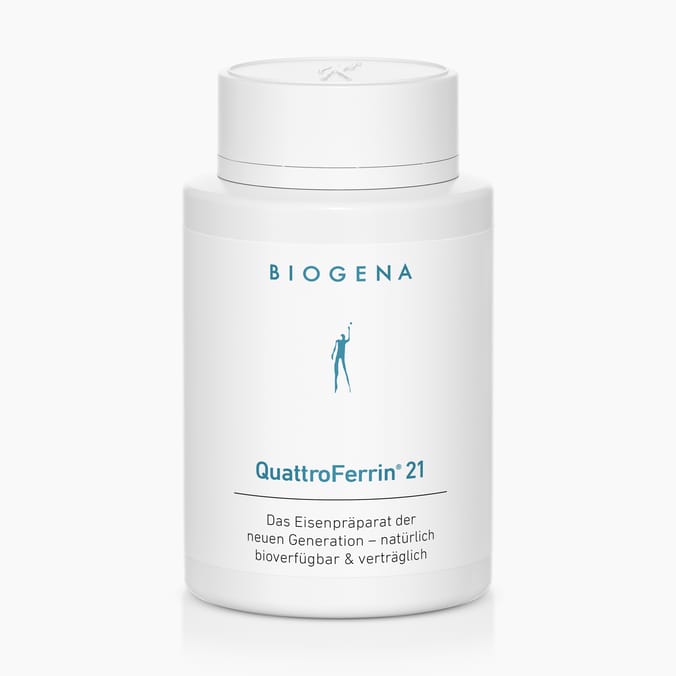
Biogena Essentials
QuattroFerrin® 21 - complejo de hierroComplejo de hierro premium de cuatro fuentes
1021,95 € / kg41,90 €
Biogena Essentials
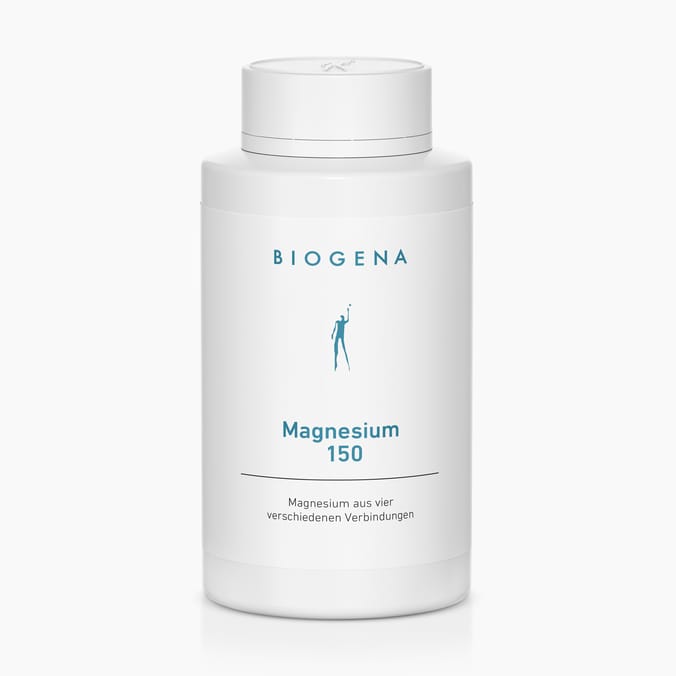
Magnesio 150 mgCuatro compuestos de magnesio perfectamente combinados
395,59 € / kg26,90 €- Vitalidad
Biogena Essentials
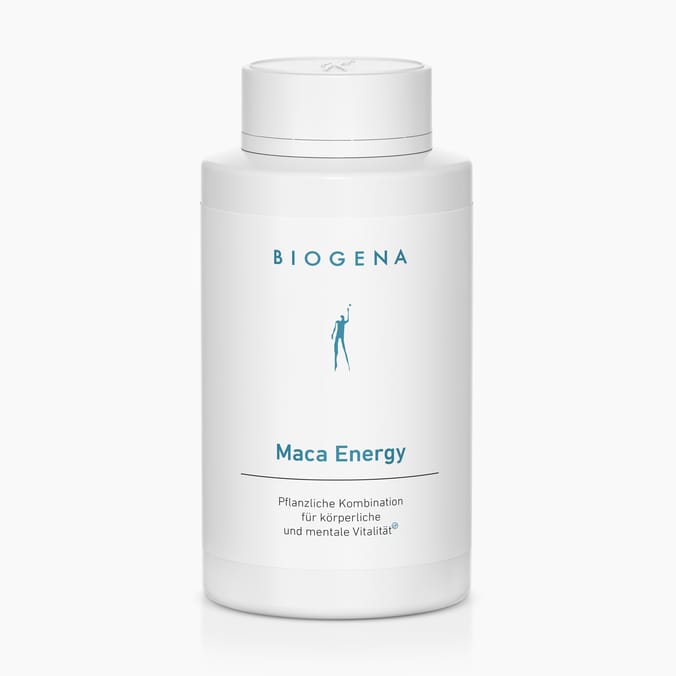
Maca EnergyPara la vitalidad física y mental, energía y motivación
793,18 € / kg34,90 € 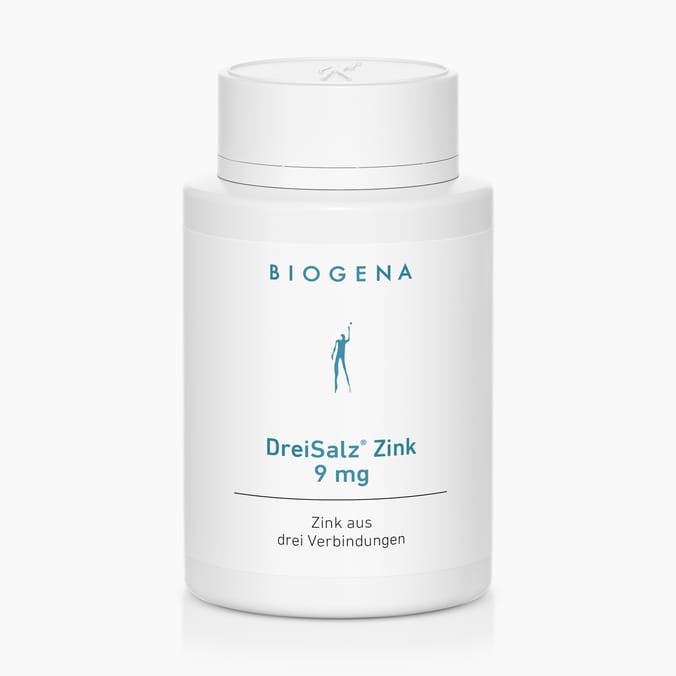
Biogena Essentials
Zinc 3 Sales 9 mgCápsulas de zinc para tu sistema inmunitario, piel, cabello y uñas
2390,00 € / kg23,90 €
Para mujeres que desean tener hijos: Vitaminas, minerales y suplementos importantes
Tu cuerpo se prepara para algo grande—por eso vale la pena apoyarlo de forma específica. Estas vitaminas, oligoelementos y extractos vegetales desempeñan un papel importante:
Ácido fólico (vitamina B9): Importante incluso antes de la concepción, contribuye a la división celular y a la formación de tejidos.
Complejo de vitaminas B (especialmente B12): Apoya el metabolismo energético y ciertas vitaminas B contribuyen al equilibrio hormonal.
Vitamina C y E: Con efecto antioxidante, ayudan a proteger las células del estrés oxidativo.
Vitamina D3: Contribuye al funcionamiento normal del sistema inmunitario y participa en la división celular. Los suplementos de D3 son especialmente valiosos cuando hay poca exposición al sol.
Selenio y yodo: Apoyan la función tiroidea y contribuyen a la protección celular.
Zinc: Contribuye a la fertilidad y reproducción normales. Es importante para la calidad de los óvulos.
Hierro: Apoya la formación normal de glóbulos rojos y el suministro de oxígeno. Mantener un buen nivel de hierro es útil incluso antes del embarazo.
Ácidos grasos omega-3: Contribuyen al desarrollo saludable del cerebro y los ojos del bebé.
Inositol: Puede apoyar la ovulación y la maduración de los óvulos—especialmente en casos de ciclo irregular o síndrome de ovario poliquístico (SOP).
Sauzgatillo (estandarizado): Tradicionalmente utilizado para regular el ciclo hormonal.
Extracto de damiana: Se usa para apoyar el equilibrio hormonal y la libido femenina.
Extracto de pino marítimo y azafrán: Pueden tener un efecto antioxidante. El azafrán además contribuye al equilibrio emocional, especialmente en fases desafiantes.
Coenzima Q10 y ashwagandha: La Q10 apoya la energía celular, mientras que la ashwagandha ayuda a lidiar mejor con el estrés.
BIOGENA JUNO®
También importante para los hombres: Vitaminas, nutrientes y suplementos en caso de deseo de tener hijos
Un estilo de vida saludable es cosa de dos cuando se trata de la fertilidad—también tú puedes contribuir activamente para que este sueño común se haga realidad. Estos micronutrientes pueden apoyarte en el proceso:
Zinc: Contribuye a la fertilidad y reproducción normales.
Selenio: Apoya la formación normal de esperma.
Vitamina A: Contribuye a una espermatogénesis normal, es decir, la formación de esperma saludable.
Vitamina B12, C y E: Apoyan la protección celular y contribuyen a un metabolismo energético normal.
Ácidos grasos omega-3: Favorecen la movilidad y la calidad del esperma.
Maca: Tradicionalmente utilizada para apoyar la energía y la libido.
Nuestros consejos de productos para la fertilidad masculina:


Por qué preferimos cápsulas en lugar de tabletas
En BIOGENA renunciamos conscientemente a aditivos innecesarios como colorantes, recubrimientos o aglutinantes. Nuestras cápsulas se producen según nuestro estándar semiautomatizado de manufactura—para ofrecer ingredientes puros y dosificados con precisión en calidad premium comprobada.
Esto es especialmente importante en fases sensibles como el deseo de tener hijos, el embarazo y la lactancia. Porque cuando se trata de tu bienestar—y el de tu futuro bebé—cada detalle cuenta. Y precisamente para eso estamos aquí.
FAQ
Preguntas frecuentes sobre vitaminas y suplementos para la fertilidad
Fuentes científicas:
Buhling KJ, Grajecki D. 2013. The effect of micronutrient supplements on female fertility. Curr Opin Obstet Gynecol. 2013 Jun;25(3):173-80. https://pubmed.ncbi.nlm.nih.gov/23571830/
Skoracka K, et al. 2021. Female Fertility and the Nutritional Approach: The Most Essential Aspects. Adv Nutr. 2021 Dec 1;12(6):2372-2386. https://pubmed.ncbi.nlm.nih.gov/34139003/
Gröber, U. 2005. Frauen mit Kinderwunsch und Schwangere als Risikogruppe für einen Nährstoffmangel. Zs f Orthomol Med. 3:28–9.
Dean, S. V. et al. 2014. Preconception care: nutritional risks and interventions. Reprod Health. 11(Suppl 3):S3. https://pubmed.ncbi.nlm.nih.gov/25415364/
Grieger, J. A., Clifton V. L. 2014. A review of the impact of dietary intakes in human pregnancy on infant birthweight. Nutrients. 7(1):153–78. https://pubmed.ncbi.nlm.nih.gov/25551251/
Figueiredo, R. F. et al. 2015. The role of the folic acid to the prevention of orofacial cleft: an epidemiological study. Oral Dis. 21(2):240–7. https://pubmed.ncbi.nlm.nih.gov/24828118/
Younis, A. et al. 2012. The relationship between pregnancy and oxidative stress markers on patients undergoing ovarian stimulations. J Assist Reprod Genet. 29(10):1083–9. https://pubmed.ncbi.nlm.nih.gov/22798064/
Grajecki, D. et al. 2012. The effect of micronutrient supplements on female fertility: a systematic review. Arch Gynecol Obstet. 285(5):1463–71. https://pubmed.ncbi.nlm.nih.gov/22302137/
Várbíró S, et al 2022. Effects of Vitamin D on Fertility, Pregnancy and Polycystic Ovary Syndrome-A Review. Nutrients. 2022 Apr 15;14(8):1649. https://pubmed.ncbi.nlm.nih.gov/35458211/
González-Rodríguez LG, et al. 2018. Nutrition and fertility. Nutr Hosp. 2018 Sep 7;35(Spec No6):7-10. Spanish. doi: 10.20960/nh.2279. PMID: 30351153. https://pubmed.ncbi.nlm.nih.gov/30351153/
Thornburgh S, Gaskins AJ. B vitamins, polycystic ovary syndrome, and fertility. Curr Opin Endocrinol Diabetes Obes. 2022 Dec 1;29(6):554-559. https://pubmed.ncbi.nlm.nih.gov/36165609/
Garner TB, et al. 2021. Role of zinc in female reproduction. Biol Reprod. 2021 May 7;104(5):976-994. https://pubmed.ncbi.nlm.nih.gov/33598687/
Szostak-Węgierek D. 2011. Nutrition and fertility. Med Wieku Rozwoj. 2011 Oct-Dec;15(4):431-6. https://pubmed.ncbi.nlm.nih.gov/22516697/
Saylam B, Çayan S. 2020. Do antioxidants improve serum sex hormones and total motile sperm count in idiopathic infertile men? Turk J Urol. 2020 Nov;46(6):442-448. doi: 10.5152/tud.2020.20296. Epub 2020 Aug 20. https://pubmed.ncbi.nlm.nih.gov/32833620/
Hogarth, C. A., Griswold, M. D. 2010. The key role of vitamin A in spermatogenesis. J Clin Invest. 120(4):956-62. https://pubmed.ncbi.nlm.nih.gov/20364093/
Kazemijaliseh, H. et al. 2015. The Prevalence and Causes of Primary Infertility in Iran: A Population-Based Study. Glob J Health Sci. 7(6):226–32. https://pubmed.ncbi.nlm.nih.gov/26153187/
Kumar N, et al. 2024. Correlation between serum vitamin B12, vitamin D, and suboptimal semen parameters in male infertility: A hospital-based cross-sectional study. J Family Med Prim Care. 2024 Nov;13(11):5171-5176. https://pubmed.ncbi.nlm.nih.gov/39722962/
Aghayeva S, et al. 2023. The Role of Thyroid Hormones, Vitamins, and Microelements in Female Infertility. Rev Bras Ginecol Obstet. 2023 Nov;45(11):e683-e688. https://pubmed.ncbi.nlm.nih.gov/38029770/
Meng, Q. et al. 2015. Incidence of infertility and risk factors of impaired fecundity among newly married couples in a Chinese population. Reprod Biomed Online. 30(1):92–100. https://pubmed.ncbi.nlm.nih.gov/25456165/
Schlatt, S., Ehmcke, J. 2014. Regulation of spermatogenesis: an evolutionary biologist‘s perspective. Semin Cell Dev Biol. 29:2–16. NCBI - WWW Error Blocked Diagnostic
Wijesekara, G. U. et al. 2015. Environmental and occupational exposures as a cause of male infertility. Ceylon Med J. 60(2):52–6. https://pubmed.ncbi.nlm.nih.gov/24685618/
Najafipour R, et al. 2017. Effect of B9 and B12 vitamin intake on semen parameters and fertility of men with MTHFR polymorphisms. Andrology. 2017 Jul;5(4):704-710. doi: 10.1111/andr.12351. https://pubmed.ncbi.nlm.nih.gov/28440964/
Fathi Najafi, T. et al. 2015. Air pollution and quality of sperm: a metaanalysis. Iran Red Crescent Med J. 17(4):e26930. https://pubmed.ncbi.nlm.nih.gov/26023349/
Zeinab, H. et al. 2015. Lifestyle and Outcomes of Assisted Reproductive Techniques: A Narrative Review. Glob J Health Sci. 7(5):41418. https://pubmed.ncbi.nlm.nih.gov/26156898/
Singh, K., Jaiswal, D. 2013. One-carbon metabolism, spermatogenesis, and male infertility. Reprod Sci. 20(6):622–30. https://pubmed.ncbi.nlm.nih.gov/23138010/
Mora-Esteves, C., Shin, D. 2013. Nutrient supplementation: improving male fertility fourfold. Semin Reprod Med. 31(4):293–300. https://pubmed.ncbi.nlm.nih.gov/23775385/
Livingstone, C. 2015. Zinc: Physiology, Deficiency, and Parenteral Nutrition. Nutr Clin Pract. 30(3):371–82. https://pubmed.ncbi.nlm.nih.gov/25681484/
Dabrowski, F. A. et al. 2015. The Role of Vitamin D in Reproductive Health -A Trojan Horse or the Golden Fleece?. Nutrients. 7(6):4139–53. https://pubmed.ncbi.nlm.nih.gov/26035242/
Mathers M. J. et al. 2009. Metabolism of nitric oxide (NO) and arginine: significance for male health. Aktuelle Urol. 40(4):235-4 https://pubmed.ncbi.nlm.nih.gov/19492277/
Lerchbaum, E. et al. 2017. Vitamin D and Testosterone in Healthy Men: A Randomized Controlled Trial. J Clin Endocrinol Metab. 2017 Nov 1;102(11):4292-4302. doi: 10.1210/jc.2017-01428. https://pubmed.ncbi.nlm.nih.gov/28938446/
Te, L. et al. 2023. Correlation between serum zinc and testosterone: A systematic review. J Trace Elem Med Biol. 2023 Mar:76:127124. doi: 10.1016/j.jtemb.2022.127124. Epub 2022 Dec 23. https://pubmed.ncbi.nlm.nih.gov/36577241/
Shin, D. et al. 2023. Efficacy and Safety of Maca (Lepidium meyenii) in Patients with Symptoms of Late-Onset Hypogonadism: A Randomized, Double-Blind, Placebo-Controlled Clinical Trial. World J Mens Health. 2023 Jul; 41(3): 692–700. Published online 2023 Jan 1. doi: 10.5534/wjmh.220112. https://pubmed.ncbi.nlm.nih.gov/36593713/
Smith, S.J. et al. 2021. Examining the Effects of Herbs on Testosterone Concentrations in Men: A Systematic Review. Adv Nutr. 2021 May; 12(3): 744–765. Published online 2020 Nov 5. doi: 10.1093/advances/nmaa134 https://pubmed.ncbi.nlm.nih.gov/33150931/
Gröber, U. Mikronährstoffe: Metabolic Tuning – Prävention – Therapie, 3. völlig überarbeitete und erweiterte Auflage. Stuttgart: Wissenschaftliche Verlagsgesellschaft Stuttgart, 2011.
Gröber, U. Orthomolekulare Medizin. Ein Leitfaden für Apotheker und Ärzte, 3. Auflage. Stuttgart: Wissenschaftliche Verlagsgesellschaft, 2008.
Hahn, A. et al. Ernährung: Physiologische Grundlagen, Prävention, Therapie, 2. Auflage. Stuttgart: Wissenschaftliche Verlagsgesellschaft, 2006.
Leitzmann, C. et al. Ernährung in Prävention und Therapie: Ein Lehrbuch, 3. Auflage. Stuttgart: Hippokrates Verlag, 2009.
Schmidbauer C, Hofstätter G. 2020: Mikronährstoff-Coach: Das große BIOGENA-Kompendium der Nährstoffe. 1158 Seiten.
Suscríbete al newsletter y obtén 10€ de descuento
Suscríbete a nuestro newsletter, recibe tu cupón personal de 10€ y disfruta de emocionantes novedades sobre nuestros productos, sorteos y consejos de salud. Así estarás perfectamente acompañado en tu viaje hacia el bienestar.