

Fertility & preconception supplements
Before new life begins, a special journey starts—and you can already do something meaningful for your body today. Especially in the months leading up to pregnancy, your micronutrient supply plays a key role—complementing exercise, nutrition, and a healthy lifestyle. For women and men.
Filters & Sorting
- Vegan
Biogena Essentials
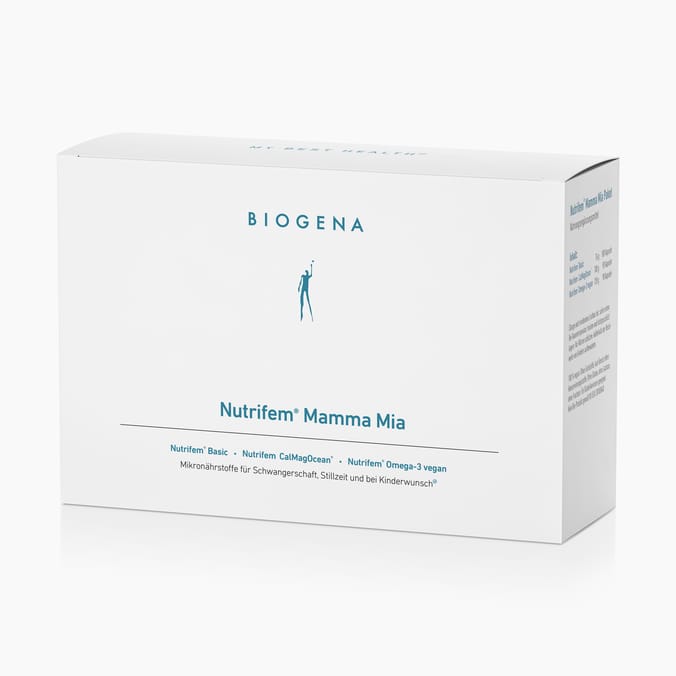
Nutrifem® Mamma Mia Pregnancy PackageFor Mom & Baby: Comprehensive micronutrient support from trying to conceive through breastfeeding.*
€427.30 / kg€129.90 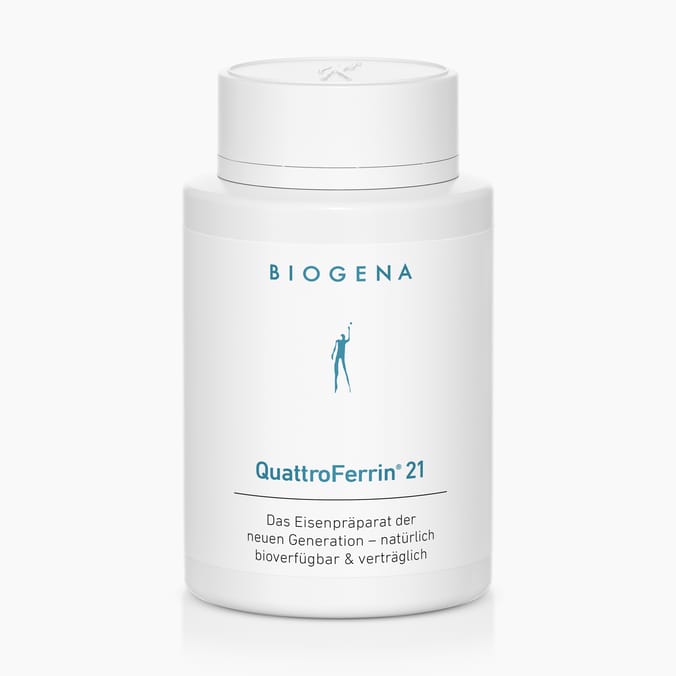
Biogena Essentials
QuattroFerrin® 21 iron complexPremium iron complex from four sources
€1,021.95 / kg€41.90
Biogena Essentials
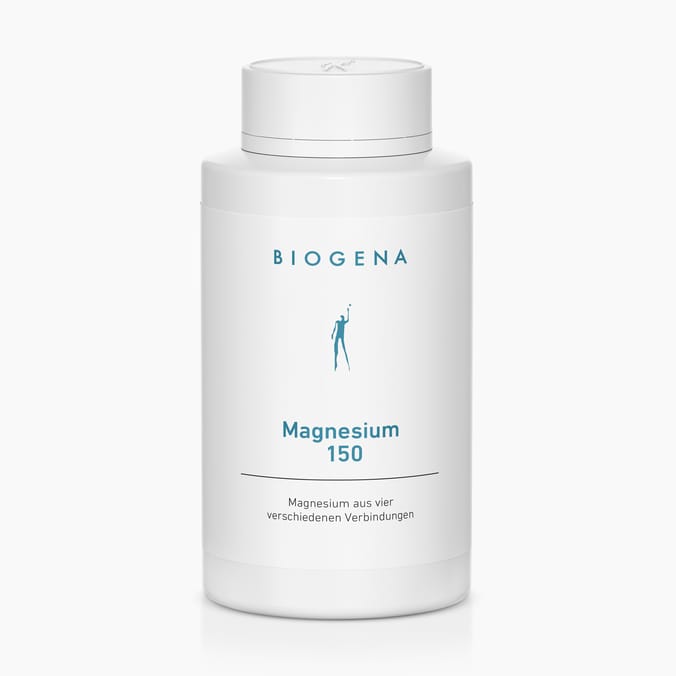
Magnesium 150 mgFour premium forms of magnesium – perfectly combined for your daily routine and smart support
€395.59 / kg€26.90- Vitality
Biogena Essentials
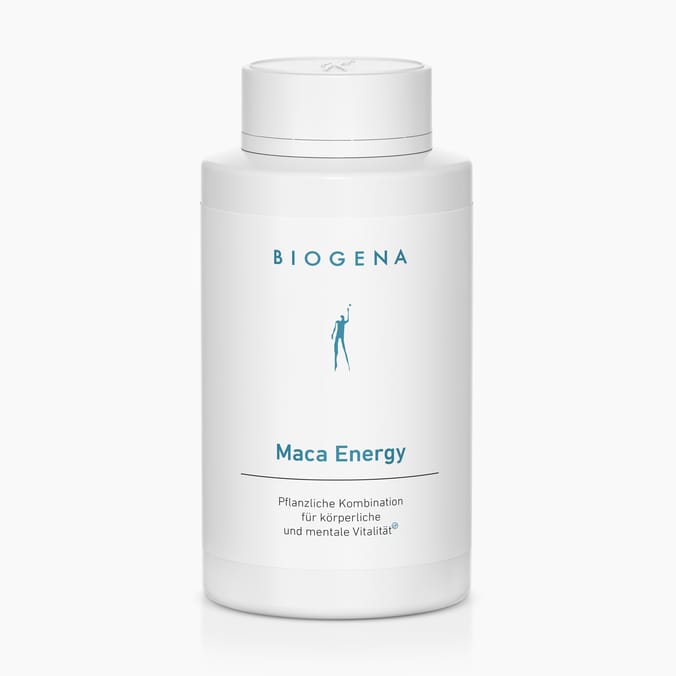
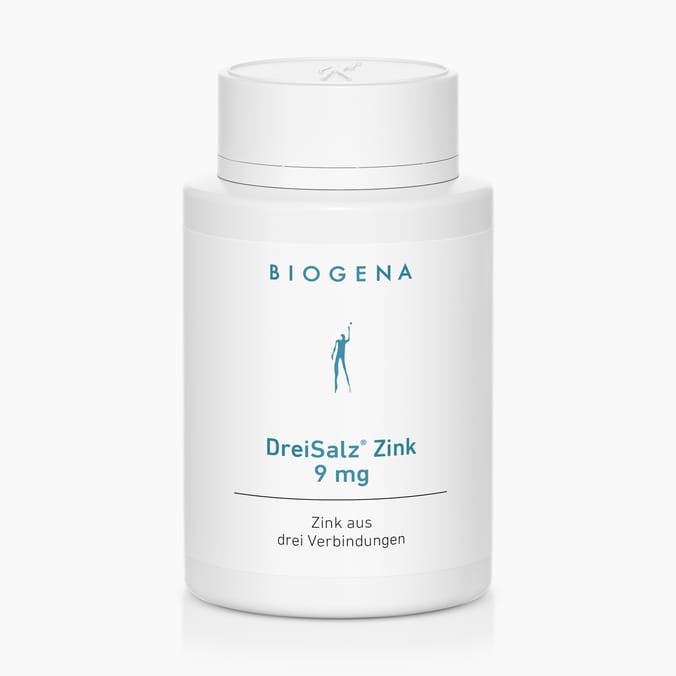
3-Salt Zinc 9 mgZinc capsules for your immune system, skin, hair & nails
€2,390.00 / kg€23.90
For women preparing for pregnancy: essential vitamins, minerals & supplements
Your body is preparing for something big—so give it the targeted support it deserves. These vitamins, trace elements, and plant-based ingredients can play a valuable role:
Folic acid (Vitamin B9) – Important even before conception: contributes to cell division and tissue growth.
B-Complex Vitamins (especially B12) – Support energy metabolism and contribute to hormonal balance.
Vitamins C & E – Act as antioxidants to help protect cells from oxidative stress.
Vitamin D3 – Supports normal immune function and plays a role in cell division. Especially helpful when sun exposure is low.
Selenium & Iodine – Support thyroid function and help protect cells from damage.
Zinc – Contributes to normal fertility and reproduction. Important for egg quality.
Iron – Supports normal red blood cell formation and oxygen transport. A good iron level is valuable even before pregnancy.
Omega-3 fatty acids – Support the healthy development of the baby’s brain and eyes.
Inositol – May support ovulation and egg maturation—particularly helpful for irregular cycles or PCOS.
Chaste Tree (standardized) – Traditionally used to support hormonal cycle regulation.
Damiana extract – May promote hormonal balance and support female libido.
Maritime pine bark extract & saffron – Offer antioxidant properties. Saffron may also promote emotional balance—especially in challenging phases.
CoQ10 & Ashwagandha – CoQ10 supports cell energy; Ashwagandha helps the body cope with stress.
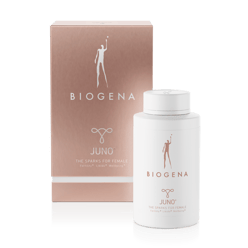
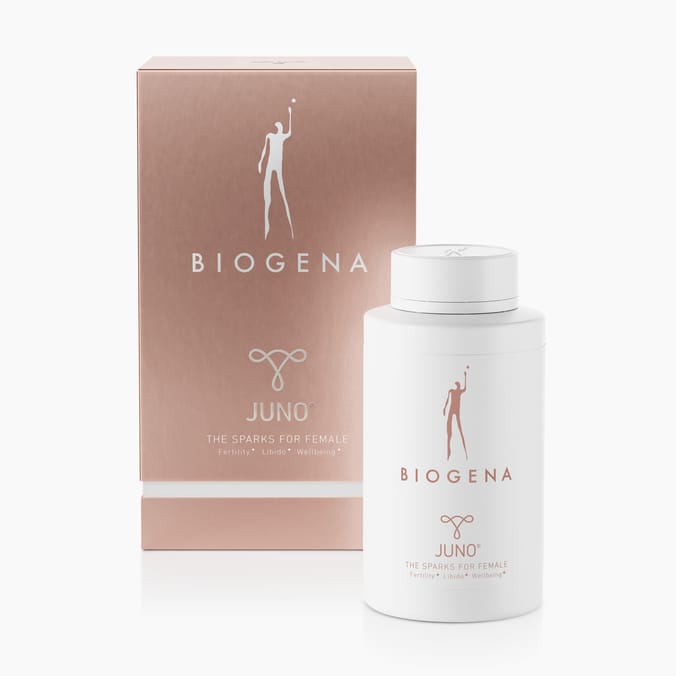
BIOGENA JUNO®
Just as important for men: essential nutrients & supplements for fertility
Fertility is a shared journey—and your lifestyle and nutrient supply matter just as much. Here are some key micronutrients that may support male reproductive health:
Zinc – Contributes to normal fertility and reproduction.
Selenium – Supports normal sperm formation.
Vitamin A – Contributes to normal spermatogenesis (healthy sperm production).
Vitamins B12, C & E – Support cell protection and energy metabolism.
Omega-3 fatty acids – Support sperm motility and quality.
Maca – Traditionally used to support energy and libido.
Our product tips for male fertility:


Why we choose capsules over tablets
At BIOGENA, we intentionally avoid unnecessary additives like artificial colors, coatings, or binders. Our capsules are crafted according to our semi-automated manufacturing standard—delivering pure, precisely dosed ingredients in premium tested quality.
That’s especially important in sensitive phases like preconception, pregnancy, and breastfeeding. When it comes to your well-being—and your future child’s—every detail counts. That’s exactly why we’re here.
FAQs
Frequently asked questions about fertility supplements
Sources & further reading:
Buhling KJ, Grajecki D. 2013. The effect of micronutrient supplements on female fertility. Curr Opin Obstet Gynecol. 2013 Jun;25(3):173-80. https://pubmed.ncbi.nlm.nih.gov/23571830/
Skoracka K, et al. 2021. Female Fertility and the Nutritional Approach: The Most Essential Aspects. Adv Nutr. 2021 Dec 1;12(6):2372-2386. https://pubmed.ncbi.nlm.nih.gov/34139003/
Gröber, U. 2005. Frauen mit Kinderwunsch und Schwangere als Risikogruppe für einen Nährstoffmangel. Zs f Orthomol Med. 3:28–9.
Dean, S. V. et al. 2014. Preconception care: nutritional risks and interventions. Reprod Health. 11(Suppl 3):S3. https://pubmed.ncbi.nlm.nih.gov/25415364/
Grieger, J. A., Clifton V. L. 2014. A review of the impact of dietary intakes in human pregnancy on infant birthweight. Nutrients. 7(1):153–78. https://pubmed.ncbi.nlm.nih.gov/25551251/
Figueiredo, R. F. et al. 2015. The role of the folic acid to the prevention of orofacial cleft: an epidemiological study. Oral Dis. 21(2):240–7. https://pubmed.ncbi.nlm.nih.gov/24828118/
Younis, A. et al. 2012. The relationship between pregnancy and oxidative stress markers on patients undergoing ovarian stimulations. J Assist Reprod Genet. 29(10):1083–9. https://pubmed.ncbi.nlm.nih.gov/22798064/
Grajecki, D. et al. 2012. The effect of micronutrient supplements on female fertility: a systematic review. Arch Gynecol Obstet. 285(5):1463–71. https://pubmed.ncbi.nlm.nih.gov/22302137/
Várbíró S, et al 2022. Effects of Vitamin D on Fertility, Pregnancy and Polycystic Ovary Syndrome-A Review. Nutrients. 2022 Apr 15;14(8):1649. https://pubmed.ncbi.nlm.nih.gov/35458211/
González-Rodríguez LG, et al. 2018. Nutrition and fertility. Nutr Hosp. 2018 Sep 7;35(Spec No6):7-10. Spanish. doi: 10.20960/nh.2279. PMID: 30351153. https://pubmed.ncbi.nlm.nih.gov/30351153/
Thornburgh S, Gaskins AJ. B vitamins, polycystic ovary syndrome, and fertility. Curr Opin Endocrinol Diabetes Obes. 2022 Dec 1;29(6):554-559. https://pubmed.ncbi.nlm.nih.gov/36165609/
Garner TB, et al. 2021. Role of zinc in female reproduction. Biol Reprod. 2021 May 7;104(5):976-994. https://pubmed.ncbi.nlm.nih.gov/33598687/
Szostak-Węgierek D. 2011. Nutrition and fertility. Med Wieku Rozwoj. 2011 Oct-Dec;15(4):431-6. https://pubmed.ncbi.nlm.nih.gov/22516697/
Saylam B, Çayan S. 2020. Do antioxidants improve serum sex hormones and total motile sperm count in idiopathic infertile men? Turk J Urol. 2020 Nov;46(6):442-448. doi: 10.5152/tud.2020.20296. Epub 2020 Aug 20. https://pubmed.ncbi.nlm.nih.gov/32833620/
Hogarth, C. A., Griswold, M. D. 2010. The key role of vitamin A in spermatogenesis. J Clin Invest. 120(4):956-62. https://pubmed.ncbi.nlm.nih.gov/20364093/
Kazemijaliseh, H. et al. 2015. The Prevalence and Causes of Primary Infertility in Iran: A Population-Based Study. Glob J Health Sci. 7(6):226–32. https://pubmed.ncbi.nlm.nih.gov/26153187/
Kumar N, et al. 2024. Correlation between serum vitamin B12, vitamin D, and suboptimal semen parameters in male infertility: A hospital-based cross-sectional study. J Family Med Prim Care. 2024 Nov;13(11):5171-5176. https://pubmed.ncbi.nlm.nih.gov/39722962/
Aghayeva S, et al. 2023. The Role of Thyroid Hormones, Vitamins, and Microelements in Female Infertility. Rev Bras Ginecol Obstet. 2023 Nov;45(11):e683-e688. https://pubmed.ncbi.nlm.nih.gov/38029770/
Meng, Q. et al. 2015. Incidence of infertility and risk factors of impaired fecundity among newly married couples in a Chinese population. Reprod Biomed Online. 30(1):92–100. https://pubmed.ncbi.nlm.nih.gov/25456165/
Schlatt, S., Ehmcke, J. 2014. Regulation of spermatogenesis: an evolutionary biologist‘s perspective. Semin Cell Dev Biol. 29:2–16. NCBI - WWW Error Blocked Diagnostic
Wijesekara, G. U. et al. 2015. Environmental and occupational exposures as a cause of male infertility. Ceylon Med J. 60(2):52–6. https://pubmed.ncbi.nlm.nih.gov/24685618/
Najafipour R, et al. 2017. Effect of B9 and B12 vitamin intake on semen parameters and fertility of men with MTHFR polymorphisms. Andrology. 2017 Jul;5(4):704-710. doi: 10.1111/andr.12351. https://pubmed.ncbi.nlm.nih.gov/28440964/
Fathi Najafi, T. et al. 2015. Air pollution and quality of sperm: a metaanalysis. Iran Red Crescent Med J. 17(4):e26930. https://pubmed.ncbi.nlm.nih.gov/26023349/
Zeinab, H. et al. 2015. Lifestyle and Outcomes of Assisted Reproductive Techniques: A Narrative Review. Glob J Health Sci. 7(5):41418. https://pubmed.ncbi.nlm.nih.gov/26156898/
Singh, K., Jaiswal, D. 2013. One-carbon metabolism, spermatogenesis, and male infertility. Reprod Sci. 20(6):622–30. https://pubmed.ncbi.nlm.nih.gov/23138010/
Mora-Esteves, C., Shin, D. 2013. Nutrient supplementation: improving male fertility fourfold. Semin Reprod Med. 31(4):293–300. https://pubmed.ncbi.nlm.nih.gov/23775385/
Livingstone, C. 2015. Zinc: Physiology, Deficiency, and Parenteral Nutrition. Nutr Clin Pract. 30(3):371–82. https://pubmed.ncbi.nlm.nih.gov/25681484/
Dabrowski, F. A. et al. 2015. The Role of Vitamin D in Reproductive Health -A Trojan Horse or the Golden Fleece?. Nutrients. 7(6):4139–53. https://pubmed.ncbi.nlm.nih.gov/26035242/
Mathers M. J. et al. 2009. Metabolism of nitric oxide (NO) and arginine: significance for male health. Aktuelle Urol. 40(4):235-4 https://pubmed.ncbi.nlm.nih.gov/19492277/
Lerchbaum, E. et al. 2017. Vitamin D and Testosterone in Healthy Men: A Randomized Controlled Trial. J Clin Endocrinol Metab. 2017 Nov 1;102(11):4292-4302. doi: 10.1210/jc.2017-01428. https://pubmed.ncbi.nlm.nih.gov/28938446/
Te, L. et al. 2023. Correlation between serum zinc and testosterone: A systematic review. J Trace Elem Med Biol. 2023 Mar:76:127124. doi: 10.1016/j.jtemb.2022.127124. Epub 2022 Dec 23. https://pubmed.ncbi.nlm.nih.gov/36577241/
Shin, D. et al. 2023. Efficacy and Safety of Maca (Lepidium meyenii) in Patients with Symptoms of Late-Onset Hypogonadism: A Randomized, Double-Blind, Placebo-Controlled Clinical Trial. World J Mens Health. 2023 Jul; 41(3): 692–700. Published online 2023 Jan 1. doi: 10.5534/wjmh.220112. https://pubmed.ncbi.nlm.nih.gov/36593713/
Smith, S.J. et al. 2021. Examining the Effects of Herbs on Testosterone Concentrations in Men: A Systematic Review. Adv Nutr. 2021 May; 12(3): 744–765. Published online 2020 Nov 5. doi: 10.1093/advances/nmaa134 https://pubmed.ncbi.nlm.nih.gov/33150931/
Gröber, U. Mikronährstoffe: Metabolic Tuning – Prävention – Therapie, 3. völlig überarbeitete und erweiterte Auflage. Stuttgart: Wissenschaftliche Verlagsgesellschaft Stuttgart, 2011.
Gröber, U. Orthomolekulare Medizin. Ein Leitfaden für Apotheker und Ärzte, 3. Auflage. Stuttgart: Wissenschaftliche Verlagsgesellschaft, 2008.
Hahn, A. et al. Ernährung: Physiologische Grundlagen, Prävention, Therapie, 2. Auflage. Stuttgart: Wissenschaftliche Verlagsgesellschaft, 2006.
Leitzmann, C. et al. Ernährung in Prävention und Therapie: Ein Lehrbuch, 3. Auflage. Stuttgart: Hippokrates Verlag, 2009.
Schmidbauer C, Hofstätter G. 2020: Mikronährstoff-Coach: Das große BIOGENA-Kompendium der Nährstoffe. 1158 Seiten.
Sign up for our newsletter and get a €10 voucher
Sign up for our newsletter, receive your personal €10 voucher and look forward to exciting insights into the latest product innovations, giveaways and health tips – so you'll be well accompanied on your journey to well-being.