

Supplements for food intolerances
What we eat today is influenced by far more than personal preference. For an increasing number of people, food choices come with consequences—triggered by sensitivities, allergies, or simply a gut feeling. Once brushed off as a “trend,” food intolerances have become a very real part of everyday life. And they deserve to be taken seriously.
Filters & Sorting
Biogena Essentials
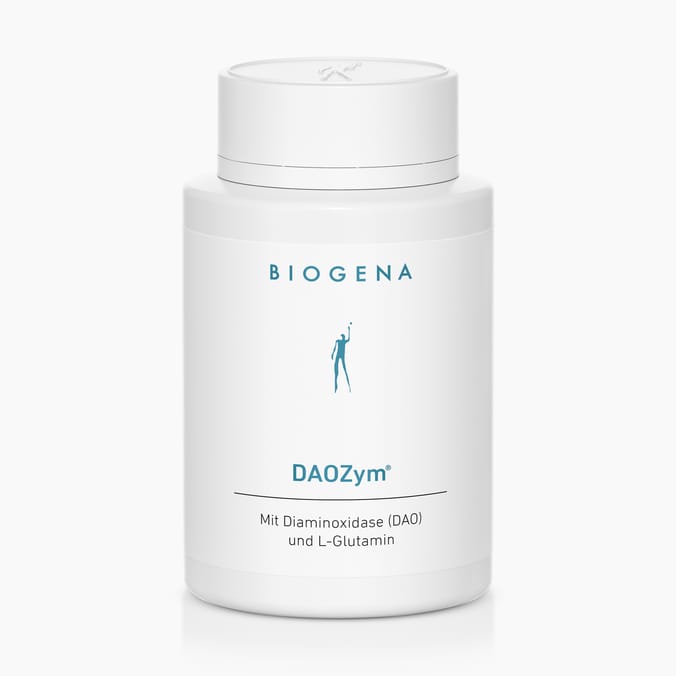
DAOZym® - DAO enzyme supplementSupplement with the DAO enzyme and L-glutamine
€1,996.97 / kg€65.90
Biogena Essentials
LactroZym® 20.000High-dose lactase enzyme supplement for improved tolerance of milk and dairy products
€1,069.05 / kg€44.90
Biogena Essentials
GluteZym®Supplement with a gluten-breaking enzyme (Tolerase® G), calcium and vitamin B2
€1,108.89 / kg€49.90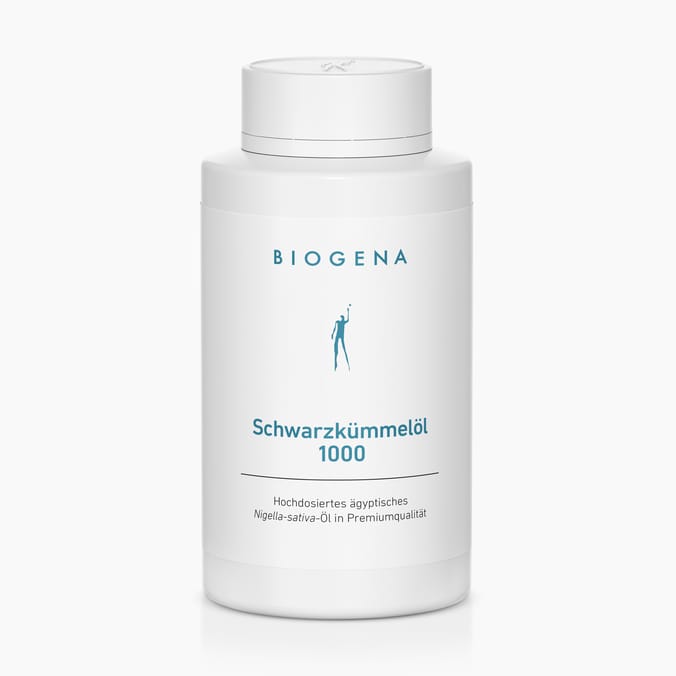
Biogena Essentials
Black Cumin Seed Oil 1000Capsules with highly dosed Egyptian Nigella sativa oil
€376.32 / kg€42.90
Biogena Essentials
AH & Glutamine FormulaWith vitamin C, L-glutamine, and trace elements to support enzyme synthesis
€1,342.31 / kg€34.90
Biogena Essentials
DAOZym® veganVegan DAO capsules – featuring innovative diamine oxidase from pea seedling flour and L-glutamine
€2,061.29 / kg€63.90
Biogena Essentials
Organic black cumin oilWith a high content of naturally occurring omega-6 fatty acid linoleic acid & thymoquinone
€309.00 / l€30.90
Living with food intolerances: honoring your body’s limits
A slice of bread without the bread? Coffee without milk — and without the coffee? For those managing food sensitivities, mealtimes can feel like navigating a minefield. But we believe enjoyment doesn't have to end here. With a bit of knowledge, a touch of awareness, and the right support, you can still enjoy the delicious side of life — even without lactose, gluten, or red wine.
How common are food intolerances?
According to the 2020 IMAS Nutrition Report, 7% of people in Austria have a medically confirmed food intolerance. But experts estimate the actual number is far higher—possibly one in four Europeans. That’s a lot of people navigating their meals with extra care.
What happens in the body during an intolerance?
Most food intolerances boil down to one thing: your body’s ability—or inability—to break down certain components in food. Often, it's due to a missing enzyme or a faulty transport system. The result? Discomfort like bloating, headaches, or stomach pain after eating. Some intolerances are lifelong; others develop unexpectedly as we age.
Why do intolerances seem to appear out of nowhere?
Today’s diet includes many “hidden extras”: added sugars, preservatives, fruit concentrates. Think yogurt, smoothies, or ready meals. For some bodies, it’s just too much. The good news? Cutting out your personal triggers can bring significant relief. Targeted supplements — like enzyme-based helpers — can also lend support when your body needs a little backup.
Most common food tolerances - and how to handle them
Lactose intolerance
Around 15–20% of Austrians struggle to digest lactose (milk sugar). The reason: a shortage of the enzyme lactase. Without enough of it, lactose remains undigested—causing bloating, nausea, or diarrhea.
Watch out for: Milk, yogurt, cheese—but also hidden lactose in processed meats, bread, or sweets.

Fructose malabsorption
In this case, the body can’t properly absorb fructose (fruit sugar), which ends up fermenting in the colon—leading to symptoms like bloating, gas, or diarrhea.
Watch out for: Apples, pears, grapes, fruit juices, smoothies, honey, and sugar-free products with sorbitol.
Important: Not to be confused with the rare genetic condition hereditary fructose intolerance.
Histamine intolerance
A classic challenge. People with histamine intolerance lack the enzyme diamine oxidase (DAO), making it hard for them to break down histamine in foods.
Symptoms may include: Itching, headaches, rapid heartbeat, nasal congestion, skin rashes.
Watch out for: Aged cheese, salami, canned fish, tomatoes, spinach, sauerkraut, red wine.
Support tip: DAO-based supplements can help your body process histamine more effectively.

Still wondering if histamine intolerance could be affecting you?
Find clarity in our blog post: Recognizing & Managing Histamine Intolerance.
Glutamate intolerance
Some people react sensitively to monosodium glutamate (MSG)—a common flavor enhancer.
Possible symptoms: Headaches, dizziness, racing heart, skin flushing.
Watch out for: Ready meals, spice blends, chips, soups, Asian food.
Pro tip: Check ingredient labels—glutamate may be listed under E-numbers (620–625) or masked as “seasoning” or “yeast extract.”
Gluten: celiac disease vs. gluten sensitivity
Celiac disease is an autoimmune condition where gluten damages the intestinal lining. People with celiac must strictly avoid gluten. Gluten sensitivity, on the other hand, isn’t an allergy—but it can still cause symptoms like fatigue, bloating, or abdominal pain.
Watch out for: Wheat, rye, barley, many baked goods and processed foods.
Product tip: BIOGENA’s GluteZym® contains the enzyme AN-PEP, which helps break down gluten into smaller, easier-to-digest fragments.

Testing & diagnosis
Suspect you’re sensitive to something? Don’t guess—get clarity. Medical testing is available for common intolerances like lactose, fructose, and histamine. The sooner you understand your body’s signals, the better you can navigate meals and avoid discomfort.
Thriving despite intolerances: yes, it’s possible
Many people living with intolerances learn what works for their bodies—and lean into supportive routines. Targeted supplements like enzymes, bitter herbs, or probiotics can make a real difference. Often, after giving your gut a break, tolerance improves naturally.
And the best part? You don’t have to give up enjoyment—just the things that don’t sit well with you.
FAQs
Got questions about intolerances? We’re here to help.
Sources:
Bischoff SC. Nahrungsmittelunverträglichkeiten. Food Intolerance. Akt Dermatol 2013; 39: 347–362
Cavalli-Sforza LT, et al. Primary adult lactose malabsorption in Italy: regional differences in prevalence and relationship to lactose intolerance and milk consumption. Am J Clin Nutr. 1987 Apr;45(4):748-54.
Storhaug, C. L., Fosse, S. K., Fadnes, L. T. (2017): Country, regional, and global estimates for lactose malabsorption in adults: A systematic review and meta-analysis. Lancet Gastroenterol Hepatol 2017 Oct, 2(10):738–46.
Sign up for our newsletter and get a €10 voucher
Sign up for our newsletter, receive your personal €10 voucher and look forward to exciting insights into the latest product innovations, giveaways and health tips – so you'll be well accompanied on your journey to well-being.