

Coenzyme Q10 supplements
Q10, also known as ubiquinone, is a true power molecule for our energy metabolism. It’s produced in the body, found in foods, and often included in supplements and beauty products.
Filters & Sorting
- Vegan
Biogena Exceptionals
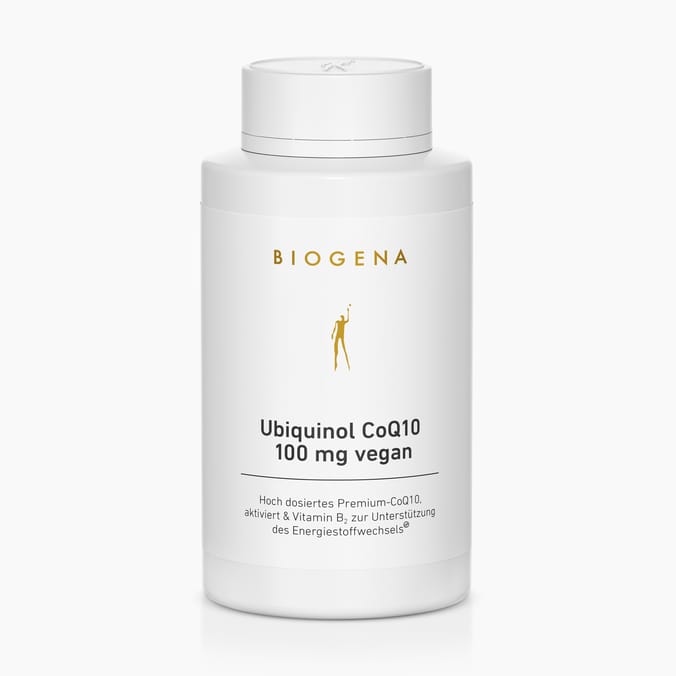
Ubiquinol CoQ10 100 mg vegan GoldCoenzyme Q10 in its active form ubiquinol – 100 mg
€2,313.16 / kg€87.90 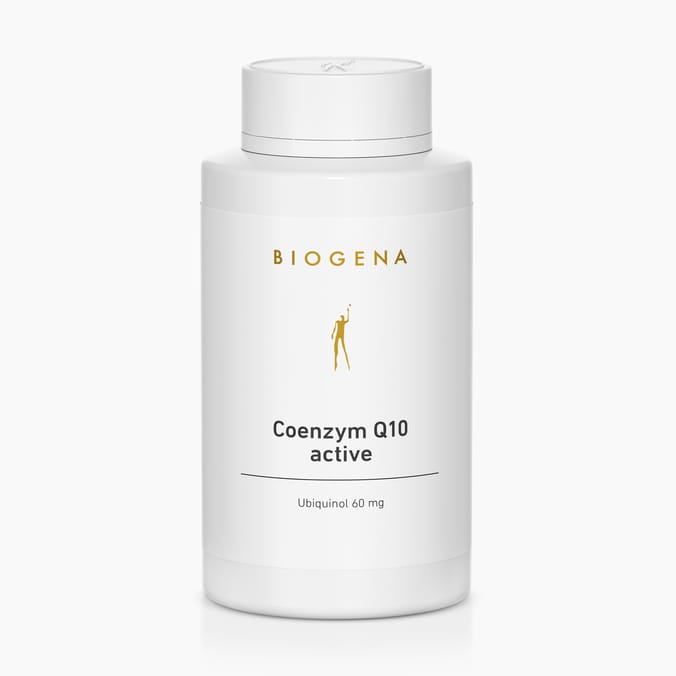
Biogena Exceptionals
Coenzym Q10 active Gold 60 mgThe Q10 active formula with 60 mg of ubiquinol from the global market leader (KANEKA Ubiquinol™)
€2,416.28 / kg€103.90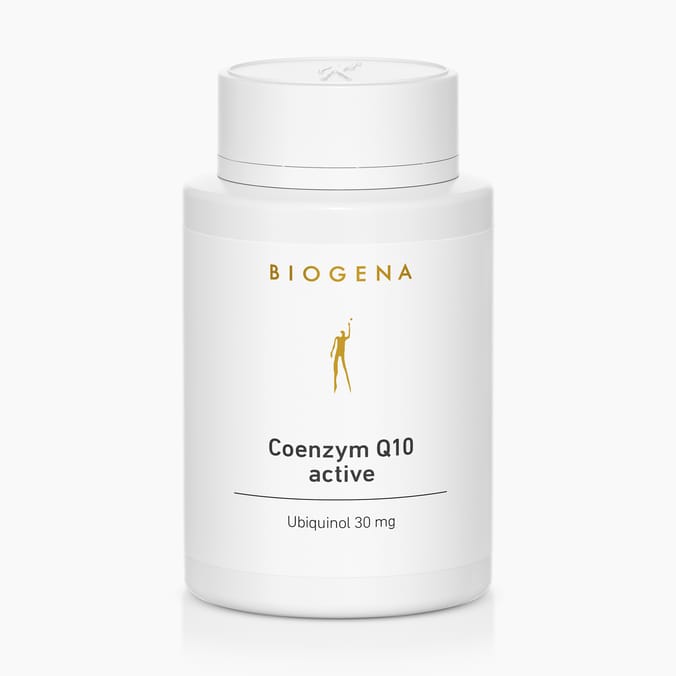
Biogena Exceptionals
Coenzyme Q10 active Gold 30 mgWith the most efficient Q10 form
€2,850.00 / kg€39.90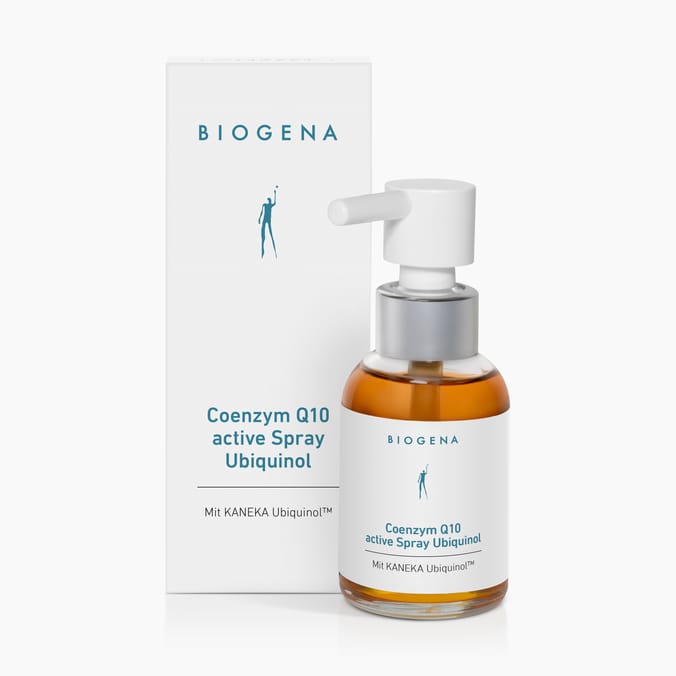
Biogena Essentials
Coenzyme Q10 active Spray UbiquinolAlcohol-free spray with the active coenzyme Q10 form ubiquinol
€1,996.67 / l€59.90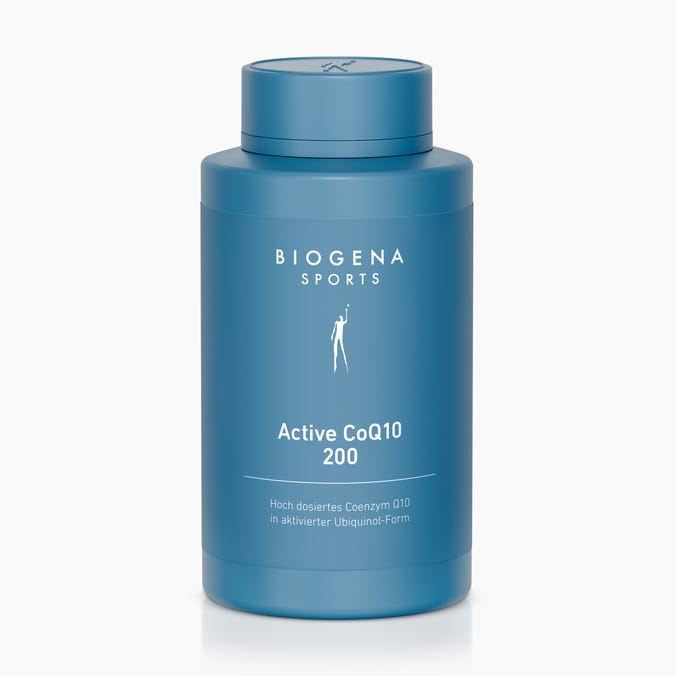
Biogena SPORTS
Active CoQ10 200High-dose coenzyme Q10 in the activated ubiquinol form
€1,362.50 / kg€119.90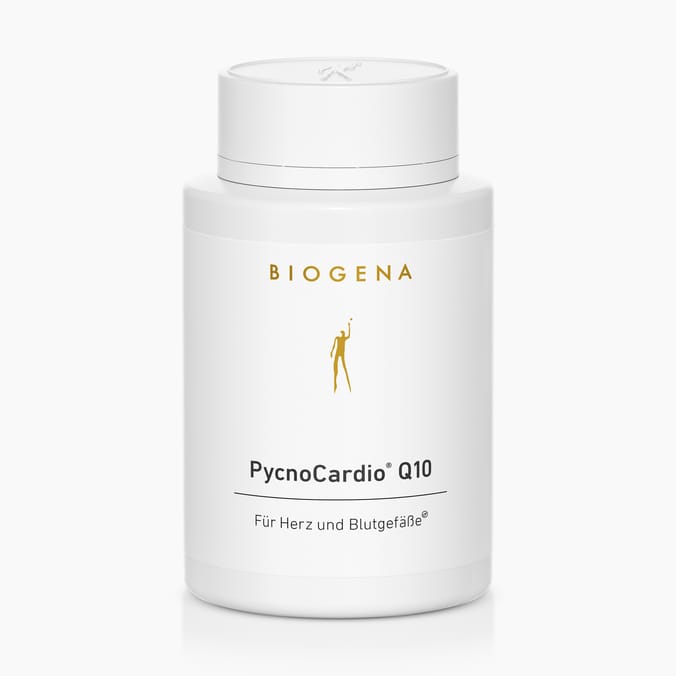
Biogena Exceptionals
PycnoCardio® Q10 GoldPremium complex for heart and blood vessels
€3,126.67 / kg€46.90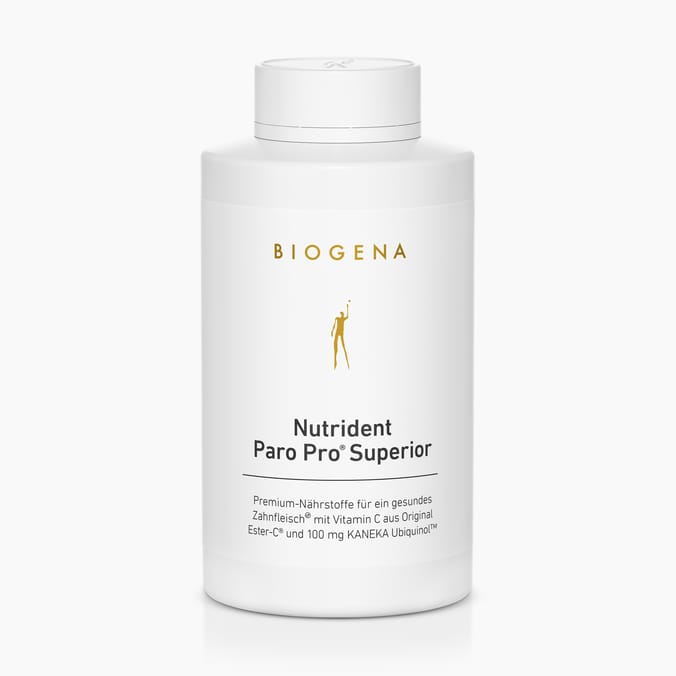
Biogena Exceptionals
Nutrident® Paro Pro SuperiorMicronutrient formula with vitamin C for healthy gums and cell protection*
€1,828.05 / kg€149.90- Vegan
What is coenzyme Q10?
Coenzyme Q10 is a natural substance produced in the body and also absorbed through food. It’s a vitamin-like vital substance (vitaminoid) found in nearly all living organisms – hence its name “ubiquinone” (from Latin ubiquitär, meaning “present everywhere”). Structurally, it’s similar to fat-soluble vitamins K and E. Q10 plays a central role in cellular energy production – a fact first discovered by Peter Dennis Mitchell, who won the 1978 Nobel Prize in Chemistry for this insight.
Enzyme vs. coenzyme – What’s the difference?
Enzymes act as biocatalysts that speed up chemical reactions in the body, while coenzymes like Q10 or NADH help enzymes perform these tasks more effectively.
Function & benefits – what coenzyme Q10 does in the body
Coenzyme Q10 is essential for energy generation in the mitochondria – our cells' “power plants.” It helps convert nutrients into ATP, our body’s main energy currency – essentially acting as a spark plug. Highest concentrations are found in organs with high energy demand, such as the heart, brain, and muscles. Q10 also functions as an antioxidant, protecting against free radicals and supporting the regeneration of vitamins C and E.
What the body needs to make Q10 – and what happens if there’s a deficiency
To produce Q10, the body requires amino acids like L-phenylalanine, L-tyrosine, and L-methionine, as well as B vitamins and vitamin C. With age, our ability to synthesize Q10 declines – potentially leading to reduced performance, lower energy levels, and vitality loss. Muscle pain and gastrointestinal weakness may also occur.
Who should keep an eye on their Q10 levels?
People over 40, those under chronic stress, athletes, smokers, individuals on cholesterol-lowering medications (statins), or those following low-fat diets may benefit from monitoring their Q10 status.
Which foods contain eoenzyme Q10?
You can get about 10 mg of Q10 daily from food – especially organ meats like liver and heart. Smaller amounts are found in fish (e.g., mackerel, sardines), meat, nuts, seeds, potatoes, and cruciferous vegetables like broccoli. A targeted blood test can help determine your individual Q10 level.
Top Q10-rich foods at a glance:
Nuts
Fish
Meat
Seeds and kernels
Potatoes
Vegetables like broccoli
Ubiquinone vs. ubiquinol – what’s the difference?
Q10 exists in two forms: ubiquinone and ubiquinol. Ubiquinol is the active, ready-to-use form, whereas ubiquinone must be converted in the body before it becomes effective. Ubiquinol is more easily absorbed and may be especially beneficial for older adults or those with specific health conditions – as confirmed by a study comparing two Q10 supplements.

Fun fact: Selenium and zinc status can influence the conversion from ubiquinone to ubiquinol.
Too little or too much Q10?
Too little Q10 can lead to fatigue and decreased performance. Overdoses primarily affect digestion, though studies have tested even high doses (1,200–3,000 mg daily) without notable side effects.
Coenzyme Q10 elvels – A diagnostic snapshot
Q10 levels are traditionally measured in blood serum, but whole blood analysis is more accurate since it also includes Q10 stored in red blood cells. Because cholesterol levels influence Q10 values, a cholesterol-adjusted test is often recommended.
Parameter | Sample type | Reference Values |
|---|---|---|
Coenzyme Q10 | Blood (EDTA*) | Deficiency < 0,67 mg/l preventive: |
Coenzyme Q10 (cholesterol-adjusted) | Blood (Serum) | preventive: > 0,200 µmol/mmol cholesterol |
Table: Laboratory diagnostics – overview of coenzyme Q10 levels
*EDTA is a special acid that is added to the blood sample to prevent it from clotting.
BIOGENA Good Health Study: Q10 supply not always ideal
Although the body produces Q10 and it’s present in food, optimal supply isn’t a given. The BIOGENA Good Health Study revealed: over a quarter (26%) of participants had Q10 levels below the cholesterol-adjusted norm – a clear sign of suboptimal intake.
Q10 as a supplement – dosage & application
Those who supplement Q10 can choose between ubiquinone and the active form, ubiquinol. Ubiquinol tends to be more effective – especially because it’s directly usable. Studies confirm its superior absorption.
When to choose which form
Q10 supplements come in different forms – liquid, capsules, or tablets.
Liquid sprays and drops offer direct delivery in oil-based form and don’t need to be taken with food. They’re pleasant to use but usually have a shorter shelf life.
Capsules are convenient, long-lasting, and stable. BIOGENA uses high-quality Kaneka Ubiquinol™, protected against oxidation via airtight encapsulation. vor Oxidation geschützt wird.
Premium Q10 products at BIOGENA
BIOGENA offers premium coenzyme Q10 supplements in liquid and capsule forms – all made with 100% pure, nature-identical Kaneka Ubiquinol™, known for its exceptional stability. Our Q10 active spray also uses the PhytoSolve® method to optimize absorption – even without concurrent fat intake.

Study: Q10 reduces stress
A 2020 study examined how the health crisis impacted mental health – and found that many people struggled more after lockdown than during it. Sleep issues, stress, anxiety, and low moods were reported by almost half the participants.
Those with high stress sensitivity particularly benefited from additional Q10: In a study with 60 participants, daily intake of 100 mg ubiquinol over 8 weeks significantly improved sleep quality and reduced stress – even under continued pressure.
More Research on Q10
The research team led by Zhan et al. discovered evidence that coenzyme Q10 can support blood sugar and fat metabolism (3). Mizuno et al. showed that Q10 supplements help reduce fatigue (4). In a double-blind crossover study by Orlando et al., Q10 supplementation reduced exercise-induced Q10 depletion in young athletes while increasing antioxidant levels in the blood and cells (5).
1 Traber, D. et al. 2020. The impact of lockdown on mental health, the importance of weak signals and subtle indicators. Preliminary results of the Covadapt study. L'information Psychiatrique Volume 96, issue 8-9, Octrobre-Novembre 2020.
2 Morikawa et al. Jpn Pharmacol Ther. Vol 47 no.8 2019.
3 Zhan P et al. 2018. Treatment of Coenzyme Q10 for 24 Weeks Improves Lipid and Glycemic Profile in Dyslipidemic Individuals. J Clin Lipidol. Mar-Apr 2018;12(2):417-427.e5.
4 Mizuno K. et al. 2020. Ubiquinol-10 Intake Is Effective in Relieving Mild Fatigue in Healthy Individuals. Nutrients. 2020 Jun 2;12(6):E1640.
5 Orlando P. et al.2018. Effect of Ubiquinol Supplementation on Biochemical and Oxidative Stress Indexes After Intense Exercise in Young Athletes. Redox Rep. 2018 Dec;23(1):136-145.
FAQs
Frequently asked questions about coenzyme Q10 supplements
Sign up for our newsletter and get a €10 voucher
Sign up for our newsletter, receive your personal €10 voucher and look forward to exciting insights into the latest product innovations, giveaways and health tips – so you'll be well accompanied on your journey to well-being.