

Spermidine supplements
We can’t stop the passage of time – but how we age is something we can influence. Today’s research looks deep into our cells: how can we stay vital for longer? And what role does a natural compound that’s gaining a lot of attention play in this – spermidine?
Filters & Sorting
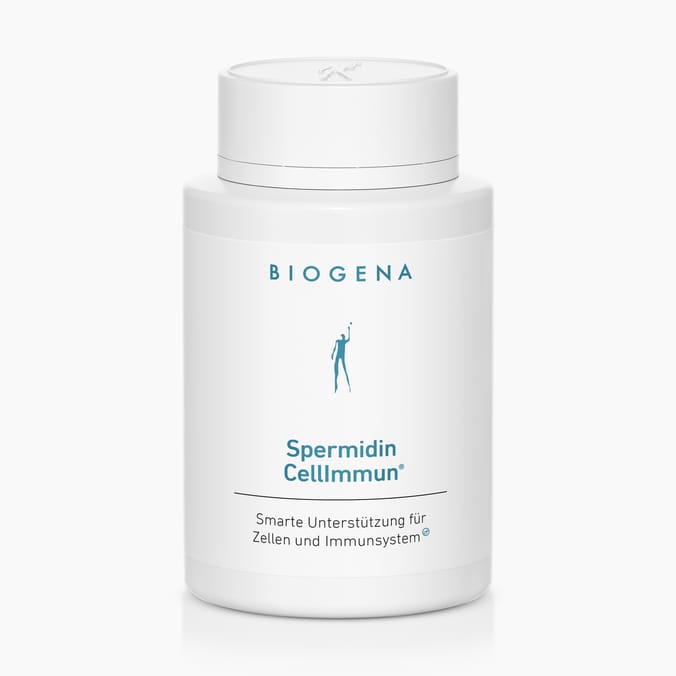
Biogena Essentials
Spermidine CellImmun®Premium spermidine combination preparation with zinc & astaxanthin
€2,820.59 / kg€95.90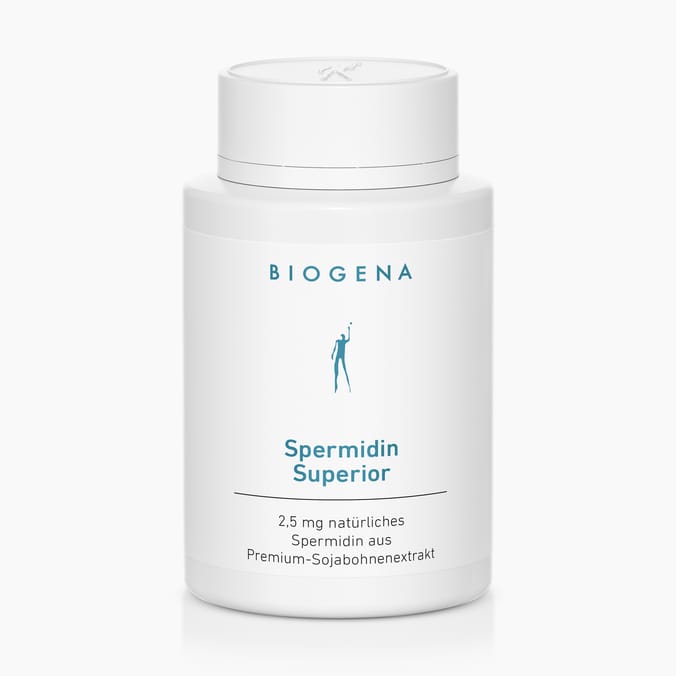
Biogena Essentials
Spermidin SuperiorHigh-dose spermidine capsules from soybeans
€2,775.56 / kg€124.90
What is spermidine?
Spermidine is a polyamine – a natural cellular compound found in every single cell of the body. While its name comes from its original discovery in seminal fluid, spermidine is found in the cells of all living organisms.
What makes it so fascinating is its function: spermidine supports the cell’s own self-care system – a process called autophagy. Think of it as the body’s biological clean-up crew. Autophagy identifies and recycles damaged cell components – helping keep your cells clean, efficient, and biologically youthful.
So what exactly is autophagy?
Autophagy is your cells’ internal waste disposal and recycling system. It breaks down faulty proteins or even entire cell structures – and reuses the valuable parts. Imagine an old house with a leaking roof and a broken fence. Autophagy is the renovation team that fixes it all – making sure the structure stays strong.
On a cellular level, that means:
breaking down damaged or unnecessary cellular materials
recycling building blocks
keeping cellular metabolism active
:quality(70))
But as we age, our natural spermidine levels decline. The result? Cellular functions slow down, and vitality fades. That’s where high-quality spermidine supplements come into play.
The benefits of spermidine for the immune system and cellular renewal
Spermidine is far more than a wellness trend. Scientific research suggests it plays a key role in healthy ageing and natural cellular renewal. Here’s how:
it activates autophagy
supports cellular regeneration
and may counteract age-related changes in a natural way
Its impact on the immune system is also gaining attention. As we age, our immune function tends to weaken. Early research suggests spermidine may help slow this process – offering exciting potential that continues to be explored.
And there’s more: scientists are also investigating spermidine’s effects on skin, hair, and even sperm quality. While early results are promising, more clinical studies are needed to confirm these findings.
If you’re looking to offset age-related loss of spermidine, a high-quality spermidine supplement can be a valuable part of your daily routine – supporting your cell health, vitality, and longevity potential.
Where is spermidine produced?
A portion of the body’s spermidine is produced internally – mainly in cells and by certain gut bacteria. But about two-thirds comes from dietary sources.
Which foods contain spermidine?
Spermidine is naturally present in a wide range of plant-based foods. You’ll find particularly high amounts in soybeans, but also in:
mushrooms
legumes
whole grains & wheat germ
aged cheese
Spermidine content in food can vary widely. If you want consistent support for your cellular health, it’s best to choose a standardized spermidine supplement – such as the controlled soy extract we use at BIOGENA.
Spermidine as a dietary supplement
Capsules, tablets, effervescent tablets, liquid – what forms are available?
Spermidine supplements come in capsules, tablets, or loose powder. At BIOGENA, our capsule formulas are produced to premium standards, free from unnecessary additives like colorants, binders, fillers or synthetic coatings – something that’s often not the case with tablets or other forms. That’s why it’s important to always check the composition and quality carefully.
Spermidine supplements by BIOGENA – quality beneath the surface
The market for spermidine products is booming – but not every product delivers real value. At BIOGENA, we focus on:
100% vegan soy-derived spermidine
free from unnecessary additives
standardized premium quality and consistent quantity in every capsule
Our customer favorites at a glance:

Spermidin Superior

Spermidine CellImmun®
Spermidine dosage & intake – how and when?
The recommended spermidine dosage depends on the product. At BIOGENA, the daily amount is always clearly indicated on the label.
Our tip: to get the most from your spermidine supplement, take it daily – ideally at the same time each day. That way, your cell balance stays steady.
Spermidine & fasting
Did you know that fasting also activates autophagy? If you’d like to boost your cell renewal process even further, try combining intermittent fasting with your daily spermidine supplements – or rely on spermidine alone as a gentle alternative when fasting isn’t feasible. Spermidine has been shown to mimic the beneficial effects of fasting by supporting autophagy.
Spermidine studies – what does the science say?
A widely discussed spermidine study from South Tyrol found that people with spermidine-rich diets lived on average 5–7 years longer – with better protection against cardiovascular, digestive, and neurological conditions.
Other studies confirm the effects of fasting – which spermidine can imitate on a cellular level – and its potential to lower the risk of cardiovascular disease and type 2 diabetes.
Researchers are also examining spermidine in the context of immune defense. One recent study from Berlin’s Charité Hospital suggests spermidine may reduce viral replication and enhance antiviral immune response – especially relevant in the context of COVID-19. The virus disrupts cellular processes and lowers spermidine levels, which in turn reduces autophagy – the body’s cellular clean-up system. While more research is needed, early findings are promising.
FAQs
Frequently asked questions about spermidine & supplements
Sources:
Wirth, M. et al. 2019. Effects of spermidine supplementation on cognition and biomarkers in older adults with subjective cognitive decline (SmartAge) – study protocol for a randomized controlled trial. Alzheimers Res Ther. 11(1):36.
Madeo, F. et al. 2018. Spermidine in health and disease. Science. 359(6374):eaan2788.
López-Otín, C. et al. 2016. Metabolic Control of Longevity. Cell. 166(4):802–21.
Madeo, F. et al. 2015. Essential role for autophagy in life span extension. J Clin Invest. 125(1):85–93.
Ekmekcioglu, C. 2019. Nutrition and longevity – From mechanisms to uncertainties. Crit Rev Food Sci Nutr. doi: 10.1080/10408398.2019.1676698.
Pucciarelli, S. et al. 2012. Spermidine and spermine are enriched in whole blood of nona/centenarians. Rejuvenation Res. 15(6):590–5.
Kiechl, S. et al. 2018. Higher spermidine intake is linked to lower mortality: a prospective population-based study. Am J Clin Nutr. 108(2):371–80.
Tong, D., Hill, J. A. 2017. Spermidine Promotes Cardioprotective Autophagy. Circ Res. 120(8):1229–31.
Eisenberg, T. et al. 2016. Cardioprotection and lifespan extension by the natural polyamine spermidine. Nat Med. 22(12):1428–38.
de Cabo, R., Navas, P. 2016. Spermidine to the rescue for an aging heart. Nat Med. 22(12):1389–90.
Pietrocola, F. et al. 2016. Caloric Restriction Mimetics Enhance Anticancer Immunosurveillance. Cancer Cell. 30(1):147–60.
Wirth, M. et al. 2018. The effect of spermidine on memory performance in older adults at risk for dementia: A randomized controlled trial. Cortex. 109:181–8.
Schwarz, C. et al. 2018. Safety and tolerability of spermidine supplementation in mice and older adults with subjective cognitive decline. Aging (Albany NY). 10(1):19–33.
Gassen, N. C. et al. 2020. Analysis of SARS-CoV-2-controlled autophagy reveals spermidine, MK-2206, and niclosamide as putative antiviral therapeutics. doi: 10.1101/2020.04.15.997254.
Beutner, S. et al. 2001. Quantitative assessment of antioxidant properties of natural colorants and phytochemicals: carotenoids, flavonoids, phenols and indigoids. The role of β-carotene in antioxidant functions. J. Sci Food Agric. doi: 10.1002/jsfa.849.
Nishida, Y. et al. 2007. Quenching activities of common hydrophilic and lipophilic antioxidants against singlet oxygen using chemiluminescence detection system. Carotenoid Sci. 11:16–20.
Kim, J. H. et al. 2011. Protective effects of Haematococcus astaxanthin on oxidative stress in healthy smokers. J Med Food. 14(11):1469–75.
Park, J. S. et al. 2010. Astaxanthin decreased oxidative stress and inflammation and enhanced immune response in humans. Nutr Metab (Lond). 7:18.
Malik, A. et al. 2014. Zinc supplementation for prevention of acute respiratory infections in infants: a randomized controlled trial. Indian Pediatr. 51(10):780–4.
King, J. C. et al. 2015. Biomarkers of Nutrition for Development (BOND) – Zinc Review. J Nutr. 146(4):858S–85S.
Mayo-Wilson, E. et al. 2014. Zinc supplementation for preventing mortality, morbidity, and growth failure in children aged 6 months to 12 years of age. Cochrane Database Syst Rev. (5):CD009384.
Brocard, A., Dréno, B. 2011. Innate immunity: a crucial target for zinc in the treatment of inflammatory dermatosis. J Eur Acad Dermatol Venereol. 25(10):1146–52.
Iddir, M. et al. 2020. Strengthening the Immune System and Reducing Inflammation and Oxidative Stress through Diet and Nutrition: Considerations during the COVID-19 Crisis. Nutrients. 12(6):1562.
Zhang et al. Polyamines Control eIF5A Hypusination, TFEB Translation, and Autophagy to Reverse B Cell Senescence. Mol Cell (2019).
Gassen, N. C. et al. 2020. Analysis of SARS-CoV-2-controlled autophagy reveals spermidine, MK-2206, and niclosamide as putative antiviral therapeutics. doi: 10.1101/2020.04.15.997254.
Puleston DJ et al. Autophagy is a critical regulator of memory CD8+ T cell formation. Immunology And Inflammation, Nov 11, 2014. DOI: 10.7554/eLife.03706
Kiechl S. et al. 2018. Higher spermidine intake is linked to lower mortality: Prospective population-based study. The American Journal of Clinical Nutrition, Volume 108, Issue 2, August 2018, Pages 371-380.
Sign up for our newsletter and get a €10 voucher
Sign up for our newsletter, receive your personal €10 voucher and look forward to exciting insights into the latest product innovations, giveaways and health tips – so you'll be well accompanied on your journey to well-being.