

:quality(70))
01
What is type 1 collagen?
Collagen type 1 is the most common and important form of collagen in the human body. It accounts for about 90% of all collagen and is a central component of skin, bones, tendons, ligaments and connective tissue.
Collagen structure: Collagen type 1 consists of long, strong fibre structures that are responsible for the stability and strength of tissues.
Function: It gives tissue stability and resistance to tensile and tensile forces. Without type 1 collagen, the skin would become flaccid, bones would be less stable and joints would be less mobile.
As the body loses its ability to produce sufficient amounts of collagen with age, this often leads to visible signs of ageing such as wrinkles, sagging skin or joint problems. For this reason, many people turn to collagen supplements to support the body's own collagen and promote skin elasticity and joint health.
02
Which is more effective – type 1, type 2 or type 3 collagen?
Sounds promising, doesn't it? But what about the other well-known types, 2 and 3? Are they even necessary? And which is more effective – type 1, type 2 or type 3 collagen? It depends on the composition of the individual collagen types.
Types 1 and 3 are both found in the skin, but their exact structure differs slightly, as type 3 is generally more densely packed. However, as collagen is broken down (hydrolysed) during processing anyway, types 1 and 3 do not differ in terms of their effects.
Type 2 is also structurally similar, but as it occurs in joints, it also contains chondroitin sulphate and hyaluronic acid. For this reason, type 2 is often recommended for joint problems. However, the fact is that the amount of chondroitin sulphate and hyaluronic acid is not particularly high and can vary considerably depending on the preparation. It is therefore better to rely on pure collagen and supplement it with the joint components chondroitin sulphate, glucosamine sulphate and hyaluronic acid. So whether it's your skin or your joints, type 1 collagen is the best choice for you!
03
What are the benefits of type 1 collagen?
Collagen type 1 combines many benefits and can have a positive effect on the following areas of your body:
Skin: It helps maintain the structure and robustness of your skin, making it a popular anti-ageing agent.
Tissue: Tendons, ligaments and bones also benefit from collagen type 1, which can reduce the risk of injury.
Bones: This type of collagen can strengthen bone mass, contributing to regeneration and preventing age-related bone loss.
Hair & nails: Type 1 collagen promotes hair and nail growth and maintains their beauty.
Wound healing: Type 1 collagen can also stimulate cell renewal in damaged areas, helping wounds to heal more quickly.
04
Foods rich in type 1 collagen
A real powerhouse, isn't it? Now the only question that remains is: Which foods contain particularly high levels of this type of collagen? The answer: Type 1 collagen is mainly found in animal products such as:
Minced meat
Fish (mainly in the skin)
Bone broth
Gelatine
05
How can I take type 1 collagen?
In order to provide your body with an optimal supply of type 1 collagen, it is important to have the right diet. You can also support this with high-quality dietary supplements. There are now a number of collagen products available, ranging from powders and drinks to capsules.
Most collagen products are derived from animal sources. The reason: these contain the same amino acids as your body – and can therefore be particularly effective. You now also have the option of using vegan collagen alternatives. However, as collagen can only be produced by humans and animals, these are not ‘real’ collagen – rather, these products contain collagen building blocks that your body uses to produce its own collagen.
The recommended daily dose of collagen can vary depending on the preparation and the reason for use. For example, if you want to improve the elasticity of your skin and reduce wrinkles on your face, 5-10 g of type I collagen peptides daily is an excellent choice.
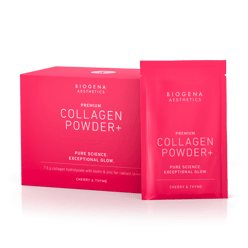
Marine Collagen Powder+
06
Collagen type 1 hydrolysate vs. conventional collagen type 1: here are the differences
In your search for the ideal product, you will repeatedly come across the term ‘hydrolysate’. What does this mean? Quite simply, in type 1 collagen supplements containing hydrolysate, the collagen is broken down into smaller peptides, i.e. collagen fragments. The advantage is that your body can absorb and utilise these more easily.
Conclusion: collagen is derived from the Greek word ‘kólla’, which means ‘glue’. And that's exactly how you can imagine collagen: as a kind of putty that keeps your body elastic, supple and stable at the same time. To support your body in this, it makes sense to take additional type I collagen supplements.
:quality(70))
:quality(70))
:quality(70))
:quality(70))
:quality(70))
:quality(70))
:quality(70))
:quality(70))
:quality(70))