

Thyroid health supplements
Your thyroid might be small, but it plays a powerful backstage role – regulating metabolism, energy, temperature, heartbeat, brain development and so much more. For it to keep things running smoothly, it relies on a steady supply of essential micronutrients. The right thyroid support supplement can help you maintain this delicate balance and nourish your body from within.
Filters & Sorting
Biogena Essentials
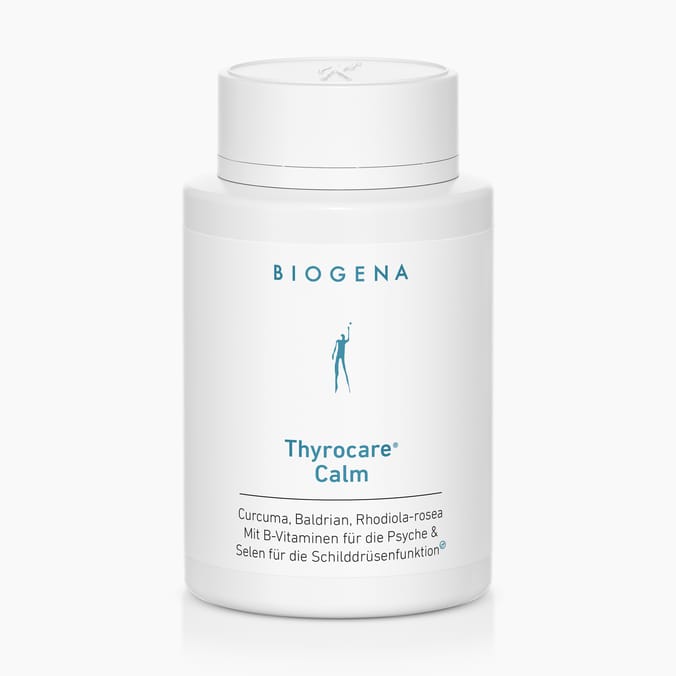
Thyrocare® Calm Thyroid ComplexYour support with B vitamins for psychological balance* & selenium for normal thyroid function*
€665.15 / kg€43.90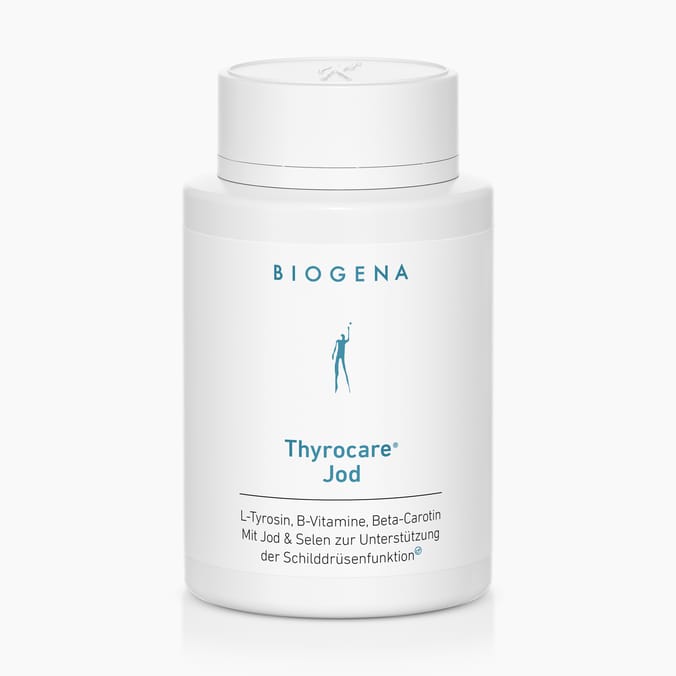
Biogena Essentials
Thyrocare® Iodine ComplexWith iodine to support hormone production in the thyroid
€906.06 / kg€29.90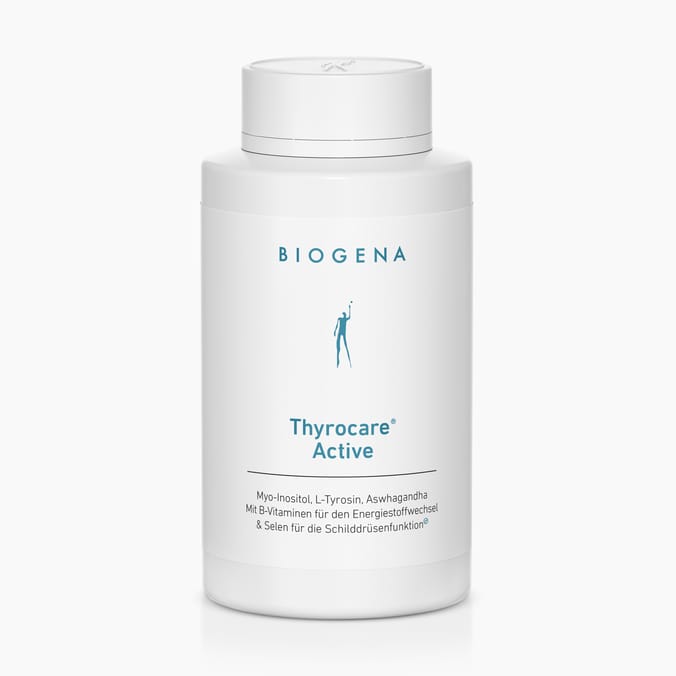
Biogena Essentials
Thyrocare® ActiveSupplement with selenium for the thyroid and B-vitamins for energy.
€665.00 / kg€39.90
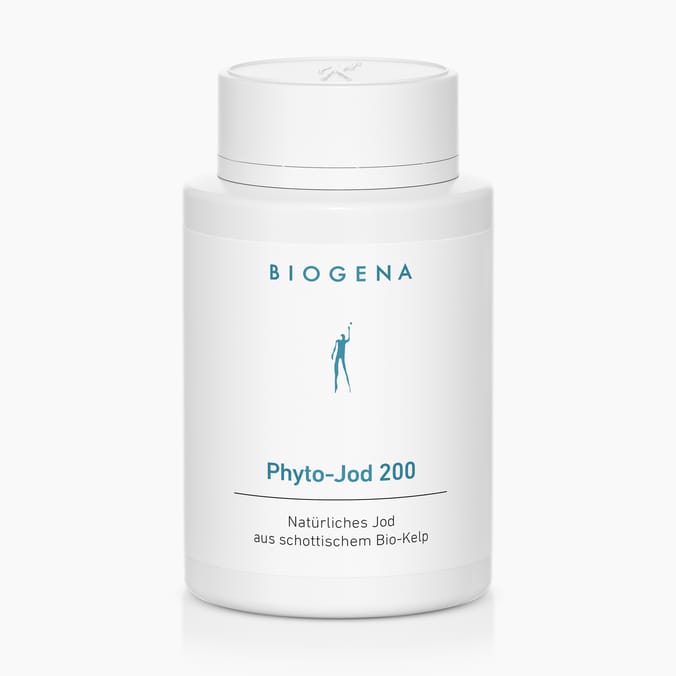
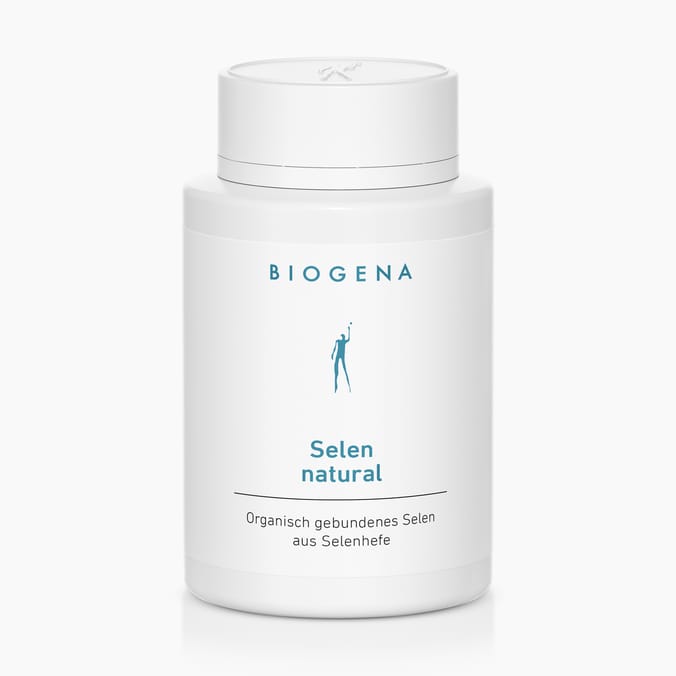
Biogena Essentials
Selenium naturalOrganically bound selenium from selenium yeast
€1,236.00 / kg€30.90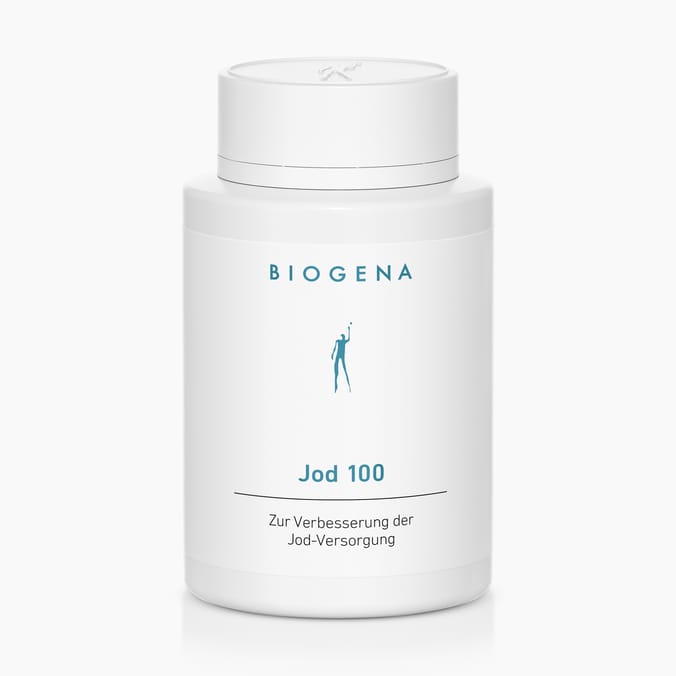
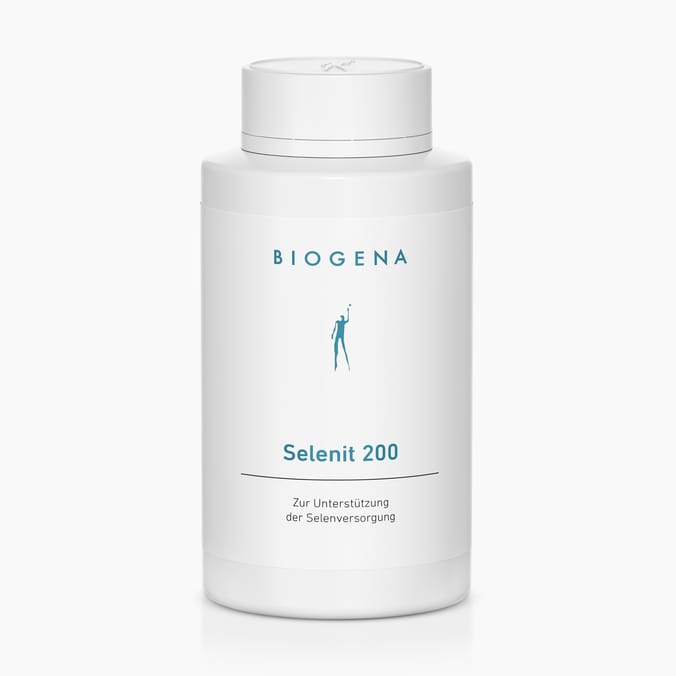
Biogena Essentials
Sodium Selenite 200 µgThe premium selenium booster with 200 µg of selenium per capsule
€1,383.33 / kg€24.90
The thyroid: silent strength at your core
You might not feel it working, but your thyroid is always active. To perform its daily duties, this hormonal conductor needs a precise mix of vitamins, minerals and nutrients. From iodine and selenium to iron, omega-3s and amino acids – they all play a role in keeping your thyroid balanced.
The essentials: which nutrients matter most?
Your thyroid is a master of multitasking – but even the best need backup. For peak daily performance, this powerful gland relies on a strong team of micronutrients. From vitamins and minerals like iodine, selenium and iron to omega-3s and amino acids, these nutrients help keep your inner rhythm in balance.
No iodine, no hormones!
Iodine is the cornerstone of thyroid hormone production – essential for forming the hormones T3 and T4. Since your body can't produce iodine on its own, it needs to be absorbed regularly through food or supplements. Once taken in, iodine travels straight to your thyroid.
But here’s something crucial: without iron, iodine can’t be converted into its hormone-active forms.
And selenium? It’s the switch that activates dormant T4 into active T3 – essential for metabolism, energy, and brain development. That’s why iodine becomes especially important during pregnancy. A deficiency can quickly throw off the gland’s sensitive balance, leading to symptoms like fatigue, cold sensitivity, or thyroid enlargement.
Important note: If you have active Hashimoto’s, iodine should never be taken without medical guidance.
Selenium – your antioxidant bodyguard & hormone booster
The thyroid is a true selenium magnet. This powerful trace element shields delicate thyroid tissue from oxidative stress and – as mentioned – is essential for activating thyroid hormones. Selenium-dependent enzymes like glutathione peroxidase help neutralize harmful oxygen compounds that form during hormone production.
When selenium runs low, the risk of inflammation, tissue damage, and autoimmune diseases like Hashimoto’s increases.
Iron – the quiet key player
Iron ensures that iodine can be converted into active hormone forms. If iron levels or ferritin stores are low, thyroid function can falter – even when iodine levels are technically adequate.
Women of childbearing age are especially affected. Studies show that supplementing iron can restore healthy hormone production – a powerful boost for your thyroid.
Other micronutrient heroes for your thyroid
Alongside the “Big 3” – iodine, selenium and iron – there’s a cast of silent supporters that work behind the scenes:
Vitamin D
Supports immune health and, according to studies, is particularly relevant for Hashimoto’s – especially in relation to elevated thyroid antibodies (TPO antibodies).Tyrosine
An amino acid that serves as a direct building block for thyroid hormones. A severe deficiency can lead to underactive thyroid function and symptoms like fatigue, weight gain or cold sensitivity.Zinc
Supports thyroid hormone production. Some studies suggest it can influence thyroid size. It also plays a key role in immune health – especially important for autoimmune conditions.Copper
Helps convert inactive T4 into active T3. Plus, it offers protection against free radical damage in thyroid tissue.Magnesium
If your body lacks magnesium, it can’t properly utilize selenium – slowing down thyroid function.Vitamin A
Improves thyroid cell responsiveness to TSH (thyroid-stimulating hormone) and supports iodine uptake. Both are critical for hormone production.Vitamin B12
Contributes to normal energy metabolism, supports cell division, and is vital for immune function. People with Hashimoto’s are more likely to experience a B12 deficiency than the general population.Amino Acids
Beyond tyrosine, amino acids like cysteine and arginine are essential building blocks for a healthy thyroid. They also support cellular protection – a key aspect of thyroid health.Omega-3 Fatty Acids
Regulate inflammation and protect the thyroid during “silent” (symptom-free) inflammation. They also help stabilize cell membranes and support hormone signaling.MSM (Methylsulfonylmethane)
Supplies organic sulfur – important for detoxification and cell protection, which in turn helps support sensitive thyroid tissue.
Thyroid-supporting supplements: what matters most
Supplements designed to support thyroid health deliver exactly what your body needs for hormone production, conversion and cellular protection.
Your thyroid needs more than just iodine: selenium-based formulas, as well as supplements with iron, zinc, magnesium, copper, vitamin A, D, B12, omega-3 fatty acids and MSM, all play a valuable role in thyroid performance and protection against oxidative stress.
Amino acid supplements can also make a big difference – especially tyrosine, the direct precursor for producing T3 and T4 hormones. That way, your thyroid gets everything it needs to perform at its best behind the scenes.
T3 & T4 supplements – and the power of micronutrients
In cases of hypothyroidism, the thyroid hormone T4 (levothyroxine) is commonly prescribed. If the body doesn’t respond as expected, T3 (liothyronine) may be added – especially if the T4-to-T3 conversion is impaired.
Important: Dosage should always be managed by a healthcare professional. Micronutrients are the perfect complement. Selenium, iron, zinc, vitamin D and tyrosine promote hormone synthesis, activation and cell protection – helping your thyroid work efficiently from within.
Hashimoto & supplementation
With Hashimoto’s thyroiditis, carefully selected supplements – always in consultation with your doctor – can support immune regulation and help ease inflammation.
Studies show that selenium and vitamin D can positively influence TPO antibodies, which are often elevated in Hashimoto’s.
Iodine should not be taken without medical advice if Hashimoto’s is active.
Omega-3 fatty acids and MSM also offer anti-inflammatory support and protect delicate thyroid tissue.
Tip: Keep an eye on your vitamin B12 levels! B12 deficiencies are common in Hashimoto’s and may lead to symptoms like fatigue, focus problems or mood swings.
Capsules or tablets – what’s best for thyroid support?
Whether you take your thyroid supplement as a capsule or tablet may feel like a small choice – but the difference lies in the quality.
Capsules
Often made from plant cellulose (or sometimes gelatin), they contain powder or liquid forms of active ingredients. They're well tolerated and usually free from unnecessary additives – ideal for sensitive individuals, especially with thyroid concerns.Tablets
Compact and stable, but more likely to include binders, fillers or colorants that some people may react to.
Small but mighty – give your thyroid what it needs
Your thyroid regulates countless vital processes in your body. To do that, it needs the right support. Nutrients like iodine, selenium, and iron – along with a team of key micronutrients – help ensure your hormone production runs smoothly, your immune system stays balanced, and your thyroid tissue remains protected.
With the right nutrient support, your thyroid can stay in sync – for more balance, energy, and well-being from within.
FAQs
Frequently asked questions about thyroid supplements and vitamins
Sources and further reading:
LeClair, K. et al. 2021. Evaluation of Gender Inequity in Thyroid Cancer Diagnosis: Differences by Sex in US Thyroid Cancer Incidence Compared with a Meta-analysis of Subclinical Thyroid Cancer Rates at Autopsy. JAMA Intern Med. 2021;181:1351–1358. doi: 10.1001/jamainternmed.2021.4804. https://pubmed.ncbi.nlm.nih.gov/34459841/
American Thyroid Association Thyroid Disease Facts and Statistics 2020. Endocrine Society. 2020. Available online: Endocrine.org
Shulhai, A.-M. et al. 2024. The Role of Nutrition on Thyroid Function. Nutrients. 2024 Jul 31;16(15):2496. doi: 10.3390/nu16152496 https://pubmed.ncbi.nlm.nih.gov/39125376/
Gwizdak, P. et al. 2024. Dietary Habits, Nutritional Knowledge, and Their Impact on Thyroid Health in Women: A Cross-Sectional Study. Nutrients. 2024 Nov 12;16(22):3862. doi: 10.3390/nu16223862 https://pubmed.ncbi.nlm.nih.gov/39599648/
Kim, D. 2017. The Role of Vitamin D in Thyroid Diseases. Nutrients. 2024 Nov 12;16(22):3862. doi: 10.3390/nu16223862
Gärtner, R. 2007. Wichtige Spurenelemente für die Schilddrüse. Die Bedeutung von Jod, Selen und Eisen für die Schilddrüsenfunktion. Präv Gesundheitsf 2007; 2; 185-190.
Köhrle, J. 2023. Selenium, Iodine and Iron–Essential Trace Elements for Thyroid Hormone Synthesis and Metabolism. Int J Mol Sci. 2023 Feb 8;24(4):3393. doi: 10.3390/ijms24043393 https://pubmed.ncbi.nlm.nih.gov/36834802/
Trigging, V. et al. 2009. Role of iodine, selenium and other micronutrients in thyroid function and disorders. Endocr Metab Immune Disord Drug Targets. 2009 Sep;9(3):277-94. doi: 10.2174/187153009789044392. https://pubmed.ncbi.nlm.nih.gov/19594417/
Capozzi, A. et al. 2022. Subclinical hypothyroidism in women's health: from pre- to post-menopause. Gynecol Endocrinol. 2022 May;38(5):357-367. doi: 10.1080/09513590.2022.2046728. https://pubmed.ncbi.nlm.nih.gov/35238251/
Pedersen, I.B., et al. 2011. A cautious iodization programme bringing iodine intake to a low recommended level is associated with an increase in the prevalence of thyroid autoantibodies in the population. Clin. Endocrinol. 2011;75:120–169. doi: 10.1111/j.1365-2265.2011.04008.x. https://pubmed.ncbi.nlm.nih.gov/21521277/
Souza, L.S.L. et al. 2025. Selenium nutritional status and thyroid dysfunction. Arch Endocrinol Metab. 2025 Feb 11;69(1):e230348. doi: 10.20945/2359-4292-2023-0348. https://pubmed.ncbi.nlm.nih.gov/39992731/
Wang, F. et al. 2023. Selenium and thyroid diseases. Front Endocrinol (Lausanne). 2023 Mar 24;14:1133000. doi: 10.3389/fendo.2023.1133000. https://pubmed.ncbi.nlm.nih.gov/37033262/
Zhu L, et al. Effects of selenium supplementation on antibodies of autoimmune thyroiditis. Zhonghua Yi Xue Za Zhi. 2012 Aug 28;92(32):2256-60. https://pubmed.ncbi.nlm.nih.gov/23158484/
Köhrle J. 2023. Selenium, Iodine and Iron–Essential Trace Elements for Thyroid Hormone Synthesis and Metabolism.
Int J Mol Sci. 2023 Feb 8;24(4):3393. doi: 10.3390/ijms24043393 https://pubmed.ncbi.nlm.nih.gov/36834802/
Zimmermann, M.B., Köhrle, J. 2002. The impact of iron and selenium deficiencies on iodine and thyroid metabolism: Biochemistry and relevance to public health. Thyroid. 2002;12:867–878. doi: 10.1089/105072502761016494. https://pubmed.ncbi.nlm.nih.gov/12487769/
Rayman, M.P. 2019. Multiple nutritional factors and thyroid disease, with particular reference to autoimmune thyroid disease. Proc. Nutr. Soc. 2019;78:34–44. doi: 10.1017/S0029665118001192. https://pubmed.ncbi.nlm.nih.gov/30208979/
Tang, J. et al. 2023. Effects of vitamin D supplementation on autoantibodies and thyroid function in patients with Hashimoto’s thyroiditis: A systematic review and meta-analysis. Medicine (Baltimore). 2023 Dec 29;102(52):e36759. doi: 10.1097/MD.0000000000036759. https://pubmed.ncbi.nlm.nih.gov/38206745/
Ertek, S. et al. 2010. Relationship between serum zinc levels, thyroid hormones and thyroid volume following successful iodine supplementation. Hormones (Athens). 2010 Jul-Sep;9(3):263-8. doi: 10.14310/horm.2002.1276. https://pubmed.ncbi.nlm.nih.gov/20688624/
Zhou Q. et al. 2022. Trace elements and the thyroid. Front Endocrinol (Lausanne). 2022 Oct 24;13:904889. doi: 10.3389/fendo.2022.904889. https://pubmed.ncbi.nlm.nih.gov/36353227/
Wróblewski, M. et al. 2023. The Role of Selected Trace Elements in Oxidoreductive Homeostasis in Patients with Thyroid Diseases. Int. J. Mol. Sci. 2023;24:4840. doi: 10.3390/ijms24054840. https://pubmed.ncbi.nlm.nih.gov/36902266/
Kolanu, B.R., et al. 2020. Activities of Serum Magnesium and Thyroid Hormones in Pre-, Peri-, and Post-menopausal Women. Cureus. 2020;12:e6554. doi: 10.7759/cureus.6554. https://pubmed.ncbi.nlm.nih.gov/32042527/
Kacharava, T. et al. 2023. Correlation Between Vitamin B12 Deficiency and Autoimmune Thyroid Diseases. Endocr Metab Immune Disord Drug Targets. 2023;23(1):86-94. doi: 10.2174/1871530322666220627145635. https://pubmed.ncbi.nlm.nih.gov/35761487/
Szczepanek-Parulska E, Hernik A, Ruchała M. Anemia in thyroid diseases. Pol Arch Intern Med. 2017 May 31;127(5):352-360. doi: 10.20452/pamw.3985. https://pubmed.ncbi.nlm.nih.gov/28400547/
Stefanovic, I. 2013. Schilddrüse aus dem Gleichgewicht. Die Folgen von Jod-, Selen- und Eisendefiziten. inside März 2013.
Biebinger, R. et al. 2006. Effect of concurrent vitamin A and iodine deficiencies on the thyroid-pituitary axis in rats. Thyroid 2006;16:961–965. https://pubmed.ncbi.nlm.nih.gov/17042680/
Krysiak R. et al 2023. Sexual Function and Depressive Symptoms in Young Women with Euthyroid Hashimoto's Thyroiditis Receiving Vitamin D, Selenomethionine and Myo-Inositol: A Pilot Study. Nutrients. 2023 Jun 20;15(12):2815. doi: 10.3390/nu15122815. https://pubmed.ncbi.nlm.nih.gov/37375719/
Gröber, U. Mikronährstoffe: Metabolic Tuning – Prävention – Therapie, 3. völlig überarbeitete und erweiterte Auflage. Stuttgart: Wissenschaftliche Verlagsgesellschaft Stuttgart, 2011.
Gröber, U. Orthomolekulare Medizin. Ein Leitfaden für Apotheker und Ärzte, 3. Auflage. Stuttgart: Wissenschaftliche Verlagsgesellschaft, 2008.
Hahn, A. et al. Ernährung: Physiologische Grundlagen, Prävention, Therapie, 2. Auflage. Stuttgart: Wissenschaftliche Verlagsgesellschaft, 2006.
Leitzmann, C. et al. Ernährung in Prävention und Therapie: Ein Lehrbuch, 3. Auflage. Stuttgart: Hippokrates Verlag, 2009.
Schmidbauer C, Hofstätter G. 2020: Mikronährstoff-Coach: Das große BIOGENA-Kompendium der Nährstoffe. 1158 Seiten.
Sign up for our newsletter and get a €10 voucher
Sign up for our newsletter, receive your personal €10 voucher and look forward to exciting insights into the latest product innovations, giveaways and health tips – so you'll be well accompanied on your journey to well-being.