

:quality(70))
01
What is vitamin D?
Vitamin D is the generic term for a group of fat-soluble vitamins, the calciferols, which the body can produce itself, mainly through sunlight. This gives vitamin D a special position among vitamins, because its main requirement is not covered by diet, as is usually the case, but by the body's own production. We will explain more about this and what our body needs for this below.
Vitamin D2 and vitamin D3: the differences explained
When looking into vitamin D, you will often come across two different forms: vitamin D2 and vitamin D3. This raises the question: what exactly is the difference between them? We have summarised the most important points for you:
Vitamin D3: This form is produced by your body itself in the skin when exposed to sunlight and is also found in some animal products such as oily fish and eggs. Vitamin D3 is best utilised and stored by your body, which is why you should prefer this form.
Vitamin D2: This form is produced by plants, especially mushrooms, that are exposed to UV light. However, vitamin D2 is not quite as useful for your body as vitamin D3. Nevertheless, it can be a useful supplement, especially for vegans.
02
Effects, uses and tasks: What are vitamin D benefits and what is vitamin D good for?
Vitamin D was long underestimated and was previously thought to be important only for bone health. Today, however, research knows that vitamin D is actually a hormone that plays a key role in the body. This is because it interacts with almost all cells in the body, whether in organs or tissues.
There, the active form of vitamin D – calcitriol – binds to special docking sites, known as receptors. Once it is bound, it supports various important processes and functions in the body, such as the absorption of calcium and phosphorus from food through the intestines. It is also involved in the maintenance of muscles, bones and teeth and supports the function of the immune system.
A vitamin D deficiency can also have far-reaching consequences and is associated with cardiovascular complaints, high blood pressure, diabetes, depression and an unhealthy aging process.
Therefore, an adequate and stable vitamin D balance has a major influence on human well-being.
Vitamin D & immune system
involved in the production of immune cells and immune-regulating proteins, it also influences various immune cells (e.g. macrophages, B and T lymphocytes) and is involved in the regulation of inflammatory processes. While a weak immune system gains strength from vitamin D, excessive immune reactions, such as allergies or autoimmune diseases, can be alleviated by it.
Vitamin D & fatigue
There are many causes of tiredness. Not least, it can also be caused by a vitamin D deficiency. According to a study, anyone who wants to combat fatigue caused by a deficiency should take vitamin D supplements. 120 healthy people of different ages who had vitamin D deficiency and were also complaining of tiredness took part in the study. The participants who – without knowing it – were given vitamin D reported a decrease in their fatigue at the end of the intake period.
Vitamin D & bones
It has been known for a long time that vitamin D is essential for healthy bones. The sunshine vitamin not only ensures that calcium is absorbed from the intestines, but it also regulates the storage of the mineral in the bones. It is no wonder that a good vitamin D supply throughout the year is an important preventive step in preventing osteoporosis. But the ‘bone vitamin’ is not only indispensable in the prevention of osteoporosis, it is also essential in its treatment. Effective bone supplements provide not only vitamin D but also other relevant nutrients (e.g. calcium, magnesium, vitamin K).
Vitamin D & muscle function
Vitamin D contributes to healthy muscle function. Conversely, a deficiency can lead to muscle weakness. It is therefore not only athletes who should pay attention to their vitamin D levels.
Vitamin D, cell growth and division
Vitamin D also plays a role in regulating cell growth and division.
Vitamin D, metabolism and hormones
Vitamin D is involved in various metabolic processes in your body and influences hormone production, among other things.
Vitamin D during pregnancy
In addition, vitamin D can support expectant mothers and their growing children during pregnancy.
03
Vitamin D daily dosage recommendation: How much vitamin D per day?
The German Nutrition Society recommends 20 µg or 800 I.U. of vitamin D daily as an estimate for an adequate intake for children, adolescents and adults. Due to the widespread inadequate supply of vitamin D in the population and the many advantages of higher vitamin D levels, higher dosages provide clear health benefits. The safe maximum daily amount of vitamin D is 100 µg or 4000 I.U.
Age | Adequate vitamin D intake in the absence of endogenous synthesis |
|---|---|
Infants up to 12 months old | 10 in µg/day |
Children up to 14 years | 20 in µg/day |
Young people and adults aged 15 and over | 20 in µg/day |
65 years and older | 20 in µg/day |
During pregnancy | 20 in µg/day |
During breastfeeding | 20 in µg/day |
Table 1: Recommended daily vitamin D intake according to the DGE
04
Vitamin D Test: measure your own blood levels
To determine vitamin D levels, the amount of 25-hydroxyvitamin D3 in the blood is measured and, depending on the laboratory, is given either as nmol/l or as ng/ml.
BIOGENA Good Health Study: Vitamin D – the underrated hormone
Vitamin D is the only nutrient that is not obtained from food, but primarily from the body's own synthesis using sunlight. Nevertheless, studies such as the BIOGENA Good Health Study repeatedly show that vitamin D stores in the population are depleted. The Good Health Study examined the supply situation of 1377 Austrian participants and came to the following conclusion regarding vitamin D status throughout Austria.
05
Vitamin D levels: normal levels & deficiency
What are normal and optimal vitamin D levels, and when do I have a deficiency? The following table is intended to help you decipher the ‘laboratory lingo’.
Assessment of the status | 25-hydroxy-D serum levels (nmol/L) | 25 hydroxy vitamin D serum level (ng/ml) (-> equivalent to "μgl/L") |
|---|---|---|
Serious deficiency | < 50 nmol/L | < 20 ng/ml |
Slight deficiency | 50 – 75 nmol/L | 20 – 30 ng/ml |
Sufficient supply | 75 – 100 nmol/L | 30 – 40 ng/ml |
Optimal supply | 100 – 150 nmol/L | 40 – 60 ng/ml |
Table 2: Vitamin D levels and classifications
* Conversion from nmol/l to ng/ml: Simply divide the value in nmol/l by 2.5.
06
Vitamin D deficiency: low vitamin d symptoms
Our bodies are able to produce vitamin D themselves with the help of sunlight. However, there are numerous disruptive factors, such as cold, older age, a darker skin type or the use of sun protection factors, which can stand in the way of sufficient vitamin D formation.
07
How to ensure an adequate supply
The intake of vitamin D through normal food only makes a small contribution to the vitamin D supply. As a rule, 80–90% of the vitamin can be produced by the body itself in the skin with the help of sunlight (UV-B rays). This requires time spent outdoors, with the body's own production varying from person to person.
Vitamin D production: synthesis in the skin – optimised by nature
The starting substance for vitamin D production in the body is the provitamin 7-dehydrocholesterol. When UV-B rays hit the skin, previtamin D3 is initially formed. This is then converted into vitamin D3, which is also known as cholecalciferol or simply vitamin D. Vitamin D3 can be metabolised into its storage form, calcidiol, and finally into its physiologically active form, the hormone calcidiol. It is in this active form that it can perform its functions in the body.
Difference between vitamin D and D3
The term ‘vitamin D’ refers to a group of fat-soluble vitamins known as calciferols. Vitamin D3, also known as cholecalciferol, is the most important form for the human body within the calciferols.
Optimal conditions and influencing factors for self-synthesis
In our latitudes, the optimal conditions for vitamin D formation are between April and September, during the period from 10 a.m. to 3 p.m. Ideally, a quarter of the skin (face, hands, parts of arms and legs) should be exposed to the sun without sunscreen for 5 to 25 minutes (depending on the season and skin type) every day. It is essential to pay attention to the skin's self-protection time and to avoid sunburn!
Note: Approx. half of the time that would otherwise be needed to get an unprotected sunburn is enough. If you spend a long time in the sun, you should definitely use sun protection.
The synthesis of vitamin D in the skin is highly dependent on the UV-B index, which only reaches the required value of more than 3 at the correct position and angle of the sun, which corresponds to UV-B radiation of 290–315 nm.
A simple rule for remembering: if the shadow is longer than you are, you will not be able to synthesise sufficient vitamin D! From October to March, the sun is lower in the sky and the UV index is below 3. At these times, the body draws on its vitamin D stores, provided these have been sufficiently replenished over the summer.
Other factors besides latitude, season and time of day and weather conditions include skin type, clothing, length of time spent outdoors and the use of sunscreen.
What are vitamin D rich foods?
Vitamin D can also be obtained from food, although significant amounts are only found in a few foods, mostly of animal origin, such as fatty fish (salmon, herring), liver, egg yolk and some edible mushrooms.
According to the DGE, the intake from the usual foods is not sufficient to reach the estimated value for an adequate intake of 20 µg vitamin D per day if the body does not produce any vitamin D itself. The difference must be covered by the body's own production and/or by taking a vitamin D supplement.
08
Vitamin D intake and dosage
According to the D-A-CH nutrition societies, people who, for various reasons, spend little or no time outdoors when the sun is shining, or only go out in the sun with their bodies completely covered, as well as people with dark skin pigmentation, are recommended to take a vitamin D supplement.
When to take vitamin D: morning or evening?
Whether it's morning, noon or evening, the time of day is less important than how you take your vitamin D supplements. Preparations that do not contain oils as an additional ingredient are best consumed with a meal. Some experts recommend taking the sunshine vitamin with the most substantial meal of the day (usually lunch or dinner). In any case, the food should provide some fat to aid vitamin D absorption.
How do you take vitamin D?
Since vitamin D is fat-soluble, fatty foods (e.g. high-quality oils) improve its absorption into the body. For this reason, vitamin D should always be taken with food. Exceptions to this are preparations in which the vitamin has already been combined with a fat component (such as vitamin D drops).
How much vitamin D per day is recommended?
The German Nutrition Society (DGE) recommends 20 µg or 800 I.U. of vitamin D daily as an estimate for an adequate vitamin D intake in the absence of self-synthesis (e.g. in winter, when working full-time indoors or when bedridden). Due to the widespread inadequate supply of vitamin D in the population and the many benefits of higher vitamin D levels, higher dosages provide clear health benefits. The safe maximum daily amount of vitamin D is 100 µg or 4000 I.U.
If higher dosages are being considered, regular blood tests are recommended. The selected dosage should also be adjusted to your own body weight; online vitamin D calculators can help you choose the right dosage, including the desired dosage period.
When is high-dose vitamin D3 useful?
High-dose vitamin D3 is often used when vitamin D levels are very low, to rectify the deficiency as quickly as possible. Some doctors also prefer high-dose vitamin D3 for maintenance therapy, as the supplement needs to be taken much less frequently and is therefore considered more convenient by some patients.
How long should you take vitamin D for?
In general, a year-round intake of vitamin D is recommended. People who suffer from a vitamin D deficiency should ideally take higher amounts of vitamin D under medical supervision and with laboratory diagnostics monitoring – until they have reached their target level. However, it can take several weeks or even months.
Vitamin D supplements: drops, capsules or tablets?
If you decide to supplement the sunshine vitamin in your daily life, you are spoilt for choice: drops, capsules and tablets are probably the most common on the market – but which preparation is best?
First things first: there is no such thing as the ultimate vitamin D supplement for everyone. However, when making a purchase decision, the quality of the supplement (e.g. a formulation that is as free as possible from additives, a trustworthy quality manufacturer) and the correct dosage should always be at the forefront of your mind.
The advantage of vitamin D drops is that the fat-soluble vitamin is already dissolved in the oily environment and can therefore be easily absorbed by the body. For the consumer, this means that they can take the drops at any time, regardless of meals. Drops are also convenient to take and can be individually dosed. Less ideal is the often shorter shelf life of drops compared to capsules or tablets.
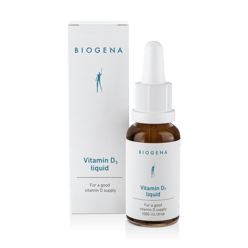
Vitamin D3 drops

Junior Vitamin D3 drops
The most common form of vitamin D on the market is in tablet form. Here, too, there are variants in which oil is included for improved vitamin D absorption. However, many tablet products not only contain active ingredients, but also unnecessary additives (such as colourings and flavourings) and are therefore less advisable.
Vitamin D capsules often impress with their particular purity, since capsules usually do not require additives. They are hygienic and have a relatively long shelf life even without additives. Preparations that do not automatically include oil should always be taken with a fatty meal to allow the vitamin to be properly absorbed into the body.
Why combine vitamin D3 with K2?
A combination of vitamin K2 and vitamin D3 is definitely useful in certain situations. In particular when it comes to hard graft on the bone, both vitamins work together. Vitamin K2 has the task of storing the minerals in the bones – but for this vitamin D3 must activate the necessary proteins and also utilise the calcium. If there is a lack of vitamin K2, calcium and magnesium cannot be ‘channeled’ into the bones. If there is insufficient vitamin D3, there is a lack of proteins and usable calcium for bone mineralisation. Both fat-soluble vitamins are therefore essential in effective bone supplements.
Vitamin D and magnesium
Vitamin D and magnesium work together at different levels in metabolism, which can make a combination of the two useful in certain settings. For example, vitamin D aids the absorption of magnesium in the gut, and adequate vitamin D levels can generally improve magnesium absorption. Both vitamin D and magnesium influence bone, tooth and muscle health. Studies suggest that a deficiency of vitamin D and magnesium can favour the development of high blood pressure. People with high blood pressure may be advised to have the status of both nutrients checked and, if necessary, to take supplements.
Conclusion: Vitamin D should be on all our minds and on our lips. After all, vitamin D receptors can be found in almost all organs and tissues – a synonym and reflection of its health relevance. Studies such as the BIOGENA Good Health Study show that in many cases, a healthy diet and exposure to sunlight are not enough to ensure good vitamin D levels; an additional supply of vitamin D in the form of a supplement is also necessary. Due to the health benefits, the aim should be not just an adequate vitamin D supply, but an optimal one, under laboratory diagnostic supervision.
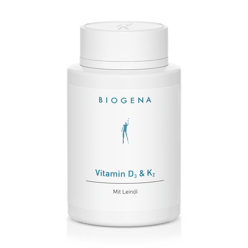
Vitamin D3 & K2 1.000 I.U.
:quality(70))
:quality(70))
:quality(70))
:quality(70))
:quality(70))
:quality(70))
:quality(70))
:quality(70))
:quality(70))