

:quality(70))
01
Vitamin D: Why your body loves this essential nutrient
Let’s start with the basics: why vitamin D at all? It’s quite simple: your body needs this messenger substance. Because, yes, essentially it is a hormone. What’s it for? For example, to keep your muscles, bones and teeth strong. So that you can absorb calcium and phosphorus more effectively. So that your immune system works as reliably as clockwork. So that you can give it your all as an athlete. Or so that tiredness, exhaustion and bad moods don’t stand a chance.
02
Vitamin D and the sun: how the two are linked
Next up: How do you get hold of this much sought-after substance? And this is where vitamin D differs from other essential nutrients in one small but significant way: not only can you obtain it from food, but your body is also capable of producing it itself. What does it need to do this? The sun. Or, to be more precise, UVB rays. This is because they can convert the provitamin D3 contained in your skin cells into previtamin D3 – a precursor. A few metabolic processes later, you end up with the real gold: vitamin D in its purest form. So sunbathing is key – it’s the only way to get your hands on this elixir.
But there’s a catch – or, to be more precise, several:
Diet is good, but not good enough: Even though you can certainly turn to a few vitamin D-rich foods, taken together they don’t provide you with the amount you need to meet your daily vitamin D requirement. So a healthy diet can, at best, be a small helping hand on the way to fully replenished vitamin D stores.
The sun is lacking in many places: Even the sun is no longer enough to provide you with the amount of vitamin D you need. The two main reasons for this are: firstly, in many European countries, the amount of sunshine is simply too low for most of the year. Secondly, we spend far too much time indoors. This is also highlighted by BIOGENA’s ‘Good Health Study’.
And then there’s the issue of sun protection. We’ll take a closer look at how this affects your vitamin D production in the next section.
03
Does sun cream block vitamin D? Myth or fact?
The theory that sun cream prevents the absorption or production of vitamin D is still going strong. What’s the truth of the matter? Well, the fact is: most sun protection products contain plenty of UV-filtering substances that provide particularly strong protection against UVB radiation. In other words, precisely the type of radiation your body needs to produce vitamin D. But here comes the big ‘but’:
Your body is large: In most cases, you still don’t apply sun cream to every single part of your body that’s exposed to the sun. Your body will therefore find areas where it can continue to produce vitamin D unhindered.
The amount matters: Even if you’re meticulous about sensitive areas, your skin will never be 100 per cent evenly and completely covered with sun cream. This, too, creates gaps that your body can exploit.
The rays are strong: After all, there’s no sunscreen that can block 100 per cent of incoming UVB rays. So even when wearing sun cream, your body can still produce a certain amount of vitamin D.
In summary: It is true that sun protection does have a slightly negative effect on vitamin D production, but sun cream, sun lotion and the like cannot completely block or prevent this process. Rather, individual factors such as your skin type, your age or other health-related aspects play a role here.
You therefore do not need to worry about a vitamin D deficiency caused by sun cream alone. However, there are other factors that can contribute to such a deficiency, such as being severely overweight or having dark skin. Older people, babies and children are also in the high-risk group.
04
Should you use sun cream – yes or no?
So what does this mean for you and your sun cream? Will you still be an unbeatable team this summer? Absolutely! Because, given the impact on your vitamin D levels, completely doing without sun protection products is not a good idea. All in all, the negative effects of UVB rays – such as sunburn, patchy skin, an increased tendency towards acne scars and age spots, rosacea, accelerated skin ageing or even skin cancer – outweigh the benefits. So make sure you use reliable protection in the form of a good sun cream, and don’t forget other essentials such as a sun hat, sunglasses and so on.
05
Vitamin D is (also) in demand in summer
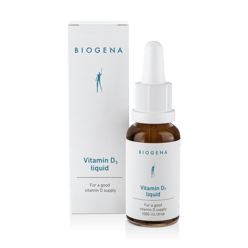
What else can you do to complement this? Make sure your body gets enough extra vitamin D. In the form of high-quality supplements that contain this vital nutrient and are free from unnecessary additives. This is therefore not only important in winter, when sunlight is in short supply, but also in summer, when you’re using sun cream for protection.
How much should you take? Experts recommend 20 µg or 800 IU of vitamin D per day. However, as many people are already deficient, higher doses of vitamin D can also offer health benefits – though these should ideally be based on a blood test. It’s best to discuss this with your GP. The safe maximum daily intake is 100 µg or 4,000 IU.

06
Conclusion
You need vitamin D. But you also need sun protection. Sounds like a challenge? Not at all! Because the fact is: even with sun cream, your body can still produce vitamin D. And if you give it an extra boost from outside in the form of dietary supplements, your stores will always be topped up. In summer and winter alike. This means you can feel free to reach for your sun cream – and reliably protect your skin from the sun’s harmful effects. It’s actually quite simple, isn’t it?
:quality(70))
:quality(70))
:quality(70))
:quality(70))
:quality(70))
:quality(70))
:quality(70))
:quality(70))
:quality(70))