

Skin & Beauty

All you need to know about the benefits of glycine

A smiling person with closed eyes, resting their head on one hand, next to a chemical structure on a plain background.

Mag. Kristiina Singer, MSc

05.05.20264 Reading time

Glycine is inconspicuous but effective: this amino acid produced naturally by the body provides support in many ways and fits harmoniously into your everyday routine of self-care and balance. Curious? Then let's take a closer look together: we'll take you into the world of glycine, explain what's behind its role, why it works so well in combination with collagen – and how you can easily integrate it into your routine.

01

What is glycine and how does it work in the body?

Some heroes don't need the limelight. Glycine is just such a silent companion – inconspicuous but indispensable. This amino acid, which is produced naturally in the body, provides support exactly where your well-being is based:

  • In the skin and connective tissue, because glycine is a central building block of collagen – the structural protein that gives your skin its elasticity.

  • In the nervous system, where glycine acts as a calming neurotransmitter – for relaxed signals in the brain.

  • In metabolism, in the formation of important substances such as glutathione, creatine and bile acids – real key players for your inner balance.

02

The benefits of glycine for skin and hair health

Beautiful skin, strong connective tissue, shiny hair: it all starts with collagen – and glycine is at the heart of it. As one of the three main amino acids in the structural protein collagen, it provides a crucial building block for the foundation of your natural beauty.

But glycine can do more than just build – it also works in the background of your body's own protective mechanisms. As a building block of glutathione, one of the body's key antioxidants, glycine contributes to cellular protection against oxidative stress. In addition, initial scientific evidence also suggests that glycine influences inflammation-regulating processes in the body – another potential benefit for maintaining healthy tissue.

03

The difference between collagen and glycine – and why the combination is beneficial

Collagen is a complex structural protein that gives various tissues such as skin, connective tissue, cartilage and muscles their shape, stability and elasticity. Approximately one in three amino acids in the collagen molecule is glycine. This makes it one of the central building blocks of collagen and forms the basis for structural strength from within, making it indispensable for the body's own collagen formation! If there is not enough glycine, collagen synthesis can come to a standstill – for this reason, combined intake of collagen and glycine can be beneficial.
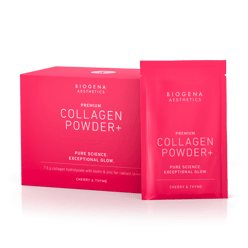
That is why we combine high-quality Naticol® collagen with glycine and other selected nutrients – for maximum effectiveness.
Marine Collagen Powder +

Marine Collagen Powder +

€34.90

04

The benefits of glycine for mental health and sleep

As an inhibitory neurotransmitter, glycine has a calming effect on the central nervous system, helping you to switch off mentally and gently wind down at the end of the day.

Glycine supports your emotional balance, especially during stressful periods or in the evening when your body wants to switch to rest mode, helping you to fall asleep restfully and start the next day feeling more relaxed.

05

The benefits of glycine for gut health

Glycine also provides valuable support in the intestine: it contributes to the formation and maintenance of the intestinal mucosa – precisely where a healthy intestinal barrier is created. Initial findings from animal studies also suggest that glycine may also have a protective effect in cases of intestinal inflammation. However, these exciting findings require further research in humans.

Glycine also plays an important role in fat digestion: together with taurine, it ensures that bile acids remain highly soluble – an important prerequisite for the absorption of fats and the excretion of cholesterol.

06

More functions of glycine: immune system, liver, etc.

But glycine can do even more – and perhaps in areas where you would not expect it.

  • Blood: Glycine provides building blocks for haem – a component of the red blood pigment haemoglobin.

  • Liver: In the liver, glycine is involved in detoxification processes – it helps to bind and break down foreign substances.

  • Muscles: Glycine is essential for the production of creatine, which is important for supplying energy to the muscles.

  • Immune system: Your body's own defence system also relies on this amino acid. Initial evidence suggests that glycine can modulate inflammatory responses, among other things.

07

Benefits of glycine for women

The female body dances to its own rhythm – hormonal, cyclical, individual. Although there have been no studies specifically focused on women and glycine to date, it is clear that this versatile amino acid often provides support in areas where many women desire more balance – in sleep, mental relaxation or cellular protection.

08

Glycine: recommended intake

Can glycine be obtained from food or only from supplements?

Once commonplace, now rather the exception: in traditional diets, animals were used ‘from nose to tail’ – including glycine-rich parts such as connective tissue and bone marrow.

These components are usually missing from the modern Western diet. In vegetarian or vegan diets, the intake is often even lower. As a result, glycine, a building block of the body's own collagen synthesis, is absorbed less frequently. Targeted supplementation with high-quality supplements can therefore be useful – especially if glycine-rich foods such as bone broth or gelatine are rarely part of your everyday diet.

Supplement intake recommendation: How to take glycine correctly

Whether in powder or capsule form, glycine can be easily integrated into your daily routine. Many people prefer to take it in the evening, especially if they want to relax gently and fall asleep more easily.

How much glycine is right for you – and which other nutrients ideally complement this amino acid – depends on your individual circumstances and personal goals.

09

Conclusion

Glycine may often remain in the background – but that is precisely where its strength lies. A closer look reveals that this amino acid, which is produced naturally in the body, is involved in a wide range of processes and is an integral part of our natural balance. Quiet but present. Unexciting but versatile.

Frau mit schulterlangen Haaren, die einen gerippten Pullover und eine Halskette mit Anhänger trägt und auf einem Schwarz-Weiß-Foto lächelt.

Mag. Kristiina Singer, MSc

Senior Knowledge Management Expert & Consultant, BIOGENA

Kristiina Singer specialises in clinical nutritional medicine. Her special interest focuses on the possibilities of functional nutrition and orthomolecular medicine. She has been part of the BIOGENA family since 2015, first as a scientific specialist at the BIOGENA Academy and later as an expert on the BIOGENA knowledge management team. Doctors, therapists and other parties concerned appreciate the calm and sunny way in which she shares her knowledge and experience in her lectures.

FAQs

Frequently asked questions about glycine

References:

Razak MA, et al. 2017. Multifarious Beneficial Effect of Nonessential Amino Acid, Glycine: A Review. Oxid Med Cell Longev. 2017;2017:1716701. doi: 10.1155/2017/1716701. Epub 2017 Mar 1. Erratum in: Oxid Med Cell Longev. 2022 Feb 23;2022:9857645. doi: 10.1155/2022/9857645. PMID: 28337245; PMCID: PMC5350494. https://pubmed.ncbi.nlm.nih.gov/37851316/

Soh J, et al. 2024. The effect of glycine administration on the characteristics of physiological systems in human adults: A systematic review. Geroscience. 2024 Feb;46(1):219-239. doi: 10.1007/s11357-023-00970-8. Epub 2023 Oct 18. PMID: 37851316; PMCID: PMC10828290. https://pubmed.ncbi.nlm.nih.gov/37851316/

Bannai M, Kawai N. 2012. New therapeutic strategy for amino acid medicine: glycine improves the quality of sleep. J Pharmacol Sci. 2012;118(2):145-8. doi: 10.1254/jphs.11r04fm. Epub 2012 Jan 27. PMID: 22293292. https://pubmed.ncbi.nlm.nih.gov/22293292/

Alves A, et al. 2019. Glycine Metabolism and Its Alterations in Obesity and Metabolic Diseases. Nutrients. 2019 Jun 16;11(6):1356. doi: 10.3390/nu11061356. PMID: 31208147; PMCID: PMC6627940. https://pubmed.ncbi.nlm.nih.gov/31208147/

Kawai N, et al. 2014. The sleep-promoting and hypothermic effects of glycine are mediated by NMDA receptors in the suprachiasmatic nucleus. Neuropsychopharmacology. 2015 May;40(6):1405-16. doi: 10.1038/npp.2014.326. Epub 2014 Dec 23. PMID: 25533534; PMCID: PMC4397399. https://pubmed.ncbi.nlm.nih.gov/25533534/

Aguayo-Cerón KA, et al. 2023. Glycine: The Smallest Anti-Inflammatory Micronutrient. Int J Mol Sci. 2023 Jul 8;24(14):11236. doi: 10.3390/ijms241411236. PMID: 37510995; PMCID: PMC10379184. https://pmc.ncbi.nlm.nih.gov/articles/PMC10379184/?utm_source=chatgpt.com#abstract1

Schmidt, J.A., Rinaldi, S., Scalbert, A. et al. (2016). Plasma concentrations and intakes of amino acids in male meat-eaters, fish-eaters, vegetarians and vegans: A cross-sectional analysis in the EPIC-Oxford cohort. European Journal of Clinical Nutrition, 70(3), 306–312

de Paz-Lugo, et al. 2018. High glycine concentration increases collagen synthesis by articular chondrocytes in vitro: Acute glycine deficiency could be an important cause of osteoarthritis. Amino Acids, 50(10), 1357–1365. https://pubmed.ncbi.nlm.nih.gov/30006659/

Pérez-Torres I, Zuniga-Munoz AM, Guarner-Lans V. Beneficial Effects of the Amino Acid Glycine. Mini Rev Med Chem. 2017;17(1):15-32. doi: 10.2174/1389557516666160609081602. PMID: 27292783. https://pubmed.ncbi.nlm.nih.gov/27292783/

Di Ciaula A, et al. 2017. Bile Acid Physiology. Ann Hepatol. 2017 Nov;16(Suppl. 1: s3-105.):s4-s14. doi: 10.5604/01.3001.0010.5493. PMID: 29080336. https://pubmed.ncbi.nlm.nih.gov/29080336/

Johnson AA, Cuellar TL. Glycine and aging: Evidence and mechanisms. Ageing Res Rev. 2023 Jun;87:101922. doi: 10.1016/j.arr.2023.101922. Epub 2023 Mar 31. PMID: 37004845. https://pubmed.ncbi.nlm.nih.gov/37004845/

Chen J, et al. 2021. Dietary Supplementation with Glycine Enhances Intestinal Mucosal Integrity and Ameliorates Inflammation in C57BL/6J Mice with High-Fat Diet-Induced Obesity. J Nutr. 2021 Jul 1;151(7):1769-1778. doi: 10.1093/jn/nxab058. PMID: 33830211. https://pubmed.ncbi.nlm.nih.gov/33830211/

Falany CN, et al. 1994. Glycine and taurine conjugation of bile acids by a single enzyme. Molecular cloning and expression of human liver bile acid CoA:amino acid N-acyltransferase. J Biol Chem. 1994 Jul 29;269(30):19375-9. PMID: 8034703. https://pubmed.ncbi.nlm.nih.gov/8034703/

Nagana Gowda GAet al. 2009. Bile acids conjugation in human bile is not random: new insights from (1)H-NMR spectroscopy at 800 MHz. Lipids. 2009 Jun;44(6):527-35. doi: 10.1007/s11745-009-3296-4. Epub 2009 Apr 17. PMID: 19373503; PMCID: PMC5459358. https://pubmed.ncbi.nlm.nih.gov/19373503/

Lim, J.J., et al. 2022. Postprandial glycine as a biomarker of satiety: A dose-rising randomised control trial of whey protein in overweight women. Appetite, 169, 105871. https://pubmed.ncbi.nlm.nih.gov/34915106/

Imenshahidi M, Hossenzadeh H. 2022. Effects of glycine on metabolic syndrome components: a review. J Endocrinol Invest. 2022 May;45(5):927-939. doi: 10.1007/s40618-021-01720-3. Epub 2022 Jan 11. PMID: 35013990. https://pubmed.ncbi.nlm.nih.gov/35013990/

Heme Synthesis. Biochemistry, Genetics and Molecular Biology. ScienceDirect: https://www.sciencedirect.com/topics/biochemistry-genetics-and-molecular-biology/heme-synthesis, Accessed: 11.12.2025.

Feel-good News

Everything about supplements, health tips and understandable study results directly from experts.
Show all articles

Sign up for our newsletter and get a €10 voucher

Sign up for our newsletter, receive your personal €10 voucher and look forward to exciting insights into the latest product innovations, giveaways and health tips – so you'll be well accompanied on your journey to well-being.