

:quality(70))
01
Definition: what are vitamins?
Vitamins are organic compounds that are essential in small amounts for the growth, development and maintenance of human body health. Unlike macronutrients such as carbohydrates, proteins and fats, micronutrients such as vitamins and minerals do not provide energy, but act as catalysts in biochemical reactions, helping to control all the important processes that make our bodies work. They support numerous bodily functions, including immune defence, cell formation, wound healing and the conversion of food into energy.
There are 13 essential vitamins that are divided into two main groups:
Fat-soluble vitamins (A, D, E and K) that can be stored in the body.
Water-soluble vitamins (C and B vitamins), which must be regularly absorbed through food because they are not stored. Vitamin B12 is an exception, because despite its water solubility, the body can store the vitamin in the liver for a long time.
Adequate and daily intake of vitamins is therefore crucial for maintaining health and avoiding deficiencies. With a few exceptions, vitamins must be obtained from food, as we cannot produce them ourselves.
02
Function of vitamins
Unlike macronutrients (carbohydrates, proteins, fats), vitamins are not used as building blocks or for energy production. Instead, they serve our bodies as auxiliary and material substances to support important functions within the metabolism. Vitamins are involved in the growth, formation and maintenance of various tissues, the formation of hormones and the protection of cells against oxidative stress as well as energy production.
03
Overview of vitamins
Fat-soluble vitamins | Water-soluble vitamins |
|---|---|
Vitamin A | Vitamin B1 (Thiamine) |
Vitamin D | Vitamin B2 (Riboflavin) |
Vitamin E | Vitamin B3 (Niacin) |
Vitamin K | Vitamin B6 (Pyridoxine) |
Folsäure (Vitamin B9) | |
Vitamin B12 | |
Biotin (Vitamin H) | |
Vitamin C |
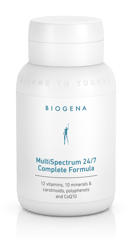
Multispectrum 24/7 Complete Formula
04
Fat-soluble vitamins
As the name suggests, fat-soluble vitamins are only soluble in a fatty environment. This means that a fat carrier must always be present for a vitamin to be absorbed into the body. Thus the vitamins in the intestine must be packed together with fats in order to be transported from the intestine into the tissues.
Our body can store fat-soluble vitamins in large quantities. Important vitamin stores include the liver and the fat deposits. Our body can take the necessary amounts from these stores if we do not ingest all the required vitamins every day.
While vitamin A and D can also be synthesised by our body itself, vitamin E and K must be supplied through our daily nutrition.
Vitamin A
Vitamin A is an essential nutrient involved in the visual process and contributes to the maintenance of normal vision. Furthermore, vitamin A is central to numerous metabolic processes, such as iron metabolism and cell specialisation. It is also important for maintaining normal skin including mucous membranes and contributes to a well-functioning immune system. Vitamin A also plays a significant role in the renewal of blood cells and the immune system.
Vitamin D
Vitamin D is important for the human body because it takes on countless tasks in the organism. It contributes to the maintenance of bones and teeth as well as normal muscle function. Vitamin D also plays a role in the absorption of calcium and phosphorus from food. It also supports the function of the immune system.
Vitamin E
Vitamin E plays a crucial role as a protective factor for cells. Due to its ability to protect cells from oxidative stress, vitamin E can protect cell walls and other body structures from damage.
Vitamin K
Vitamin K is the short form for “coagulation vitamin” (after the German word “Koagulation”), which describes its role in the maintenance of blood clotting. It is also involved in the formation of substances that support bone metabolism and bone mineralisation. Vitamin K thus contributes to the maintenance of normal bones.
05
Water-soluble vitamins
Water-soluble vitamins are distributed in all water-containing areas of the body, for example in the blood and in intercellular spaces. Unlike fat-soluble vitamins, they cannot be stored in the body, with the exception of vitamin B12. They must therefore be continuously supplied through the diet.
Vitamin B complex
Vitamin B or B-complex vitamins (thiamine (B1), riboflavin (B2), niacin, pantothenic acid, vitamin B6, biotin, folic acid, vitamin B6, vitamin B12) are required in the body for the provision of energy and for the smooth functioning of the nervous system. In addition to nerve cell function, they also support our mind and take on other tasks in the body. Vitamins B1 and B2 contribute to the normal functioning of the nervous system. Folate, biotin and other vitamins contribute to normal mental function. Vitamins B2, B6 and B12 support energy metabolism and help to reduce tiredness and fatigue.
Vitamin C
Vitamin C is primarily known for its work in the immune system. However, it can do more than that and is involved in many other processes in the body: for example, this water-soluble vitamin supports the normal function of blood vessels via its role in collagen formation. It is also important for our antioxidant defence system: it helps protect cells from oxidative stress and supports the regeneration of the reduced form of vitamin E.
Biotin
Biotin has numerous tasks in the body – among other things, it contributes to the maintenance of normal skin and hair. Biotin also plays an important role in numerous metabolic processes, such as energy metabolism or the metabolism of macronutrients and the nervous system.
Folic acid
Folic acid is involved in a number of metabolic processes in the body. Among other things, it plays an important role in cell division, blood formation and the growth of maternal tissue. This is why folic acid is especially important during pregnancy. Folic acid is found in plant foods as well as in animal products, although the animal-based form is better absorbed by the body.
Niacin
Niacin, unlike most vitamins, can also be produced by the human body itself from the amino acid tryptophan. As a component of important enzymes, it plays an essential role in metabolism, where it contributes to energy metabolism and the reduction of fatigue and exhaustion. In addition, this vitamin supports the maintenance of normal skin and mucous membranes.
Pantothenic acid
Pantothenic acid contributes to normal energy metabolism. It supports brain performance and is also involved in the normal synthesis and normal metabolism of steroid hormones, vitamin D and some neurotransmitters.
06
Minerals
Minerals are inorganic nutrients that our body cannot produce itself and therefore must be absorbed through food. All minerals are inorganic. However, they are never found in pure form in nature, but always in a combination. They can also be combined with organic acids, such as calcium citrate, which is the compound of an organic acid (citric acid) with calcium – creating an “organic mineral”. Minerals play a central role in numerous physiological processes. Macro-elements such as calcium, magnesium and potassium are required in large quantities and contribute to bone health, muscle and nerve function and the regulation of fluid balance.
07
Trace elements
Trace elements such as iron, zinc and selenium are only necessary in tiny quantities, but are still of immense importance. Iron supports oxygen transport in the blood, zinc strengthens the immune system and selenium acts as an antioxidant that protects cells from damage. A balance of these minerals and trace elements is critical to maintaining health and well-being, which is why a varied and nutritious diet is essential.
:quality(70))
:quality(70))
:quality(70))
:quality(70))
:quality(70))
:quality(70))
:quality(70))
:quality(70))
:quality(70))