

:quality(70))
01
What is magnesium bisglycinate?
Magnesium – most people are familiar with it. This substance, which is vital for the body, belongs to the group of minerals and is one of the most important macrominerals. It is therefore present in your body in significant quantities. But what exactly is magnesium bisglycinate? To understand this, you need to know that not all magnesium is the same. Rather, there are various compounds in which the molecule can occur. Magnesium isn’t fussy when it comes to its partners and sometimes flirts with one, sometimes with another. When it forms a bond with two molecules of the amino acid glycine, magnesium bisglycinate is produced. Magnesium bisglycinate is therefore a specific form of magnesium.
02
What are the benefits of magnesium bisglycinate?
So what are the benefits associated with this particular form of magnesium? For example, this form is highly bioavailable and, at the same time, extremely stable. Many of its other beneficial effects stem from the fact that magnesium bisglycinate – unlike magnesium aspartate or citrate – is an organic compound. This results in:
High bioavailability: Your body is particularly good at absorbing the magnesium, transporting it into the bloodstream and utilising it.
Good tolerability: People with a sensitive gastrointestinal tract, in particular, benefit from this advantage of magnesium bisglycinate.
A calming effect: The glycine contained in the compound can also have a calming effect – ideal if you want to improve your sleep.
03
What are the disadvantages of magnesium bisglycinate?
In nature, magnesium occurs mainly in inorganic form. And that brings us straight to the only drawback: in organic compounds such as magnesium bisglycinate, a large proportion of the total amount is accounted for by the binding partner, and the manufacturing process is more complex. Consequently, the pure magnesium content per gram is often lower than in compounds such as magnesium oxide, and the price of high-dose preparations is higher.
04
Why your body needs magnesium
Now the question remains: why is it actually so important to ensure your body gets enough magnesium? The answer is as multifaceted as the nutrient itself: for example, magnesium ensures strong bones and teeth and supports your muscles in their daily work and relaxation. In addition, magnesium provides energy and optimises your sleep at the same time. It helps regulate your hormone balance, protects your heart and is even involved in the production of the ‘happiness hormone’ serotonin. This is good news for your mental wellbeing – and anxieties quickly fade away. Furthermore, this essential nutrient regulates the stability, permeability and division of your cells. These functions are particularly important when you’re pregnant.
An impressive range of functions, isn’t it? And that’s precisely why you should, conversely, avoid a magnesium deficiency. Because if your body lacks this essential substance, numerous organs, systems and processes will suffer as a result.
05
Supplying the body with magnesium bisglycinate
As you already know, magnesium is usually found in nature in inorganic form. And that also means that magnesium bisglycinate is not found directly in natural foods. So how can you still benefit from the many advantages of magnesium bisglycinate? It’s quite simple: by taking high-quality dietary supplements produced under controlled conditions.
Experts recommend around 400–420 mg of magnesium per day for men and 310–320 mg for women. However, if you’re going through a particularly challenging period in your life, do a lot of sport or are expecting a baby, you may need more. It’s best to discuss this with a doctor you trust.
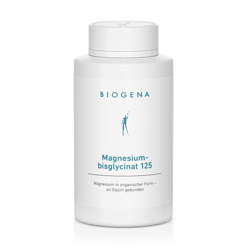
Magnesium bisglycinate 125
06
Side effects of magnesium bisglycinate
Healthy people with normal kidney function who stick to the daily recommendations have nothing to worry about when taking magnesium bisglycinate. If you happen to consume too much of it, your body simply activates a protective mechanism and excretes the excess via your urine. You should only exercise caution if you have a sensitive gastrointestinal tract – in which case your body may react with diarrhoea.
07
Conclusion
Easy to tolerate, practical, soothing. Magnesium bisglycinate offers many beneficial effects. What’s more, your body is exceptionally good at processing this particular form of magnesium and, via the bloodstream, quickly delivers it exactly where it’s needed. People with a sensitive gastrointestinal tract, in particular, should take a closer look at this powerhouse.
:quality(70))
:quality(70))
:quality(70))
:quality(70))
:quality(70))
:quality(70))
:quality(70))
:quality(70))
:quality(70))