

:quality(70))
01
Griffonia seed: what is behind it?
Griffonia simplicifolia is an herbaceous plant native to the tropical regions of West Africa. The seeds of this plant are particularly interesting because they contain high amounts of 5-hydroxytryptophan (5-HTP). This molecule is a precursor of the neurotransmitter serotonin, which plays a crucial role in regulating mood, sleep and appetite.
In traditional West African medicine, griffonia has been used for centuries to treat various ailments. It is particularly valued for its calming effect and its ability to increase well-being. Today, modern research is focusing on the African black bean due to its potential uses in dietary supplements.
02
Griffonia seed extract: valuable ingredients and uses
The Griffonia extract is obtained from the seeds of the plant and is rich in 5-HTP. This molecule is particularly interesting because it can cross the blood-brain barrier. In the brain, 5-HTP is converted into serotonin, which influences various physiological and psychological processes.
Overview of the main ingredients and their effects:
5-hydroxytryptophan (5-HTP): the main component of the extract, responsible for increasing serotonin levels.
Antioxidants: protect cells from oxidative stress and support the immune system.
Griffonia extract has many uses. It is often sold in the form of capsules or tablets and taken as a dietary supplement to promote mental well-being.
03
Griffonia seed benefits and effects: what does 5-hydroxytryptophan help with?
The main effect of griffonia is due to its 5-HTP content. This molecule is a key substance in the metabolic pathway that produces serotonin. A balanced serotonin level is crucial for many physical and psychological functions:
Mood enhancement: A lack of serotonin is often associated with depression, low mood, mood swings and anxiety. 5-HTP can help to stabilise mood and promote well-being, as well as supporting emotional balance.
Pain relief: There is evidence that 5-HTP can help with chronic pain such as migraine or fibromyalgia by reducing pain sensation.
Stress reduction: By boosting serotonin production, griffonia can help to reduce stress and promote inner calm.
Help with weight management: Griffonia can reduce cravings by regulating appetite. Thus, Griffonia can also be used as an adjunctive therapy for obesity.
Improvement in sleep quality: Serotonin plays a crucial role in the sleep-wake cycle. By converting serotonin into melatonin, 5-HTP supports a healthy sleep cycle.
04
Side effects: When should Griffonia not be taken?
If you are taking antidepressants, you must first discuss taking 5-HTP with your therapist. Since 5-HTP affects the serotonin balance, interactions with medication cannot be ruled out. This applies in particular to selective serotonin reuptake inhibitors (SSRI) and other antidepressants. The effect of the antidepressants is increased by 5-HTP. If they are taken at the same time, a serotonin syndrome is possible. In any case, 5-HTP should only be taken under the special supervision of the treating therapist.
The use of griffonia in pregnant and breastfeeding women is not recommended due to a lack of studies.
05
How much 5-hydroxytryptophan should you take?
The optimal dosage of griffonia or 5-HTP depends on the individual situation and the intended use. Generally recommended dosages are:
For mood enhancement: 50-100 mg 5-HTP per day.
For better sleep: 100-200 mg 5-HTP about 30-60 minutes before bedtime.
For appetite control: 50 mg 5-HTP before main meals.
Tips for taking griffonia simplicifolia
Start with a low dose: To test tolerability, you should start with the lowest recommended amount.
Combination with other nutrients: Some supplements combine 5-HTP with magnesium or vitamin B6 to facilitate its conversion into serotonin.
Take with or without food: Griffonia can be taken with or without food, although if you have a sensitive stomach it is advisable to consume it after a meal.
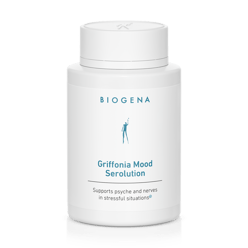
Griffonia 50 Mood Serolution®
:quality(70))
:quality(70))
:quality(70))
:quality(70))
:quality(70))
:quality(70))
:quality(70))
:quality(70))
:quality(70))