

Micronutrients

N-acetyl-L-cysteine (NAC): Benefits for body and mind

Green cacti with wavy edges and brown spines against a clear blue sky.

Lisa Ressi, MSc

18.09.20243 Reading time

N-acetyl-L-cysteine (NAC) is a versatile nutritional supplement with a wide range of health benefits. From supporting the organism to influencing the mind, NAC can contribute to health and well-being in many ways. As with any supplement, however, it is advisable to adjust the intake and dosage individually – in this article you will find all the important information.

01

What is N-acetyl-L-cysteine (NAC)?

N-acetyl-L-cysteine, or NAC for short, is a modified form of the amino acid L-cysteine. This amino acid is an important component of many proteins and is required to synthesise glutathione, one of the strongest antioxidants in the body. Due to its versatile positive effects on the human organism, awareness of N-acetylcysteine has increased considerably in recent years.

02

Benefits of NAC on the organism

The diverse modes of action of NAC can be explained by its role as precursor to glutathione and its direct antioxidant capacity.

Effect as a direct antioxidant

As a precursor to glutathione, NAC helps to strengthen the body’s antioxidant defence system. Glutathione is the most important intracellular antioxidant that neutralises free radicals, protecting cells from oxidative stress. In addition, NAC also acts directly as an antioxidant by intercepting free radicals and minimising their harmful effects on cells and tissues. Through this antioxidant effect, acetylcysteine can help slow the ageing process and reduce the risk of chronic diseases caused by oxidative stress.

Effect as a mucus releaser for lung health

In addition, NAC is often used as a mucolytic agent to support the respiratory tract. It helps to liquefy the mucus in the airways, which makes the mucus easier to cough up. As a result, NAC can have a supportive effect, especially in respiratory diseases such as chronic bronchitis, asthma or COPD. Its antioxidant properties also allow it to alleviate inflammatory processes in the respiratory tract and thus contribute to the improvement of lung function.

Effect on the heart and vessels

NAC can also have a protective effect on the cardiovascular system. By promoting glutathione production, it contributes to the reduction of oxidative stress, a key factor in the development of arteriosclerosis. In addition, NAC has vasodilatory properties that can improve blood flow and regulate blood pressure. Thus N-acetyl-L cysteine helps to reduce the risk of cardiovascular diseases such as high blood pressure and coronary heart disease.

Effect on the immune system

A strong immune system is crucial for defence against pathogens. NAC can strengthen the immune system by increasing glutathione levels in cells and reducing oxidative stress. Glutathione plays a central role in the functioning of the immune cells – in this way NAC can help to strengthen the body’s defences and reduce susceptibility to infections.

Effect on the liver

The liver is the body’s detoxifying organ and plays a key role in the breakdown of pollutants. NAC can promote glutathione production in the liver and thus support detoxification. In addition, NAC can contribute to liver health through its antioxidant and anti-inflammatory effect by protecting cells from damage and promoting regeneration.

Effect on the brain

Oxidative stress and inflammation in the brain are increasingly associated with mental illnesses such as depression, anxiety disorders and impulse control disorders. NAC has shown that it can influence these factors. By increasing glutathione levels in the brain, NAC can help reduce neuronal stress and stabilise mood. Some studies indicate that NAC can play a supportive role when it comes to psychological stress.

03

Intake and dosage of NAC

N-acetylcysteine is available in various forms such as tablets, capsules or powder. BIOGENA offers NAC as capsules – with the new dosage of 350 mg N-acetyl-L cysteine in the usual excellent quality, without binders or other unnecessary additives. The number of capsules was increased from 60 to 180 capsules to allow longer-term use.  

The recommended daily dose is one capsule that should be taken with plenty of fluid.
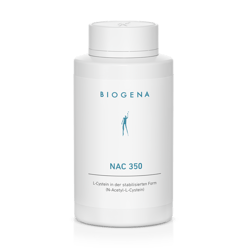
Monopreparation of extremely pure NAC, the stabilised form of the essential amino acid L-cysteine.
NAC 350

NAC 350

€49.90
Our NAC capsules

Lisa Ressi, MSc

Expert in knowledge management & speaker

Lisa Ressi is a certified Health & Care Nurse with a Master's degree in Health Sciences. Her heart has been in micronutrients for over 20 years. During her work as a freelance health and care nurse, she also gained a lot of practical experience with micronutrients. 

Her journey at BIOGENA began in 2014. In addition to her work as a micronutrient consultant at the BIOGENA store in Linz, she has created the Micronutrient Coach® compact course with great commitment and love. She has been a member of the BIOGENA science team since 2022 where she fulfills her great passion for knowledge transfer. True to the motto “Knowledge creates health”, she shares her knowledge in lectures, seminars, podcasts and even contributions in a very practical way with all those who are interested in promoting health and supporting therapy with micronutrients.

FAQs

Frequently Asked Questions (FAQ) about NAC

Further reading:

Baniasadi, S. et al. 2010. Protective effect of N-acetylcysteine on antituberculosis drug-induced hepatotoxicity. Eur J Gastroenterol Hepatol. 22(10):1235-1238.

Breitbart, R et al. 2011. Intraperitoneal N-acetylcysteine for acute iron intoxication in rats. Drug Chem Toxicol. 34(4):429-432.

G. K. Schwalfenberg, et al. 2021. N-Acetylcysteine: A Review of Clinical Usefulness (an Old Drug with New Tricks), Journal of Nutrition and Metabolism.

Gillissen, A. 2011. Anti-Inflammatory Efficacy of N-Acetylcysteine and Therapeutic Usefulness. Pneumologie. 65(9):549-557.

Gröber, U. Mikronährstoffe: Metabolic Tuning – Prävention – Therapie, 3. völlig überarbeitete und erweiterte Auflage. Stuttgart: Wissenschaftliche Verlagsgesellschaft Stuttgart, 2011.

Gröber, U. Orthomolekulare Medizin: Ein Leitfaden für Apotheker und Ärzte, 3. unveränderte Auflage. Stuttgart: Wissenschaftliche Verlagsgesellschaft Stuttgart, 2008.

Kerksick, C., Willoughby, D. 2005. The antioxidant role of glutathione and N-acetylcysteine supplements and exercise-induced oxidative stress. J Int Soc Sports Nutr. 9(2):38-44.

M. Diotallevi, et al. 2017. Glutathione Fine-Tunes the innate immune response toward antiviral pathways in a macrophage cell line independently of its antioxidant properties, Frontiers in Immunology, vol. 8, no. SEP.

Sadowska, A. M., Manuel-Y-Keenoy, B., De Backer, W. A. 2007. Antioxidant and anti-inflammatory efficacy of NAC in the treatment of COPD: discordant in vitro and in vivo dose-effects: a review. Pulm Pharmacol Ther. 20(1):9-22.

Sung, H. J. et al. 2011. N-acetyl cysteine suppresses the foam cell formation that is induced by oxidized low density lipoprotein via regulation of gene expression. Mol Biol Rep. 39(3):3001-3007.

Tenório/Graciliano et al., "N-Acetylcysteine (NAC): Impacts on Human Health", Antioxidants, vol. 10, no. 6, Jun. 2021.

V. Mokhtari, et al. 2017. A Review on Various Uses of N-Acetyl Cysteine, Cell Journal (Yakhteh), vol. 19, no. 1, 4872.

Feel-good News

Everything about supplements, health tips and understandable study results directly from experts.
Show all articles

Sign up for our newsletter and get a €10 voucher

Sign up for our newsletter, receive your personal €10 voucher and look forward to exciting insights into the latest product innovations, giveaways and health tips – so you'll be well accompanied on your journey to well-being.