

:quality(70))
01
What is a micronutrient analysis?
A micronutrient analysis involves specifically testing for vitamins, minerals and trace elements in your blood – in other words, precisely the building blocks that help regulate your energy levels, your immune system and your internal balance.
The result: a personalised nutritional profile that shows you where everything is in the green – and where your body might need a bit of extra support. No more guesswork – just well-founded data.
02
How can micronutrients be measured?
Micronutrients are best measured via a blood test – as this provides the most direct indication of how well your body is actually nourished. As a rule, a small blood sample from a vein is sufficient for this, or – where possible for certain nutrients – a few drops of capillary blood from your fingertip.
In the laboratory, the vitamins, minerals and trace elements relevant to your current state of health are then specifically analysed. Depending on your specific concerns, the analysis can also be tailored to your individual needs – for example, in cases of fatigue, high stress, particular life circumstances or to monitor your supplement intake.
The best bit? You get a clear picture of your personal micronutrient status and can then take targeted action.
03
Micronutrient analysis in whole blood
Do you want to know exactly how well your body is supplied with micronutrients? Then there’s really no getting round a whole-blood analysis.
Unlike conventional tests, which only examine the serum – that is, the liquid part of the blood – a whole-blood analysis scrutinises the entire blood sample, including the cells. And that is precisely what makes it so valuable.
This is because many micronutrients are primarily found in the blood cells – if these aren’t analysed as well, you quickly end up with a distorted picture of the actual situation.
Whole-blood analysis, on the other hand, not only shows you what’s currently circulating in your plasma, but also provides insights into your body’s own nutrient stores. So you don’t just get a fleeting snapshot, but a well-founded picture of your actual nutrient status.
When is a full blood count recommended?
The process of a whole-blood analysis
Blood sample collection: A small amount of venous blood is taken by a healthcare professional – usually at a doctor’s surgery or a diagnostic centre.
Laboratory analysis: The analysis focuses on micronutrients relevant to your individual situation – depending on the specific issue being investigated.
Results: You will receive a detailed laboratory report – often accompanied by recommendations regarding diet or supplementation.
04
Blood analysis of micronutrients using capillary blood
Would you like to keep an eye on certain micronutrients – and preferably from the comfort of your own home? Then capillary blood analysis is just the thing for you.
All it takes is a small amount of blood from your fingertip. The sample collection is simple, quick and virtually painless – ideal for anyone who likes things to be straightforward. Despite the small number of drops, the capillary blood provides valuable insights into selected vitamins, minerals and fatty acids.
What is it suitable for?
Capillary blood analysis is ideal if you want to check specific individual levels – for example, vitamin D in winter, your iron status (ferritin) or the effectiveness of your supplementation.
What can be measured?
Capillary blood analysis is particularly suitable for micronutrients and other health indicators that can be reliably measured in blood plasma – including:
Vitamin D
Ferritin (iron stores)
The capillary blood sampling procedure – here’s how it works:
Testing at home: Using a lancet, you take a few drops of blood from your fingertip and place them on a special dried-blood card.
Posting it in: The sample is securely packaged and sent by post to a certified diagnostic laboratory.
Receiving your results: After a few days, you’ll receive your personalised results – digitally or by post, depending on the provider. Clear, easy to understand – and ready to support you in your next health decisions.
05
Vitamins & minerals: Which levels can be measured?
A blood test can provide you with a lot of valuable information about your micronutrient status – but it doesn’t tell the whole story. This is because not every nutrient can be detected equally well in the blood.
Substances that can be easily measured in the blood include, for example:
Important vitamins such as vitamin D or folic acid
Essential minerals such as calcium and potassium
Selected trace elements such as iron and selenium
However, the following, for example, cannot be measured (accurately) in the blood:
Iodine: Can be detected more reliably via urine
Amino acids & metabolic products: Here, too, urine analyses usually provide clues
Certain enzyme co-factors: Require special testing procedures
06
Carrying out a micronutrient analysis using a blood sample taken at home – is a self-test really possible?
Want to find out more about your micronutrient levels and health indicators with a self-test? It’s really easy to do these days!
A capillary blood test allows you to check selected micronutrients or health indicators from the comfort of your own home. The process is straightforward, quick and virtually painless – ideal for anyone who wants to keep an eye on their health in a flexible and independent way.
Important to note: A self-test provides you with valuable information, but it is no substitute for a comprehensive medical diagnosis. If you’re unsure or wish to clarify any possible symptoms, it’s always advisable to speak to a healthcare professional.
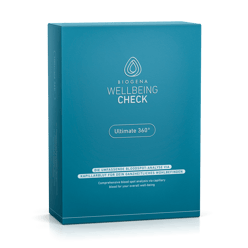
BIOGENA Wellbeing Check Ultimate 360° - Home Blood Test
07
Conclusion
Whether you’re at the surgery or relaxing at home – a micronutrient analysis gives you valuable insights into your individual nutritional status. Just a few drops of blood are enough to show where your body is in balance – and where it might need a little extra support.
:quality(70))
:quality(70))
:quality(70))
:quality(70))
:quality(70))
:quality(70))
:quality(70))
:quality(70))
:quality(70))