

:quality(70))
01
Vitamins for pregnant women: which nutrients are essential during pregnancy
First, the good news: Pregnant women generally don’t need much extra energy, meaning calories. The bad news: Their need for vitamins and minerals increases. Especially folic acid, iodine, iron, omega-3 (or DHA), vitamin C, vitamin D, B-complex vitamins, vitamin A, vitamin E, calcium, zinc, and magnesium are now in high demand.
What does this mean for you? You should still focus on a balanced diet and can also rely on dietary supplements. Especially with folic acid and iodine, it’s almost impossible to fill your stores with the right foods alone. However, always discuss the use of supplements with a doctor beforehand!
The following four vitamins and nutrients are particularly important during pregnancy:
Folic Acid: Without folic acid, there is no new life. This vitamin not only ensures that your cells divide and a baby can grow, but it also helps your uterus and breasts increase in size. It also supports your immune system, fights fatigue, and contributes to normal blood formation.
Iodine: Iodine is essential for the healthy development of your baby – especially your child’s thyroid depends on this substance.
Iron: Both you and your baby need iron for blood formation and oxygen transport. However, whether you should take additional iron must be clarified by a doctor.
Omega-3 / DHA: Omega-3 fatty acids contain a special substance that is crucial for your baby’s brain and vision development: Docosahexaenoic acid (DHA). Especially if you rarely eat fish, you should supplement DHA or omega-3 fatty acids.
02
Additional nutrients for pregnant women: what you shouldn't miss
In addition, the following vitamins and nutrients play a significant role during pregnancy and can be taken as needed:
Vitamin C: This vitamin is necessary for your child to form healthy connective tissue, strong bones, and teeth. Vitamin C also supports iron absorption, strengthens your immune system as an expectant mother, and can help reduce fatigue and exhaustion.
B-complex vitamins: B vitamins are essential for pregnant women. For example, vitamin B12 helps with your baby’s brain and nervous system development, and you need it for red blood cell formation. Vitamin B6, on the other hand, can help alleviate nausea and improve metabolism. Vitamins B1 and B2 are also involved in various energy functions and blood formation.
Vitamin D: Whether for bone health, immune defense, or cell division – vitamin D should not be missing for you and your baby during pregnancy.
Vitamin A: Your baby relies on vitamin A, especially for their lungs, eyes, immune system, and cell and tissue formation.
Vitamin E: Vitamin E is important during pregnancy for cell development and protection from harmful free radicals. It also plays a role in a healthy immune system and can increase fertility.
Calcium: For bones, teeth, but also muscle contraction, heartbeat, and blood clotting, you should have enough calcium in your body.
Zinc: Zinc supports your immune system, metabolism, and cell division and can positively affect fertility.
Magnesium: Magnesium supports muscle and nerve function during pregnancy, fights fatigue and exhaustion, and helps alleviate cramps.
03
Vitamins and nutrients during pregnancy: needs and intake
Here is a list of how much of each vitamin and nutrient is needed during pregnancy and which foods are particularly rich in these essential nutrients:
Vitamin/Nutrient | Daily Requirement During Pregnancy | Natural Sources |
|---|---|---|
Folic Acid | 400–800 µg | Spinach, lamb’s lettuce, eggs, broccoli, whole grains, legumes |
Iodine | 100–150 µg | Saltwater fish, dairy products, iodized table salt |
Iron | 30 mg | Meat, millet, rice, lentils, leafy greens like spinach |
DHA | 200 mg | Fatty fish like salmon, mackerel, herring |
Vitamin C | 105 mg from the 4th month | Berries, citrus fruits, peppers, broccoli, cabbage, spinach, sauerkraut |
Vitamin B1 | 1,2 mg in 2. trimester 1,3 mg in 3. trimester | Whole grains, legumes, nuts, seeds, pork |
Vitamin B2 | 1,3 mg in 2. trimester 1,4 mg in 3. trimester | Dairy products, eggs, leafy greens, almonds |
Vitamin B6 | 1,5 mg in 1. trimester From 2. trimester 1,8 mg | Poultry, fish, potatoes, bananas, chickpeas, avocados |
Vitamin B12 | 4,5 µg | Meat, fish, dairy products, eggs, fortified plant-based milk alternatives |
Vitamin D | 20 µg | Fatty fish like salmon, herring, mackerel, trout, offal, egg yolk, edible mushrooms |
Vitamin A | 800 µg | Carrots, pumpkin, red peppers, lamb’s lettuce, spinach, kale |
Vitamin E | 13 mg | Vegetable oils, nuts and seeds, leafy greens, chickpeas, sweet potatoes, peppers, avocado, kiwi, whole grains, fatty fish like salmon, herring, mackerel |
Calcium | 1000 mg | Dairy products, nuts and seeds, broccoli, kale, kohlrabi, arugula, white beans, nettles |
Zinc | 10 mg | Meat, offal, oysters, dairy products, eggs, fish, spinach, oats, whole grains, legumes, nuts |
Magnesium | 310 mg | Nuts, dark chocolate, spinach, bananas |
What vegetarians or vegans should pay attention to
Do you follow a vegetarian or vegan diet? Then it’s especially important to ensure adequate vitamin B12 and omega-3/DHA intake – and supplement these nutrients if necessary. Vitamin B12, for example, can only be obtained from animal products but is crucial for your baby’s brain development and metabolic processes. DHA, on the other hand, is found in many fish. Your baby’s brain and vision will benefit from it.
04
Best pregnancy supplements from BIOGENA
BIOGENA supports you during pregnancy with a variety of products. You can choose from carefully formulated combination supplements or opt for single supplements to create your own individual set of vitamins and minerals. We also offer vegan products, such as the Multispectrum 24/7® or Nutrifem CalMagOcean®.
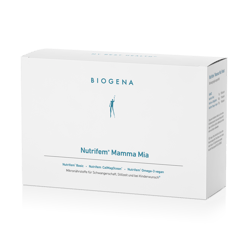
Nutrifem® Mamma Mia Pregnancy Package
05
Preparation for pregnancy: which pre-pregnancy vitamins and minerals are useful
Do you want to become pregnant, but the test hasn’t been positive yet? The key to success is a healthy lifestyle. That means plenty of exercise, a balanced diet, little stress, no nicotine or alcohol. In addition, the right vital nutrients can sometimes be the missing piece to make everything fall into place. Focus on the following vitamins and nutrients to help you get pregnant:
Folic Acid
Vitamin D
Iron, Vitamin B12, Vitamin C, Omega-3 fatty acids, Zinc, and Iodine may also be beneficial.
06
Breastfeeding: important vitamins and nutrients after pregnancy
Hooray – the baby is here! But even after childbirth, when breastfeeding begins, you should keep an eye on your vitamin and mineral intake. You especially need B-vitamins like B12, B2, and folic acid. These support your blood formation, cell division, and various growth processes.
07
Conclusion: A healthy development of mother and baby
Pregnancy is truly special – new life is created in just nine months! But this period can also be challenging. To make sure both you and your baby get through this phase well, ensure that you both have enough vitamins and nutrients. A balanced diet usually provides most of what you need, but sometimes it may be wise to supplement vital nutrients. Discuss this with a doctor to make sure you and your baby are optimally supported.
:quality(70))
:quality(70))
:quality(70))
:quality(70))
:quality(70))
:quality(70))
:quality(70))
:quality(70))
:quality(70))