

:quality(70))
01
What is beta-alanine?
Beta-alanine is a non-essential amino acid which – unlike the classic protein-forming amino acids – does not serve to build proteins. Instead, it combines with histidine in the body to form carnosine, which is found primarily in skeletal muscle, where it helps to buffer excess hydrogen ions (acidity) produced during intense physical activity.
02
Beta-alanine benefits: What does it do in the body?
Especially when your workout gets really demanding and your muscles start to burn, hydrogen ions build up in the muscles. This causes the pH level to drop – an important factor that can contribute to muscle fatigue.
To produce carnosine, a natural buffer in the muscles, the body needs beta-alanine and histidine. Whilst histidine is usually present in sufficient quantities in the muscles, beta-alanine is the limiting factor for carnosine synthesis.
Studies show: Targeted supplementation can increase carnosine levels in the muscles by up to 80 %.
More carnosine in the muscles means: Excess hydrogen ions can be neutralised more effectively, which helps keep the pH level in the muscles stable for longer. This can help to slow down muscle fatigue during intense exercise – particularly during short, high-intensity and explosive training sessions.
Sounds exciting? It certainly is – especially for ambitious athletes who like to push themselves to their limits in training
Beta-alanine in sport – where does it realise its potential?
Athletic performance & muscle fatigue
As your workout gets more intense, you’ll see what you’re really made of. Whether it’s sprinting, HIIT or strength training: beta-alanine can help delay muscle fatigue, particularly during exercise sessions lasting between 1 and 4 minutes.
In short: you’ll keep performing at your best – exactly when you need to.
Endurance sports & team sports
Running, cycling, football, hockey – wherever rapid changes in exertion are required, beta-alanine really comes into its own. Studies show that after just four weeks of regular intake, carnosine levels rise noticeably – with a positive effect on endurance and the point of exhaustion.
Muscle building & body composition
Beta-alanine isn’t a miracle muscle-building supplement – but it does offer a real training benefit. After all, if you can keep going for longer, you’ll manage more repetitions, more volume and greater stimulus. And it is precisely this stimulus that can contribute to muscle growth in the long term.
Beta-alanine for women
Whether it’s functional training, interval training or traditional strength training – beta-alanine can also be a valuable aid for women who are active in sport. After all, its effects are not dependent on gender.
Other areas of application
What about brain function, sexual performance or blood pressure? Rumours about beta-alanine keep doing the rounds. But one thing is clear at present: the scientific focus is on its benefits for sport.
Whilst there are initial indications of antioxidant properties, there are as yet no reliable studies on other areas of effect.
03
Are there any undesirable side effects?
Beta-alanine is generally considered to be well tolerated. Higher single doses may cause a harmless tingling sensation on the skin – known as paraesthesia. This effect is harmless and usually disappears after a few minutes.
Tip: If you’d prefer to avoid the tingling sensation, there’s a simple trick: split your daily dose into smaller portions. This can significantly improve tolerability.
Very rarely, taking it on an empty stomach can trigger gastrointestinal symptoms such as nausea or diarrhoea.
And what’s the truth behind the rumours about beta-alanine causing hair loss, which crop up online from time to time? Good news: there’s no scientific evidence to suggest a link.
04
Sources: Which foods contain beta-alanine?
Beta-alanine is found naturally mainly in animal-based foods such as chicken, beef or fish. Those who follow a vegetarian or vegan diet usually consume significantly less of it – simply because plant-based sources provide hardly any bioavailable beta-alanine.
Targeted supplementation can therefore be particularly beneficial for people on a plant-based diet – especially if regular exercise is part of their routine.
05
Usage: How to take beta-alanine and the recommended dosage
Whether you want to make your next workout even more effective or simply get more out of your training – beta-alanine can help you achieve this. Provided, of course, that you take it regularly and correctly. We’ll show you what’s important.
How do you take beta-alanine?
Beta-alanine should be taken regularly and with plenty of fluid. To improve tolerability, it is advisable to divide the daily dose into several small portions and take these with meals.
And what about the form of administration? Whether you prefer capsules or powder is up to you – what matters is the quality. Pure, premium products without unnecessary additives are the best choice here.
Particularly handy: combination supplements that combine beta-alanine with creatine and functional peptides. This allows you to support your body comprehensively – and exactly when performance is required.
When should you take beta-alanine?
Whether in the morning, at lunchtime or in the evening: the exact time is of secondary importance. What matters far more istaking it regularly. Ideally, beta-alanine should be taken with meals, and the daily dose should be spread over two to three servings. This promotes a steady build-up of carnosine and, at the same time, helps ensure better tolerability.
How much beta-alanine per day?
The recommended daily dose is 3 to 6 grams. If you’re just starting out, feel free to begin with a lower amount – and increase it gradually. This will give your body a chance to get used to taking it.
Did you know?
The active ingredient TriBsyn™ used in our BIOGENA SPORTS Power³ Hybrid is an innovative form of beta-alanine featuring patented Hydro-Oleo technology. This means that, unlike conventional beta-alanine, TriBsyn™ is released in a controlled manner. This results in a more consistent absorption rate, which not only improves tolerability but also leads to more than four times the bioavailability. Consequently, a significantly lower dose is required to achieve a comparable intake than with conventional beta-alanine. Furthermore, the tingling sensation (paraesthesia) typical of conventional beta-alanine is significantly reduced thanks to the controlled release.
When does beta-alanine take effect?
This is where patience is key: the full effect doesn’t kick in overnight. It usually takes 2 to 4 weeks for your carnosine stores to be sufficiently replenished – and for you to feel what you’re capable of during intense training sessions.
Can you take beta-alanine long-term?
Yes – provided the recommended dosage is followed, beta-alanine is well tolerated even over longer periods. Studies show: Even after 12 weeks of continuous use, no adverse effects were observed.
Important when choosing a product: Look for certified quality – ideally from brands listed on the Cologne List®. That way, you’re not only prioritising performance, but also safety.
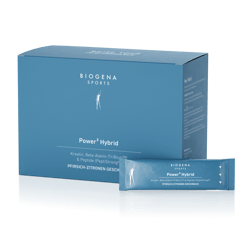
Power³ Hybrid
06
Conclusion: Beta-alanine - Your extra boost for better performance
Whether on tthe field, court, in the gym or out on the running track – if you want to get more out of your training, beta-alanine can be a useful supplement. It helps your muscles stay powerful for longer – making your workout even more effective.
The effects don’t happen overnight. But if you stick with it consistently, you’ll reap the benefits in the long term. Particularly effective: combining it with creatine and peptides.
For everyone who wants more. For everyone who sticks with it. For a better you.
:quality(70))
:quality(70))
:quality(70))
:quality(70))
:quality(70))
:quality(70))
:quality(70))
:quality(70))
:quality(70))