

:quality(70))
01
What is turmeric?
Turmeric or Curcuma (Curcuma longa) is a ginger cultivar known as the yellow root, saffron root, or turmeric. This herbaceous plant loves warm, moist locations, can reach growth heights of up to one meter, and, with its turtle-shaped leaves, is slightly reminiscent of a banana plant. But their true size is underground. Like ginger, turmeric has underground shoots, so-called rhizomes (rootstock). This stores a lot of botanicals, including the coloring curcuminoids (up to 5%) and a special essential oil (up to 6%), which mainly consists of zingiber, turmerones, and curcumin. The peeled side shoots of the rhizome are also part of the plant that is mainly used as a food supplement, spice, or dye.
02
Is tumeric healthy?
Turmeric is a spice that doesn’t just make our diet taste and look more interesting. Its inner values are also highly sought after. Essential oils, resins, curcumin, and other related compounds (curcuminoids) enrich our diet with a very exciting mix of plant-specific substances. The curcuminoids in the formula not only give the rhizome its bright orange color, but they have also been among the most intensively researched natural substances in recent decades.
03
Turmeric and its effect: What is turmeric good for?
Curcuma longa not only brings spice and colour to life, but it can also benefit our bodies. Thus, the plant can support the function of our defences at an immunological level and contribute to the maintenance of a normal immune defence. In addition, Curcuma longa can also support the functions of nerves and the liver and contribute to fat digestion.
04
Turmeric as a nutritional supplement
Why does it make sense to consume turmeric as a dietary supplement?
If you want to take turmeric not as a spice, but because of its beneficial effects, you should use high-quality products from trustworthy providers. Ideally, these have been checked for their quality and pollutant exposure, as well as standardised for their curcumin/curcuminoid content.
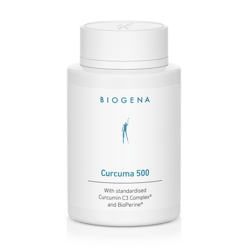
Turmeric 500 mg
Dosage forms: Capsules, extract, powder or drops?
Capsules, powder, drops, etc. – consumers are spoilt for choice when it comes to turmeric. If you want to take turmeric for a longer period of time, you should use high-quality capsule preparations with quality turmeric extract tested for harmful substances. The encapsulation allows for precise dosing.
05
Turmeric – Dosage & Use
How much turmeric per day?
Special Curcuma longa extract preparations should only be used briefly – over a few days to weeks. The special extract used by BIOGENA, Curcumin C3 Complex®, was classified as safe up to 1.755 g daily (= GRAS status).
How to take turmeric
Turmeric should ideally be taken with meals because the curcumin contained in it is fat-soluble and can be optimally used in conjunction with fat.
Why take turmeric with pepper?
The combination with black pepper can increase the absorption rate of the contained turmeric many times over. The pungent spice piperin, which acts as a type of enhancer, is the reason for this
Can you take turmeric during pregnancy and breastfeeding?
Pregnant and breastfeeding mothers should refrain from supplementing with turmeric, as there is still no detailed scientific data available on this.
Conclusion: Turmeric is a star in traditional Indian cuisine and herbal theory. The traditional plant has also become very popular in Europe, enriching our diet with a wide range of interesting ingredients. A lot of research is still being carried out by science, but one effect remains undisputed: turmeric with its curcuminoids provides a strong and persistently sunny yellow.
Literature with the author
:quality(70))
:quality(70))
:quality(70))
:quality(70))
:quality(70))
:quality(70))
:quality(70))
:quality(70))
:quality(70))