

:quality(70))
01
How does glutamine help with muscle building?
L-glutamine is the most abundant free amino acid in the human body. A large proportion is found in the skeletal muscles, where glutamine is involved in numerous processes of muscle metabolism. Furthermore, the amino acid serves as an important source of energy for, amongst others, intestinal and immune cells, and plays a key role in nitrogen transport.
These properties make glutamine particularly interesting from a biological perspective. Indeed, cell and animal studies show that the amino acid influences signalling pathways associated with muscle growth and muscle regeneration. These include, amongst others, mTOR-dependent processes* as well as mechanisms involved in the activation of satellite cells** and the adaptation of muscle tissue to training stimuli.
*Processes that promote muscle growth.
**Muscle stem cells that support muscle growth and muscle recovery.
The crucial question, however, is: Can these findings be applied to humans?
Based on the current state of research, the answer is rather cautious. Several human studies have failed to demonstrate any additional effect of glutamine supplementation on muscle mass or strength development compared with a placebo in healthy adults who undertake strength training and have an adequate protein intake. Recent systematic reviews also rate the evidence for a direct influence on muscle growth as a whole as weak.
However, this does not mean that glutamine plays no role for ambitious athletes. Instead, research is increasingly focusing on recovery following intense exercise.
02
Findings from studies on L-glutamine for muscle growth
When it comes to muscle building, the current body of research on L-glutamine does not paint a clear picture. The findings are significantly more consistent in the area of recovery.
In several placebo-controlled studies, the following observations, amongst others, were reported following eccentric strength training:
less loss of strength in the days following exercise
faster recovery of muscle strength
in some cases, reduced muscle soreness
in isolated cases, lower levels of markers of muscle damage in the blood
Studies involving elite and team athletes also suggest that glutamine may be associated with faster functional recovery following intensive training phases. However, no clear benefit for long-term strength gains or muscle growth has yet been established from this.
The current body of research can be summarised as follows:
Direct muscle growth: To date, there is no convincing evidence in healthy, training adults.
Recovery after intense exercise: Studies more frequently provide positive indications in this area.
Biological mechanisms: Scientifically plausible, but so far only confirmed to a limited extent by human studies.
Particularly when training volumes are high, good recovery is a key factor in being able to complete training sessions consistently. However, research has yet to show whether this results in indirect long-term benefits for muscle growth.
03
Why glutamine may be of interest during intensive training
Intense training sessions place demands not only on the muscles, but on the entire body.Particularly during very high-intensity or prolonged physical exertion, the demand for glutamine in various tissues increases, which can cause blood levels to drop temporarily.
This is precisely why glutamine has been the subject of intensive research for many years – particularly in competitive and ambitious recreational sport. Today, the focus is less on whether glutamine supports muscle growth and more on the role this amino acid can play during periods of intense training.
Nevertheless, the basics remain crucial for successful muscle growth:
progressive strength training
an adequate intake of energy and protein
sufficient sleep
adequate recovery
Glutamine can complement this foundation – but it cannot replace it.
04
Glutamine supplementation: Tips for athletes
If you wish to take glutamine supplements, it is often recommended to do so around intensive training sessions. However, as studies have examined different intake protocols, it is not currently possible to determine an optimal time to take it.
In practice, glutamine is often recommended immediately after training or in the morning on non-training days on an empty stomach.
Pre-measured single portions are particularly convenient, as they can be easily incorporated into your daily training routine.
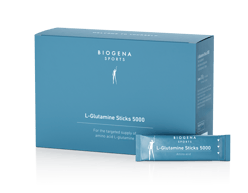
L-Glutamine Sticks 5000
05
Conclusion
L-glutamine is one of the most important amino acids in the human body and is involved in numerous metabolic processes. However, current human research does not provide convincing evidence that supplementation directly improves muscle growth in healthy, active adults.
The evidence from studies in the area of recovery is considerably more interesting. Several studies suggest potential benefits following intense exercise, even though the evidence as a whole is not yet conclusive.
If you want to build muscle mass in the long term, the basics remain crucial: a structured strength training programme, an adequate protein intake, a balanced diet and sufficient recovery. Glutamine can usefully complement this foundation – but it cannot replace it.
:quality(70))
:quality(70))
:quality(70))
:quality(70))
:quality(70))
:quality(70))
:quality(70))
:quality(70))
:quality(70))