

:quality(70))
01
What is stress?
The term stress was coined by the father of modern stress research, the Hungarian-Canadian physician Hans Selye. Selye defined stress as an ‘unspecific reaction of the body with which it reacts to its environment and to the demands placed on it’. Demands in themselves are not bad. They can spur us on to peak performance and help us grow. Consequently, a life completely free of stress and challenges is undesirable. We would miss out on the spice of life in the form of positive stress (eustress), the inner drive and the breeding ground for personal growth and a sense of achievement.
‘Life is like riding a bike: to keep your balance, you have to keep moving.’
02
Chronic stress: when stress becomes a problem
If stress is the spice of life, why do so many people suffer noticeably from stress and its consequences? As with many things in life, when it comes to stress, it depends on the dose. While short-term stress can be inspiring (e.g. in exam situations), chronic stress means that the much-needed recovery phases are missing. When an external or internal stimulus is perceived as unpleasant or when you feel that you are unable to meet a particular challenge, then this is stress in its negative form (distress), which can have a negative impact on our physical and mental health. It is not for nothing that we say: ‘The stress is getting to me’, ‘This is maddening’ or ‘I'll have to digest that first’.
03
Stress models and types of stress
Not all stress is the same. Scientists distinguish between different types of stress, which have different effects on our body and mind:
Eustress vs. distress
Eustress (positive stress) motivates and energises us. It helps us to overcome challenges and to surpass ourselves. Examples include an upcoming promotion, an exciting project or an important competition.
Distress (negative stress), on the other hand, overwhelms us and can make us ill. It arises when we feel that we cannot cope with demands and have no coping strategies available.
Dimensions of stress
Emotional stress: Arises from interpersonal conflicts, relationship issues or emotional overload.
Mental stress: Results from cognitive strain such as information overload, complex decision-making situations or pressure to perform.
Physical stress: Is triggered by physical factors such as lack of sleep, illness or intense physical exertion.
This differentiated view helps us to understand that stress is more than just an unpleasant burden – it can also be an important catalyst for growth and development.
04
Typical symptoms of chronic stress:
But how can unhealthy stress be recognised? The following symptoms can provide clues:
Restlessness, tension
Anxiety
Irritability, anger
Mood swings, bad moods
Depression
Concentration problems
Fears
Dissatisfaction
Muscle tension, tension headaches
Skin rashes
05
The stress response: a survival programme in the age of the performance-oriented society
Stress is not a new phenomenon. Since the beginning of time, our inborn protective mechanism has prepared us for survival in dangerous and stressful situations. However, while our ancestors were faced with life-or-death situations, today we are stressed by other things: financial worries, deadlines or fear of failure. The survival programme works the same way today as it did back then: when a stress factor (stressor) impacts the body, stress hormones are released and the entire organism is mobilised against the ‘impending danger’. While systems that can be neglected in the short term – such as libido, the immune system or digestion – are shut down, other systems are put into a state of readiness for flight or fight: breathing quickens, pulse and blood pressure rise, muscle tone and blood flow increase, while blood coagulates faster in preparation for possible injuries.
06
The biochemical stress process: what happens in the body
When we experience stress, our body undergoes a complex biochemical process that ensures our ability to survive:
The three phases of the stress response (Hans Selye's stress model)
1. Alarm phase:
Stress hormones are released immediately (adrenaline and noradrenaline)
Sympathetic nervous system is activated
Heart rate and blood pressure increase
Energy for flight or fight is provided
2. Resistance Phase:
Persistent cortisol production
Mobilisation of energy reserves
The body's attempt to adapt to the stressful situation
Increased alertness and performance
3. Exhaustion phase:
If the stress continues, the body's resources are depleted
Immune system is weakened
Increased risk of mental and physical illness
These biochemical processes explain why chronic stress can be so dangerous to our health.
07
Does everyone feel stress the same way?
While the physiological stress reactions are the same for everyone, everyone perceives stress differently. While some are already saying, ‘I can't take any more,’ people with high stress resilience are holding the fort. These resilient individuals can withstand even severe stress and recover from its negative effects comparatively quickly.
08
Causes of stress: What triggers stress?
Even though each of us has an individual perception of stress, there are certain stressors that trigger the stress hormones of most of us. Typical stressors include:
09
Health consequences of chronic stress
While short-term stress does not harm our body, chronic stress can have devastating effects:
Physical effects
Cardiovascular diseases: increased risk of high blood pressure and heart attack
Digestive disorders: gastrointestinal problems, irritable bowel syndrome
Weakened immune system: increased susceptibility to infections
Hormonal disorders: impaired metabolism
Chronic pain: tension, headaches
Mental effects
Development of depression
Anxiety disorders
Burnout syndrome
Concentration and memory disorders
Sleep disorders
Psychosocial effects
Relationship problems
Loss of performance at work
Social isolation
Decreased self-esteem
Conclusion: Stress is a complex phenomenon that affects each person differently. What is important is not to avoid stress completely, but to deal with it in the right way. With knowledge about stressors, warning signs and coping strategies, we can learn to manage stress and use its positive aspects while protecting ourselves from the negative effects.
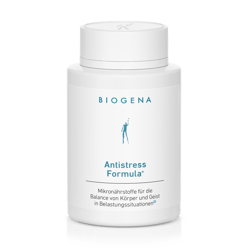
Antistress Formula®
:quality(70))
:quality(70))
:quality(70))
:quality(70))
:quality(70))
:quality(70))
:quality(70))
:quality(70))
:quality(70))