

:quality(70))
01
Liposomal technology explained briefly
To help you understand the definition of ‘liposomal’, let’s take a slight detour and first look at the postal and logistics sector. In this sector, parcels have long since replaced letters as the most important item of mail. The catch is that many of the goods being sent are extremely fragile. The solution: a protective layer, such as bubble wrap, is applied. This ensures the inside of the parcel is optimally protected and the valuable contents arrive at the recipient undamaged. Liposomal technology works in a similar way. It involves a fat-based shell that encapsulates nutrients, ensuring they reach their intended destination in the body safely and can take effect there. These tiny fat vesicles, which resemble cell membranes, are also known as liposomes. ‘Liposomal’ therefore means that a nutrient is surrounded by a protective shell – a technology suitable for a wide range of active ingredients.
A liposome, in turn, consists of phospholipids. These lipids are not only a component of many dietary supplements, but also the main building blocks of your body’s own cell membranes. It's therefore the same layer of fat that we carry within us, which means the body knows exactly how to handle it. These membranes or shells are crucial because, on the one hand, they clearly separate the interior of a cell from its surroundings and, on the other hand, ensure the exchange of substances between individual cells.
Some substances pass through this membrane without external assistance, whilst others rely on little helpers such as vesicles. These components can be described as the body’s own equivalent of liposomes. They are formed when small sections of the cell membrane are pinched off, causing a separate mini-cell to develop. This can then move freely, make contact with a cell membrane and fuse with it, allowing the contents to enter the cell. In this way, complex uptake mechanisms can be bypassed, increasing bioavailability. Unlike vesicles, liposomes consist of multiple lipid bilayers and are therefore a special form of vesicle.
02
Advantages of liposomes
Products that utilise liposomal technology offer many advantages. The most important of these include:
Excellent absorption: Active ingredients protected by a liposomal coating are optimally absorbed by the body and offer higher bioavailability.
High tolerability: Liposomal products are very well tolerated.
Easy to take: The coating around the active ingredients shields them from aggressive stomach acid. Many liposomal products can therefore also be taken with food.
Liquid form: Liposomal products are available in liquid form. This is particularly beneficial for people who rely on various dietary supplements, as it means they need to take a few fewer capsules.
03
Liposomes – cleverly packaged, but are they stable too?
Liposomal supplements are therefore considered genuine bioavailability boosters, but be warned: liposomes are extremely delicate. Heat, light or incorrect storage can destroy their structure – and thus negate their benefits. If liposomes break down prematurely, the benefits are lost before the body has even had a chance to benefit from them.
That’s why the rule is: quality comes first. Put your trust in manufacturers who don’t just advertise with fancy terms, but also carefully test their liposomal products for stability. That way, you can be sure that everything your body really needs is there – and exactly where it’s supposed to be.
04
Which active ingredients are suitable for the liposomal process?
The liposomal process can be used for both fat-soluble and water-soluble substances – although fat-soluble components are generally more suitable than water-soluble ones.
Liposomal technology is particularly useful when the active ingredient to be delivered would otherwise be poorly absorbed by the human body. In such cases, the liposomal shell ensures that your body can utilise the substance very effectively, even if it is not taken with a meal.
Liposomal products also excel in terms of high bioavailability – and are therefore particularly suitable for antioxidants, such as the water-soluble B vitamins or the essential vitamin C.
05
Liposomes in supplements
Researchers and manufacturers are now also turning to liposomal technology for a range of dietary supplements. The micronutrients are thus safely encapsulated, reach their destination quickly, fuse perfectly with the relevant cell and are easily absorbed by the body. The only drawback is that liposomal products cannot contain as many different substances as their counterparts in capsule or powder form, and you should bear in mind their shorter shelf life.
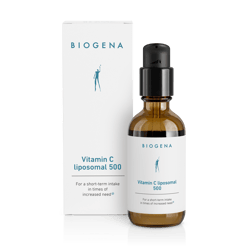
Vitamin C liposomal 500
06
Conclusion: Liposomal technology is here to stay and is suitable for many active ingredients
Anyone who wants to look after their body, is interested in supplements and places great importance on bioavailability can benefit from liposomal products. Although this technology is more complex, it provides more reliable protection for the active ingredient against digestive enzymes and other barriers on its way to the cell nucleus, thereby ensuring that it's absorbed by the body as effectively as possible.
:quality(70))
:quality(70))
:quality(70))
:quality(70))
:quality(70))
:quality(70))
:quality(70))
:quality(70))
:quality(70))