

:quality(70))
01
Not all fats are equal. In fact, the quality, composition and ratio of the fatty acids we ingest play a crucial role.
Particular focus should be placed on the two essential omega-3 fatty acids DHA* and EPA**, which are found mainly in fatty cold-water fish – our body needs these fatty acids to keep any number of processes running smoothly. Yet it is precisely these substances – DHA, EPA and the omega-3 variant ALA*** found in certain vegetable oils – that are frequently lacking in our diet, an observation borne out by two recent studies.
A good supply of omega-3 is important at every stage of life: DHA and EPA play a key role in maintaining our vitality long before we are born and well into old age. They promote normal heart function and help maintain normal blood pressure and healthy triglyceride levels. DHA also helps maintain normal vision and brain function. For mothers, upping your intake of DHA during pregnancy and breastfeeding has enormous benefits for your child, as it supports normal brain and eye development in the fetus and breastfed child.
But how much omega-3 do we actually consume? This question has now been addressed by a group of French researchers. Using the latest data on food consumption in France, they examined the dietary lipid intake of 28 pregnant and nursing women in France and compared it with that of 742 non-pregnant women of childbearing age. The analysis showed that none of the pregnant women or nursing mothers met the recommended daily intake of omega-3, some of them even falling short of the recommended levels by a factor of four (ALA) to ten (DHA). The control group of non-pregnant women showed very similar results.
A second study has also produced some interesting findings. This too was based on data from the French food consumption survey, but this time the subjects were children and adolescents. While total lipid and omega-6 intake was close to the recommended levels, the figures for EPA, DHA and vegetable ALA painted a very different picture: 80% of three to ten-year-olds and up to 90% of 11 to 17-year-olds consumed too little of these essential fatty acids.
02
Take omega-3 deficiencies to heart!
The good news is: getting enough omega-3 fatty acids is both easy and delicious! Significant amounts of EPA and DHA are present in high-fat cold-water fish such as mackerel, herring or trout. For people who don't like fish, other options include nuts, seeds and certain vegetable oils such as linseed oil, hemp oil or camelina oil. These are natural sources of the vegetable omega-3 fatty acid ALA, which can, to a small extent, be converted by the body into EPA or DHA. In addition to a balanced diet, taking high-quality omega-3 supplements can also help you meet the recommended levels
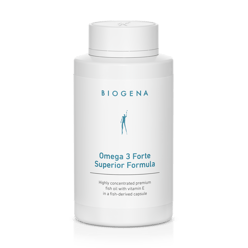
Omega 3 Forte Superior Formula
* DHA: docosahexaenoic acid
** EPA: eicosapentaenoic acid
*** ALA: alpha-Linolenic acid
:quality(70))