

Anti-aging supplements
Over time, our skin changes—it loses moisture, elasticity, and sometimes that natural glow. But there’s good news: Anti-aging supplements can support your skin from the inside out—for a fresher look and a healthy radiance that shines through.
Filters & Sorting
- Vegan
Biogena AESTHETICS
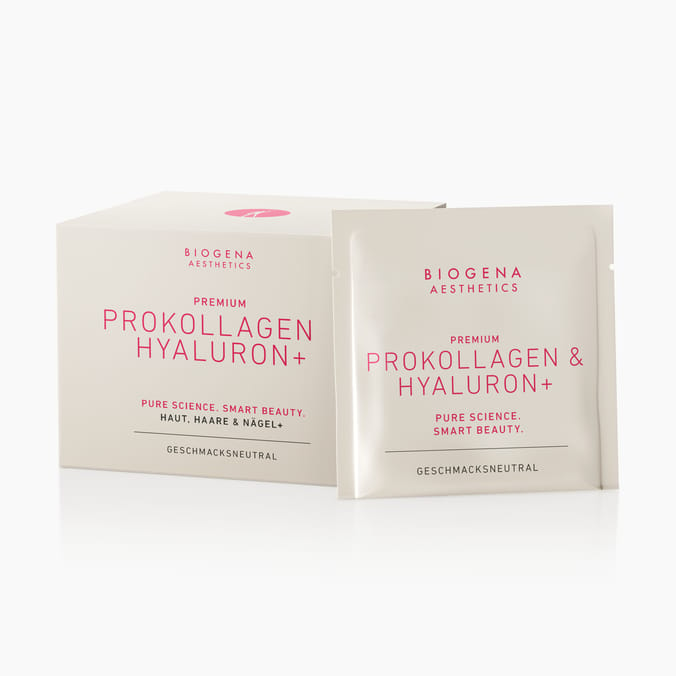
ProCollagen & Hyaluronic Acid+ NeutralVegan ProCollagen drink with GREENIURONIC® hyaluronic acid. Neutral in taste, for every moment.
€34.90 - Vegan
Biogena AESTHETICS
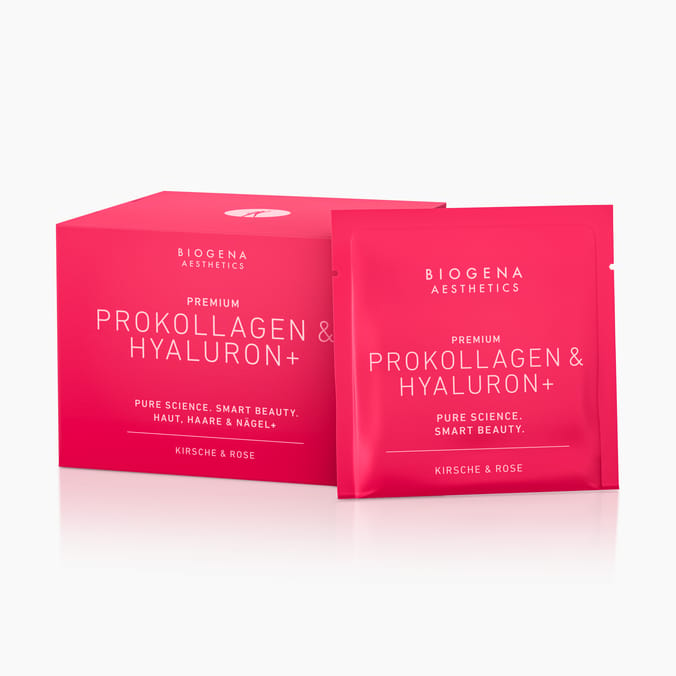
Premium ProCollagen & Hyaluron+Vegan collagen drink for your daily beauty routine
€34.90 - Bestseller
Biogena AESTHETICS
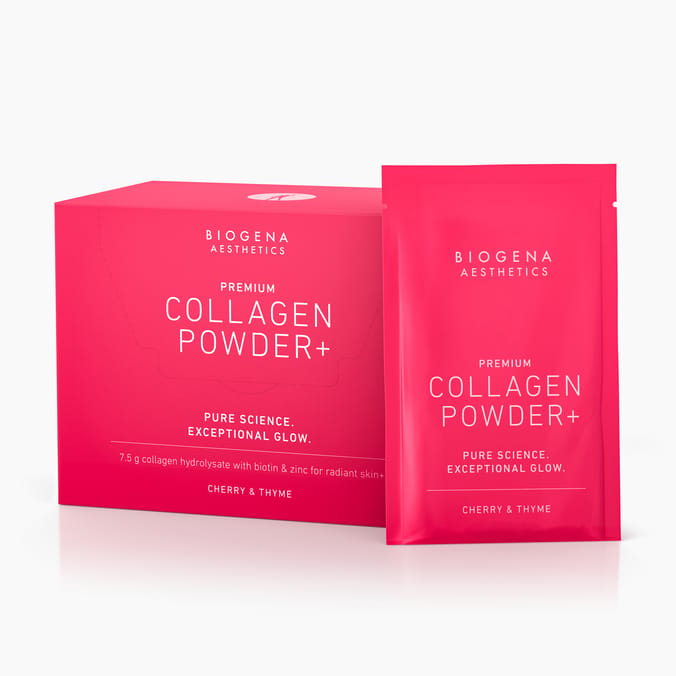
Marine Collagen Powder+Premium marine collagen powder with Naticol® and natural cherry-thyme flavour
€34.90 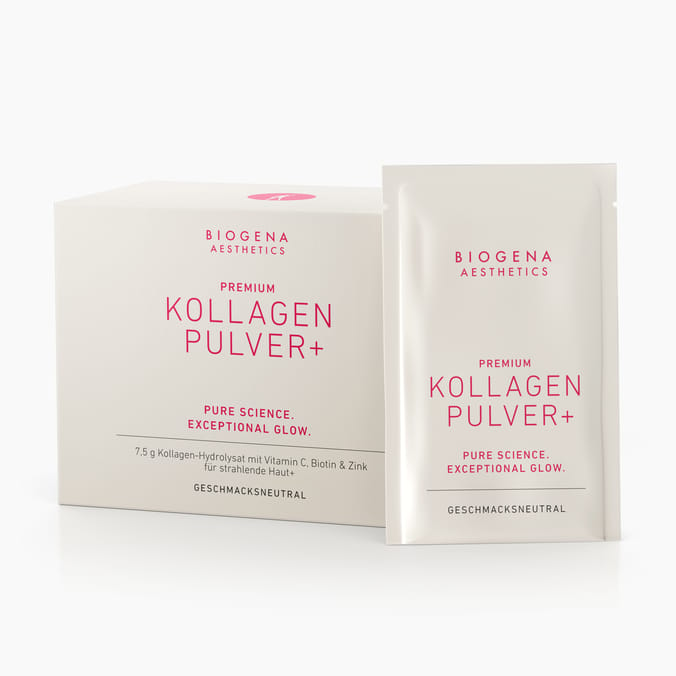
Biogena AESTHETICS
Marine Collagen Powder+ NeutralUnflavoured Collagen Powder – with Biotin & Zinc to Support Beautiful Skin*
€34.90
Biogena AESTHETICS
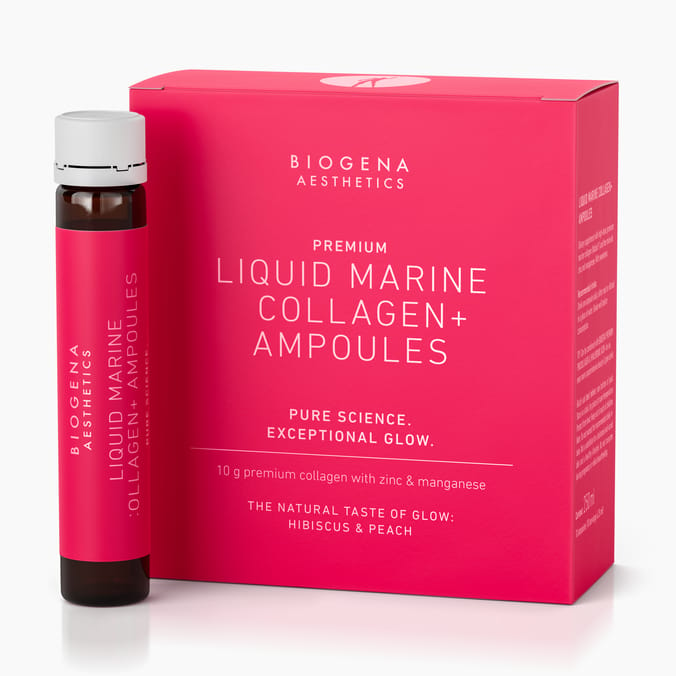
Liquid Marine Collagen+ Ampoules 10 gLiquid collagen shot with zinc & manganese
€39.90- Vegan
Biogena AESTHETICS
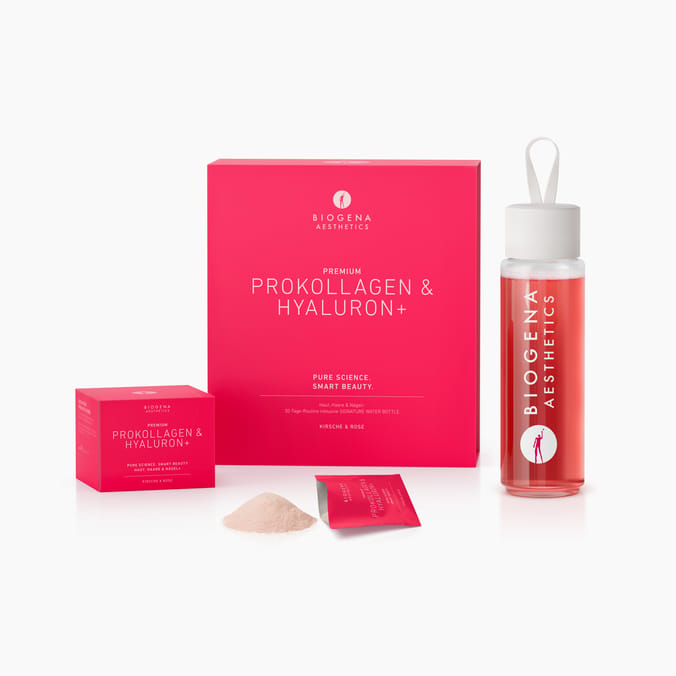
ProCollagen & Hyaluronic Acid+ Starter BundleThe vegan premium ProCollagen + Hyaluron+ Starter Bundle for your 30-day glow – with cherry-rose flavour.
€79.90 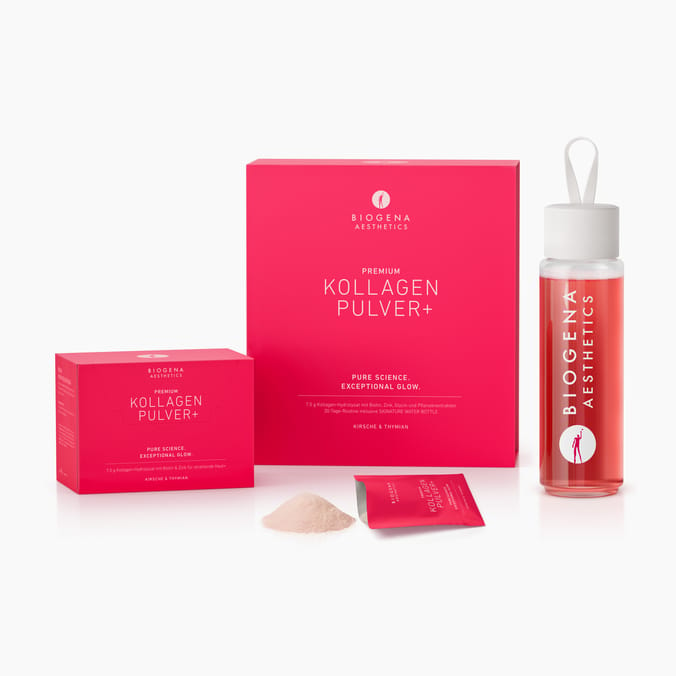
Biogena AESTHETICS
Collagen Powder+ Starter BundleMonthly supply of premium NATICOL® collagen with 7.5 g marine collagen per serving, including our signature bottle.
€79.90
Kategorie
Anti-aging from within: Which vitamins, minerals & more can really help with wrinkles?
Collagen – the gold standard in anti-aging
High-quality anti-aging supplements often start with collagen hydrolysate—a specially broken-down form of protein that provides your skin with essential building blocks. These collagen peptides can support your body’s own production of collagen and hyaluronic acid—two key elements for skin elasticity, hydration, and firmness.
Studies show: taking collagen hydrolysate daily over at least eight weeks can positively impact skin moisture and elasticity. And here's something interesting—where your collagen comes from matters. Marine collagen, especially from fish, showed particularly promising results for skin hydration.
Hyaluronic acid – hydration meets glow
Yes, your body actually produces hyaluronic acid on its own! This gel-like molecule stores moisture and helps keep your skin firm and supple. But with age, production slows down—skin becomes drier and loses its bounce.
The good news? You can support your skin both inside and out. While skincare products act on the surface, capsules and drinks work from within—long-lasting and backed by science. So why not double down on moisture?
Elastin – your skin’s underrated structure hero
Elastin is another crucial skin protein—alongside collagen and hyaluronic acid, it helps maintain firmness, flexibility, and a smooth surface. This trio acts like a dream team against the visible signs of aging.
But over time, stressors like UV rays, oxidative stress, and poor lifestyle habits can weaken elastin. The result? Less elasticity, more wrinkles, and a skin texture that feels different. The good news: you can support your elastin levels—like with OVODERM®, an innovative eggshell membrane extract found in our collagen complex. It’s even vegetarian-friendly and backed by more than 20 studies.
Vitamin C – your beauty booster with immune power
Vitamin C does more than support your immune system—it’s also key for skin health. As a co-factor in collagen production, it’s vital for elasticity and structure. Without enough of it, your skin can’t build a strong foundation. If you're thinking long-term skin health, vitamin C is a must-have.
Zinc – the small-but-mighty mineral for healthy aging
Zinc works right where fresh skin begins: in cell division and the formation of new tissue. It also binds free radicals as an antioxidant and supports the production of both keratin and collagen—key for elasticity and skin renewal. Put simply: no zinc, no glow.
Coenzyme Q10 as Ubiquinol – your inner skin shield
You might know coenzyme Q10 from face creams—but its real magic happens inside your cells. Especially in its active form, ubiquinol, Q10 becomes a true beauty booster. No need for your body to convert it—it’s ready to go.
Q10 lives deep in your skin cells and even in your lipid layer, where it teams up with other antioxidants to protect your skin from oxidative stress. At the same time, Q10 plays a vital role in the mitochondria—your cellular energy centers. More energy equals more vitality—and it shows in your skin.
As we age, natural Q10 production declines. And yes—you can see and feel that difference.
Vitamin E – your cellular bodyguard with skin benefits
Sun exposure, pollution, environmental stress—vitamin E helps your cells stand strong. It defends against oxidative stress, helps prevent light-induced damage, and strengthens the skin barrier. Plus, it locks in moisture and supports resilience from within.
Polyphenols – plant-based power for your skin
Found in pomegranate, grape seeds, and other plant sources, polyphenols are the unsung heroes of skin health. These powerful antioxidants help neutralize free radicals—the same troublemakers that break down collagen and elastin.
That’s why polyphenols are your skin’s natural defense in the daily anti-aging game. Gentle, plant-based, and smart—which is exactly why they’re part of our BIOGENA AESTHETICS range.
Ceramides – your skin barrier’s best friend
Why are ceramides so important in anti-aging? Simple: a strong skin barrier keeps moisture in. And moisture loss is one of the key reasons skin becomes dry, rough, and less elastic with age.
Ceramides help lock in hydration, smooth out skin texture, and reduce the appearance of fine lines. Your skin will thank you—with softness you can see and feel.
Are anti-aging supplements better than regular creams?
Why choose when the real magic lies in combining both? Skincare from the outside and micronutrients from within make a powerful team—and that’s the real difference-maker.
Sure, aging is natural. But you can shape how gracefully it shows. With thoughtfully chosen skincare and targeted nutrients, you can support your skin from every angle. It’s not about shortcuts—it’s about synergy. And your skin? It’ll show the difference.
FAQs
Frequently asked questions
Further reading
Sibilla, S. et al. 2015. An Overview of the Beneficial Effects of Hydrolysed Collagen as a Nutraceutical on Skin Properties: Scientific Background and Clinical Studies. Open Nutraceuticals J. 8:29–42.
Pu, S.-Y. et al. 2023. Effects of Oral Collagen for Skin Anti-Aging: A Systematic Review and Meta-Analysis. Nutrients. 15(9):2080. https://pubmed.ncbi.nlm.nih.gov/37432180/
Kammeyer, A., Luiten, R. M. 2015. Oxidation events and skin aging. Ageing Res Rev. 21:16–29. https://pubmed.ncbi.nlm.nih.gov/25653189/
Asserin, J. et al. 2015. The effect of oral collagen peptide supplementation on skin moisture and the dermal collagen network: evidence from an ex vivo model and randomized, placebo-controlled clinical trials. J Cosmet Dermatol. 14(4):291–301. https://pubmed.ncbi.nlm.nih.gov/26362110/
Kawada C et al. 2015. Ingestion of hyaluronans (molecular weights 800 k and 300 k) improves dry skin conditions: a randomized, double blind, controlled study. J Clin Biochem Nutr. 56(1):66-73. https://pubmed.ncbi.nlm.nih.gov/25834304/
Oe M et al. 2017. Oral hyaluronan relieves wrinkles: a double-blinded, placebo-controlled study over a 12-week period. Clin Cosmet Investig Dermatol. 10:267-273. https://pubmed.ncbi.nlm.nih.gov/28761365/
Aguirre, A. et al. 2018. Supplementation with Ovoderm® Reduces the Clinical Signs of Skin Aging. A Double-Blind, Placebo-Controlled Study. J Clin Res Dermatol. 5(2):1–8.
Gröber U.2011. Mikronährstoffe. Metabolic Tuning - Prävention -Therapie. Wissenschaftliche Verlagsgesellschaft Stuttgart. 3. Aufl.
Lansdown, A. B. G. et al. 2007. Zinc in wound healing: Theoretical, experimental, and clinical aspects. Wound Repair Regen. 15(1):2–16. https://pubmed.ncbi.nlm.nih.gov/17244314/
Žmitek, K. et al. 2017. The effect of dietary intake of coenzyme Q10 on skin parameters and condition: results of a randomised, placebo-controlled, double-blind study. Biofactors. 43(1):132–40. https://pubmed.ncbi.nlm.nih.gov/27548886/
Marcheggiani, F. et al. 2021. Anti-ageing effects of ubiquinone and ubiquinol in a senescence model of human dermal fibroblasts. Free Radic Biol Med. 165:282–8. https://pubmed.ncbi.nlm.nih.gov/33482334/
Hahn, A. et al. 2006. Ernährung: Physiologische Grundlagen, Prävention, Therapie. 2. Auflage. Wissenschaftliche Verlagsgesellschaft Stuttgart.
Delinasios, G. J. et al. 2018. Vitamin E inhibits the UVAI induction of „light“ and „dark“ cyclobutane pyrimidine dimers, and oxidatively generated DNA damage, in keratinocytes. Sci Rep. 8(1):423. https://pubmed.ncbi.nlm.nih.gov/29323251/
Sun, J. 2024. The Effect Of Ellagic Acid On Anti-Aging. MedScien. 1(7).
Asghariazar, V. et al. 2024. The Role of Oleuropein, Derived from Olives, in Human Skin Fibroblast Cells: Investigating the Underlying Molecular Mechanisms of Cytotoxicity and Antioxidant and Anti-Inflammatory Activities. Int J Clin Prac. 8827501.
Januszewski, J. et al. 2023. Nutritional supplements for skin health—A review of what should be chosen and why. Medicina (Kaunas). 60(1):68. https://pubmed.ncbi.nlm.nih.gov/38256329/
Han, B. et al. 2003. Proanthocyanidin: A natural crosslinking reagent for stabilizing collagen matrices. J Biomed Mater Res A. 65(1):118–24. https://pubmed.ncbi.nlm.nih.gov/12635161/
Zi, S.-X. et al. 2009. Oligomeric proanthocyanidins from grape seeds effectively inhibit ultraviolet-induced melanogenesis of human melanocytes in vitro. Int J Mol Med. 23(2):197–204. https://pubmed.ncbi.nlm.nih.gov/19148543/
Yamakoshi, J. et al. 2004. Oral intake of proanthocyanidin-rich extract from grape seeds improves chloasma. Phytother Res. 18(11):895–9. https://pubmed.ncbi.nlm.nih.gov/15597304/
Bizot, V. et al. 2017. Improving Skin Hydration and Age-related Symptoms by Oral Administration of Wheat Glucosylceramides and Digalactosyl Diglycerides: A Human Clinical Study. Cosmetics. 4(4):37.
Giteru, S. G. et al. 2023. Wool keratin as a novel alternative protein: A comprehensive review of extraction, purification, nutrition, safety, and food applications. Compr Rev Food Sci Food Saf. 22(1):643–87. https://pubmed.ncbi.nlm.nih.gov/36527315/
Tursi, F. et al. 2025. The Effects of an Oral Supplementation of a Natural Keratin Hydrolysate on Skin Aging: A Randomized, Double-Blind, Placebo-Controlled Clinical Study in Healthy Women. J Cosmet Dermatol. 24(1):e16626. https://pubmed.ncbi.nlm.nih.gov/39367631/
Sign up for our newsletter and get a €10 voucher
Sign up for our newsletter, receive your personal €10 voucher and look forward to exciting insights into the latest product innovations, giveaways and health tips – so you'll be well accompanied on your journey to well-being.