

:quality(70))
01
How can osteoporosis be prevented?
Like a squirrel that hoards its winter supplies, we humans should also be carefully husbanding our bone density from a young age. Because the stronger (i.e. the better mineralised) our bones become in the first third of our lives, the less dramatic the consequences of natural degradation in old age.
But even for older people, it is never too late to take control of your own bone health. After all, as an active tissue our bones can change over a lifetime – for the worse, but with the right approach, also for the better. With the following tips and in line with osteoporosis prevention, you can help to stabilise bone degradation – or ideally even achieve an improvement in bone density.
A diet to strengthen bones
A sufficient supply of nutrients that support the bones plays a significant role in creating strong bones both in our youth and as we get older. In addition to a high-energy, alkaline diet (rich in vegetables, herbs and fruit), optimum vitamin D levels should be ensured all year round – i.e. moderate sunbathing between April and October as well as a supplementary vitamin D intake for the rest of the year. Regular checks of the vitamin D level in the blood are recommended to find the right individual dose of vitamin D in the summer and winter, keeping the values in the optimal range.
Why alkaline plant food helps fight bone degradation.
A severe acid load (e.g. many animal foods, stress) can erode our bones. Because this not only releases calcium from the bone, but also stimulates bone-degrading cells (osteoclasts). It is therefore all the more important to provide targeted alkalising elements. In addition to a plant-based diet, targeted alkaline preparations (alkali powder, alkali capsules) can also supply our bodies with alkalising elements.
02
Bone-relevant vitamins & minerals
Calcium: Calcium is good for the bones. Many of us had this drummed into us at primary school. Although the mineral does not build up our bone structure alone, it is its most important structural component. No wonder – after all, around 98% of our total body calcium is found in the bone. However, calcium is dependent on vitamin D in order for it to actually be stored in the bones.
Vitamin D: For a long time, most people only associated calcium with the bones. However, thanks to years of educational work, many people are now aware of the importance of another bone nutrient, vitamin D. This fat-soluble vitamin is needed for calcium to be absorbed from the intestines and incorporated into the bones, providing an essential contribution to bone health. Thus vitamin D levels should be kept in the optimal range all year round.
Vitamin K: Many people are less aware that vitamin K is also important for healthy bones. This fat-soluble vitamin plays a role in activating bone formation. Vitamin K is necessary for the formation of osteocalcin, a protein substance that binds calcium and hydroxyapatite in the bone as a matrix and thus increases bone density.
Boron: The trace element boron is involved in the regulation of the hormone, bone and mineral metabolism.
Zinc, copper & manganese: The trace elements zinc, copper and manganese contribute to the formation of the bone matrix.
Magnesium: In the case of a magnesium deficiency, the activity of bone-degrading cells (osteoclasts) increases. In addition, the mineral is involved in the conversion of vitamin D into the bone-active form calcitriol. In combination with vitamin D, magnesium ensures that the bone is not demineralised, making it essential for the development and maintenance of bone mass.
03
Supplements to prevent osteoporosis
Compound food supplements can provide our bones with the right micronutrients in a targeted and meaningful manner. Recommended preparations are based on the latest study findings. In addition to vitamin D3, calcium and vitamin K2, less well-known, but nevertheless very important bone nutrients, such as magnesium, phosphorus, manganese, zinc and boron can also contribute to the strengthening of bones. However, recommended bone preparations do not only impress with their science-based active substance formula, but also in quality issues. In addition to strict quality controls and the waiver of unnecessary technical excipients, premium preparations use clinically validated brand raw materials (e.g. K2VITAL®) if possible.
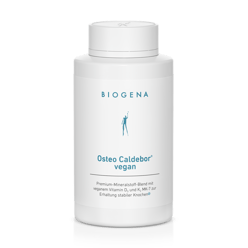
Osteo Caldebor® vegan

Osteo Calbon Complex® Gold
04
5 tips for preventing osteoporosis
However, in order to stimulate the mineralisation of the bone, another important measure must be present, namely...
Build strong bones through sport and strength training
Use it or lose it really does hold true. No more suitable saying could be found in terms of bone health. Whether it’s jogging, skipping, tennis or hiking – sports that put pressure on our bones signal to our body that it is worth investing in bone mineralisation. And all age groups should be aware that they are affected: At a young age, sufficient physical exercise improves the development of bone density and thus increases peak bone mass – the maximum value of bone mineral density in humans, as achieved by adults around 30 years of age with healthy bones. The higher this individually achieved maximum bone density, the higher the chances of strong bones in old age. In advanced age, exercise and strength training reduce the rate of bone density loss.
Limit alcohol consumption
Excessive alcohol consumption can overwhelm our bones. The stimulant can interfere with the osteoblasts (= bone-producing cells of bone formation) in their bone job, not only making our bones more fragile, but also leading to fractures healing more slowly.
Stop smoking
Nicotine gnaws at the bones. The fact that smoking is bad for our health is really not something new. But did you know that smoking can also damage our bones? Cigarette consumption narrows the blood capillaries – and so the supply of bone nutrients worsens. Giving up smoking is always worthwhile – not least for the sake of your bones.
Maintain a healthy body weight
Moderation in life is true in just about every aspect – including when it comes to a bone-friendly weight. If you are overweight, the extra pounds place stress on your bones and make exercise – which is so important to them – more difficult. Being chronically underweight can also consume your bone stability, as this is often associated with a lack of nutrients – and in women – with the bone protection hormone oestrogen.
Train your balance regularly
Around one third of all 65-year-olds fall at least once a year – and this tends to increase with age. If you practice balance training, you can kill two birds with one stone. On the one hand, in tricky situations (e.g. when tripping over a carpet), you keep your balance more easily; on the other hand, you will feel safer in daily life. After all, the regular balance training helps your body and mind to know exactly how to react best in an emergency. If possible, training should be done twice a week for at least half an hour.
05
Preventing osteoporosis during the menopause
The menopause is a difficult time for the bones. The falling oestrogen level increases bone loss and promotes the loss of bone substance. The risk of osteoporosis increases.
For this reason, women should start actively strengthening their bones at the latest when they start going through the menopause. A healthy, mainly plant-based diet, an optimal year-round supply of vitamin D and regular exercise form the basis for this. In particular, strength training and sports involving impact movements (e.g. hiking, tennis, jogging) signal to the body to invest in the mineralisation of the bones. In addition, specially developed ‘bone supplements’ containing relevant nutrients such as vitamin D, vitamin K2, calcium and magnesium can help to prevent osteoporosis.
06
Can bone density be built up?
As active living tissue, the bone can renew itself over a lifetime, so even after reaching maximum bone density at about 30 years, it is possible for bone degradation to be held in check in a stable manner with the help of targeted measures (= a diet with bone-healthy micronutrients, a healthy lifestyle and physical activity) – or even to achieve an improvement in bone density depending on your age or to prevent further bone degradation or to considerably slow down the process.
Conclusion: In addition to a diet that is beneficial to bones, special dietary supplements can also target bone metabolism and help prevent osteoporosis. Preparations that contain other science-based bone nutrients in addition to the classics calcium, vitamin D3 and vitamin K2 are recommended. In addition, regular bone-strengthening exercise should be on the agenda. It is only when under stress that the minerals from the diet are increasingly incorporated into the bone structure.
:quality(70))
:quality(70))
:quality(70))
:quality(70))
:quality(70))
:quality(70))
:quality(70))
:quality(70))
:quality(70))