

:quality(70))
01
Why it's worth building muscle as a woman
Muscle-building training is worthwhile for women in every respect. To understand this, we first need to consider the physical differences between men and women – and hormones play a major role here. Women have fundamentally less testosterone in their blood, which ensures that protein is stored in the muscles and growth is stimulated. As a result, women generally build less muscle and take longer to do so. They also have more body fat. The concern that regular workouts will make women appear too bulky is therefore unfounded.
Conversely, this also means that because women have less muscle mass on average, their muscle mass can be increased relatively quickly – women therefore benefit more from exercise and can achieve an athletic look with discipline and perseverance. Other advantages of building muscle as a woman include:
Feel good in your body, less pain: Weak back muscles often lead to tension and headaches. Strength training improves posture, effectively counteracts such problems and relieves pressure on the joints. At the same time, it generally makes you feel better in your body. Studies also show that strength training can alleviate menstrual cramps – one reason for this could be the release of happiness hormones.
A defined silhouette, a powerful body: While endurance training primarily strengthens the cardiovascular system and fitness, regularly lifting weights ensures a firmer, more defined silhouette and also makes you strong and powerful. It also strengthens your bones.
More self-confidence, better mood: When you lift weights, you lift something else too: your mood. Strength training acts as a mood booster. It also increases your self-confidence.
Higher basal metabolic rate, optimised metabolism: The more muscle you have, the higher your basal metabolic rate. This means that your body consumes more energy even when you are resting. This is beneficial if you want to reduce your body fat and lose weight at the same time.
Excellent prevention, longer life: Exercise prevents musculoskeletal disorders and cardiovascular disease. In addition, studies show that regular exercise can reduce the risk of mortality, especially in women.
02
How to build muscle as a woman: what matters
If you want to stimulate muscle growth, you need to look at the big picture, because there are several factors that contribute to success. The four most important pillars of muscle building for women are: training, recovery, nutrition and supplements.
The ideal workout for women
Your muscles grow primarily when you expose them to continuous training stimuli. It is therefore important that you lift weights regularly and increase the load from time to time. And remember: even small amounts can have a big impact if you repeat the exercises continuously. You can train with dumbbells, resistance bands and equipment at the gym, or at home using only your own body weight. The latter is recommended for beginners, but in the long term, professional weights will bring faster progress. Warm up well beforehand and start with the following exercises, for example:
Squats: Stand with your legs wide apart and tense your abdominal muscles. Now lower yourself down – your buttocks should move backwards while your heels remain on the floor and your body stays upright. You can raise your arms during this movement. Then return to the starting position.
Deadlifts: For this exercise, start in a firm, hip-width stance with your knees slightly bent and your buttocks tensed. Straighten your upper body and tilt it slightly forward while pushing your hips backwards – make sure you keep your back straight. Then grasp a barbell with your hands shoulder-width apart. Then straighten your upper body and lift the barbell close to your shins. Keep your core and buttocks tense.
Lunges: For this exercise, either lunge forward or – if you have the necessary balance – backward. Make sure that your front knee reaches a 90-degree angle without extending beyond the tip of your front toe. Keep your body upright throughout the exercise. You can either keep your back leg straight or bend it so that it almost touches the floor. Then return to the starting position.
Repeat each exercise 8–12 times and do 3–4 sets. Take a 60 to 90 second break between sets. You should do at least 2–3 training sessions per week, either following a full-body plan or a 2-split (e.g. upper body/lower body).
Once you have mastered these beginner exercises, you can either increase the weight or choose more challenging variations for your workout. These include: bench presses, pull-ups, barbell rows, bicep curls and leg curls.
If you are unsure, seek professional help from fitness centre staff or a personal trainer.
Ensure you get enough rest
What many people often forget is that your muscles do not grow during exercise, but afterwards, during the recovery phase. Breaks and sufficient sleep are therefore essential. You can optimally support your body with red light treatments. These are not only considered mood enhancers and beauty boosters, but also effective means of regeneration after exercise. This is because they accompany the body's own repair and renewal at the cellular level.
The right nutrition for women
Nutrition also plays an important role in muscle building for women. Above all, your body now needs protein as a building material for new muscle cells. Complex carbohydrates and healthy fats should also be available as sources of energy. Don't be afraid of a slight calorie surplus – this is actually important. On average, you need about 150–300 more calories per day to build muscle quickly as a woman.
Proteins: Aim for 1.6–2.2 grams of protein per kilogram of body weight. Good sources include tofu, legumes, quinoa, lean meat, tuna, salmon, eggs, Greek yoghurt and cottage cheese.
Complex carbohydrates: Complex carbohydrates provide you with the energy you need. Focus on whole grains, oatmeal, quinoa, legumes, nuts and vegetables.
Healthy fats: Healthy fats can have a positive effect on your energy levels and hormone balance. They are found in: avocados, fish, free-range eggs, hay milk, olive oil and linseed oil.
Your diet is rounded off by vitamins, minerals and trace elements, which are mainly found in fruit and vegetables.
Useful supplements for women
Your daily requirement for certain nutrients increases as a result of your training regime. This often makes it difficult to obtain all the important nutrients you need from your diet alone. Supplements are therefore a useful accompaniment to muscle building for women:
Protein powder: Protein powder contributes to muscle growth and maintenance. It is best to drink the shakes immediately after training. They are also a good choice between meals.
EAAs and BCAAs: Your body cannot produce these essential amino acids, i.e. protein building blocks, itself, but they are indispensable for muscle growth. Take them before or after training.
Creatine: Creatine can help improve your performance, so it is a good idea to incorporate this vital substance into your daily routine.
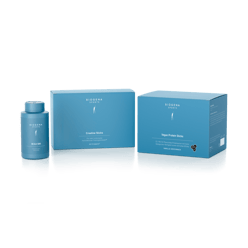
Muscle bundle - BCAA, creatine and protein
03
Special considerations for women building muscle: What else you should pay attention to
Always listen to your body and take your cycle into account when building muscle as a woman. This is because hormones such as oestrogen and progesterone have a major influence on your energy levels as well as your appetite and stress resistance. You are usually more productive in the first half of your cycle (follicular phase) than in the second (luteal phase). Therefore, you should pay particular attention to regeneration during the second half.
04
5 mistakes women make when building muscle
Building muscle as a woman is a complex topic that also involves many potential pitfalls that can slow you down. Typical mistakes include:
Too little strength training: Endurance is important and healthy – but you should still prioritise strength training to build muscle. Occasional cardio sessions as a supplement are still helpful.
Too light weight: Only by stimulating the muscle can you encourage it to grow. The weight must therefore always be challenging during the last few repetitions in order for you to achieve results.
Too few calories: Many women try to lose weight faster by cutting calories – but this is counterproductive. On the one hand, you need energy for workouts, and on the other hand, your body tends to break down muscle when there is a deficit, which lowers your basal metabolic rate. A balanced diet is therefore key.
Too little protein: Without protein, there is no muscle growth – so make sure your diet is protein-rich and, if necessary, use protein powder.
Too few breaks: If you don't allow your body enough time to recover, you will inhibit muscle growth. So make sure you take rest days and get enough sleep.
05
Conclusion: Stay on track and reap the benefits
Muscles don't build up overnight – especially not for women. A lot of perseverance, a positive attitude and clear goals are therefore essential. It is important that you stick with it, challenge yourself, but don't overdo it, and listen to your body. Avoid constantly comparing yourself to others and focus on your own small successes. This way, you will soon be able to benefit from the many advantages that more muscle brings.
:quality(70))
:quality(70))
:quality(70))
:quality(70))
:quality(70))
:quality(70))
:quality(70))
:quality(70))
:quality(70))