

:quality(70))
01
What is magnesium and why do we need it?
Let's start with a brief overview of magnesium – what exactly is it and why do we need it? Well, magnesium is a mineral. It is essential for us humans. The reason for this is that magnesium plays a role in many functions and processes in your body. The mineral ensures strong bones and teeth, regulates the stability, permeability and division of your cells, provides energy, helps control your hormone balance, protects your heart, supports your muscles in regeneration and is involved in the production of the happiness hormone serotonin, which puts you in a good mood. A true all-rounder – but that's not all.
02
Why magnesium deficiency can increase the risk of depression and anxiety
If you are plagued by fears and worries and are under stress, your body tries to compensate for this. The result: it produces more stress hormones, which put you on alert. Your heart beats faster, your blood pressure rises, your muscles tense up. And magnesium consumption also increases. Our ancestors used these bodily mechanisms to act quickly or flee from enemies – and thus survive. Today, however, we often lack a meaningful use for this evolutionarily developed excess of stress hormones – they remain largely unused in your body. To break them down again, you need magnesium.
In summary, this means that In stressful situations, your body excretes more magnesium – and therefore needs more to compensate. If this is only a short-term period of stress, your body can usually cope well. However, if you are under constant pressure, there is a risk that you will develop a magnesium deficiency – and this makes you more susceptible to anxiety and depression.
Symptoms and risk factors of magnesium deficiency
A magnesium deficiency can manifest itself in many different ways – both physically and psychologically. Important symptoms include:
Muscle cramps and twitching
Diabetes
Digestive problems
Menstrual cramps and PMS
Brittle fingernails
Increased sensitivity to stress
Depressive moods
Headaches & migraines
Inner restlessness
Difficulty concentrating
Tingling or numbness in the hands and feet
The nervous and mental warning signs in particular clearly demonstrate the significant impact that magnesium deficiency can have on our psyche. Conversely, this also means that if you manage your magnesium deficiency effectively, there is a good chance that you will experience fewer of these symptoms. Let us take a closer look at this.
03
The positive impact magnesium can have on depression and anxiety
There is now a great deal of knowledge circulating on the subject of magnesium and anxiety. Many people are therefore rightly asking themselves: does magnesium help with depression and anxiety? Studies reveal the following:
# Magnesium regulates the stress hormone cortisol
In particularly stressful times, your body produces more of the stress hormone cortisol to help you cope with the tension. However, if the stress is chronic, the resulting permanently elevated cortisol levels can contribute to anxiety and depression. This is a good time to take magnesium: it lowers cortisol levels by participating in its breakdown and inhibiting its release – a possible mechanism for the anxiety-relieving effect of magnesium.
# Magnesium has a positive effect on neurotransmitters
Magnesium can also help to harmonise the neurotransmitter system. Neurotransmitters are chemical messengers. They play a fundamental role in the transmission of information between nerve cells by docking onto a receptor and passing on their message. When you are stressed, your brain releases stimulating neurotransmitters – the most important of which is the neurochemical glutamate. When you relax again, calming neurotransmitters take over, primarily gamma-aminobutyric acid (GABA). However, if the neurotransmitter system becomes unbalanced, for example due to an excess of stimulating neurotransmitters, your nerves can become overstrained. The result: you feel stressed or anxious. Magnesium can curb the release of activating glutamate while enhancing the effect of calming gamma-aminobutyric acid.
04
BIOGENA Good Health Study
We at BIOGENA have also dealt with this topic intensively as part of our ‘BIOGENA Health Study: Magnesium’, Europe's most comprehensive study on micronutrients, health and well-being. This study confirms once again that magnesium plays an important role in mental balance. Mental balance is linked to high resilience, associated stress reduction, healthy sleep and the prevention of mental illness. The following was revealed:
Higher magnesium levels above 35.0 mg/l in whole blood correlate with up to 6% higher resilience (= mental resistance).
However, 74% of all women surveyed and 49% of all men fall below this desirable threshold.
Higher magnesium concentrations in women are associated with less difficulty falling asleep.
Magnesium supplementation lowers blood pressure.
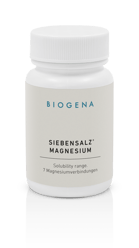
BIOGENA minis - Siebensalz® Magnesium
05
Supplementing magnesium: What are the options?
You can consume magnesium both through food and, in addition, in the form of dietary supplements.
Food sources
Magnesium is found in numerous animal and plant-based foods. The most important sources of magnesium include whole grains, green leafy vegetables, legumes, nuts, seeds, fish and seafood. Meat, potatoes and bananas can also contribute to magnesium intake.
Supplements
Although many foods contain magnesium, meeting your needs through diet alone can be challenging. If your intake is suboptimal, dietary supplements can help. They are particularly suitable as support during stressful times and if you are already suffering from a deficiency.
06
Which magnesium is best for depression and anxiety?
Magnesium can basically be divided into organic and inorganic compounds. While organic magnesium compounds are more soluble, inorganic compounds are less soluble but have a higher magnesium content. The following two forms of magnesium are suitable for treating depression and anxiety, for example:
Magnesium citrate: In this easily absorbable form of magnesium, the active ingredient is bound to citric acid. It is one of the best-known types of magnesium.
Magnesium glycinate: In magnesium glycinate, the mineral is bound to the amino acid glycine. This allows magnesium to be absorbed by the body as an amino acid and does not compete with other minerals for absorption, as is usually the case.
Magnesium L-threonate: In this magnesium compound, the active ingredient is bound to L-threonic acid, a vitamin C metabolite.
Magnesium taurate: This compound contains the amino sulfonic acid taurine, which also has a modulating effect on the nervous system.
07
The correct magnesium dosage
To ensure that all your bodily functions that depend on magnesium are working optimally, experts recommend the following daily dose:
For men: 400–420 mg
For women: 310–320 mg
What determines the appropriate dosage
However, your actual daily requirement depends on other factors: for example, if you are very athletic and engage in regular, vigorous exercise, then you will probably need more. The same applies to people who are challenged in their everyday lives. New scientific studies also suggest that expectant mothers have an increased magnesium requirement. In addition, young people and people over the age of 50 in particular often suffer from magnesium deficiency, which means that these groups in particular should consume more magnesium.
08
Conclusion: Magnesium can be a game changer in alleviating depression and anxiety
Magnesium is a multi-talented mineral that not only supports strong bones and teeth, healthy cells, a well-functioning heart and smooth muscle tension and relaxation, but also boosts mood, can shield against anxiety and depression, and helps us sleep better. A balanced diet with sufficient magnesium sources is therefore essential. In certain situations, taking high-quality dietary supplements can also be beneficial.
:quality(70))
:quality(70))
:quality(70))
:quality(70))
:quality(70))
:quality(70))
:quality(70))
:quality(70))
:quality(70))