

:quality(70))
01
A meaningful mineral
Did you know that calcium is the most important mineral in your body in terms of quantity? In fact, it makes up 2% of your body weight – and that's no joke! The largest store of calcium is found in your teeth and bones, where an impressive 99% of this valuable mineral is stored.
Vegans often wonder how they can meet their calcium requirements, as many calcium-rich foods such as dairy products are not included in a plant-based diet. But don't worry – plant-based sources also offer plenty of calcium!
02
3 myths about vegan diet and calcium: we set the record straight
Myth No. 1: If you decide to follow a vegan diet, you won't get enough calcium
Only partially correct.
Explanation: Vegans who eat a varied diet with a focus on calcium-rich plant-based foods, supplemented with calcium-rich plant milk, can easily meet their daily calcium requirements. The claim that a vegan diet does not provide enough calcium is therefore only true if you have not planned your diet well.
Myth No. 2: Calcium from plants is less absorbable than calcium from milk
Wrong!
Explanation: The calcium absorption rate varies from food to food. The fact is that many plants have roughly the same bioavailability of calcium as cow's milk. Only a few plants have poorer bioavailability. In general, a well-planned vegan diet can also provide you with sufficient amounts of calcium.
Myth No. 3: Vegans have an increased risk of osteoporosis due to poorer calcium intake.
Only partially correct.
Explanation: Vegans who ensure they consume adequate amounts of calcium through plant-based foods do not have higher rates of osteoporosis compared to vegetarians and people who eat a mixed diet. The prerequisite for this is a well-planned diet. If you do not follow such a diet, the risk of osteoporosis may increase, as is the case with other suboptimal diets.
Overall, milk and dairy products are undoubtedly among the best sources of calcium, but you can also get enough without them. Even if you follow a strictly plant-based diet, you don't need to worry about calcium deficiency or poor bone health. However, not all vegan diets are the same. It's all about finding the right mix of foods.
03
Plant-based and vegan sources of calcium
Ideally, your vegan diet should consist of three groups of plant-based foods to meet your total calcium requirements:
1. Third: Foods with medium to high calcium content
Examples: kale, pak choi, Chinese cabbage, rocket, nettles, broccoli, figs, mineral water, cocoa powder, pistachios, sesame seeds, chia seeds, poppy seeds, linseeds, almonds, hazelnuts2. Third: Calcium-rich plant-based milks or tofu
Examples: calcium-enriched soya milk, almond milk, oat milk or tofu3. Third: Plant-based foods low in calcium
Examples: whole grains, pseudograins, legumes, sweet potatoes, leafy vegetables, other nuts and seeds
Inhibiting substances
However, we do have some bad news for you: some substances can inhibit the absorption of calcium in your body. Therefore, you should eat foods containing these substances with caution. However, you don't have to ban them from your diet altogether – on the contrary, moderate amounts can even be healthy:
Oxalic acid: This acid is found in large quantities in spinach, Swiss chard and rhubarb.
Phytates: These are a form of phosphate found mainly in sesame seeds and some wholemeal products, as well as nuts and legumes.
Other substances and products that can have a negative effect on your calcium intake or cause the mineral to be excreted quickly include:
Tannic acid (e.g. in coffee and black tea)
Phosphate (e.g. in sausage, soft drinks)
Table salt
Alcohol
Promoting substances
The good news is: there are also substances that help your body absorb calcium better. So feel free to consume a little more of the following ingredients, spread out evenly throughout the day:
Vitamin D
Vitamin K
Vinegar
Lemon juice
Vitamin D is particularly essential, as your body can only absorb calcium properly if it has sufficient vitamin D levels! We therefore recommend that you have your vitamin D levels checked and, if necessary, support your body with high-quality supplements.
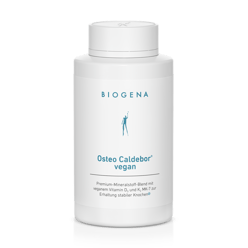
Osteo Caldebor® vegan
04
Other nutritional factors that play a role
If you pay attention to all of this, you will already have created excellent conditions for providing your body with sufficient calcium as a vegan. Also keep the following in mind:
It is better to eat several calcium-rich meals spread throughout the day than one large meal. This is because a high calcium intake temporarily reduces the absorption rate.
Pay attention to your magnesium balance – calcium and magnesium complement each other perfectly and ensure that your muscles and nerves function optimally.
Those who wish to provide their body with optimal support can also take advantage of high-quality dietary supplements. Combination preparations containing calcium, magnesium and vitamin D, for example, are particularly popular.
05
How much calcium you should consume daily
The recommended daily intake for adults is 1,000 mg of calcium. Children and adolescents who are still growing need slightly more – experts recommend 1,100–1,200 mg per day.
Are you expecting a baby or breastfeeding your newborn? Then you should pay even closer attention to your calcium levels, regardless of your lifestyle – your requirement for this vital substance is increased during these phases of life. This is because the mineral is not only important for your health as a mother, but also for the ideal development of your baby.
06
Calcium deficiency as a vegan: What happens when your body doesn't have enough
Calcium deficiency can lead to various health problems. You should take the following symptoms seriously:
Muscle cramps
Dry skin
Brittle nails
Tooth decay, poor dental health
Increased PMS symptoms
In the long run, calcium deficiency can also lead to osteoporosis, increasing your risk of bone fractures.
07
Conclusion: No cow necessary!
Is it possible to provide your body with optimal calcium even as a vegan? Yes, it is! Cow's milk, goat's cheese and the like are not absolutely necessary. What you need instead is a well-structured diet with as many high-quality plant-based or vegan sources of calcium as possible. If you also know all the inhibitors and promoting substances inside out, nothing can go wrong. Want to do even more good for your body? Then vegan calcium supplements that are perfectly tailored to your bone and dental health can be a useful addition.
:quality(70))
:quality(70))
:quality(70))
:quality(70))
:quality(70))
:quality(70))
:quality(70))
:quality(70))
:quality(70))