

:quality(70))
01
Supplements: radiance from within
Dietary supplements such as collagen, hyaluronic acid, biotin and antioxidants support skin health from the inside. But how effective are these beauty boosters?
+ Depth effect | Supplements work at the cellular level, where conventional skincare products such as creams and serums do not reach. They provide the skin with nutrients that are often not sufficiently absorbed through nutrition. |
|---|---|
+ Longterm benefits | When taken regularly, they support the skin's structure, increase elasticity and promote moisture retention. |
+ Holistic effect | Unlike creams, supplements not only improve the skin, but also hair, nails and general well-being. |
The downside: | The results take time and often only appear after weeks. |
02
Effect of hyaluronic cream vs. supplements
Hyaluronic creams or serums mainly work in the superficial layers of the skin (epidermis), whereby the deeper layers of the skin can only be reached with very small hyaluronic acid molecules. For a deeper effect, as would be necessary for anti-ageing or improving the skin structure, for example, injections or dietary supplements would have to be used.
:quality(70))
Ingredients in skin supplements include, for example:
Collagen: for tension and toning of the skin – in the form of collagen powder or capsules
Hyaluronic acid: counteracts moisture loss and improves the elasticity of the skin – in the form of hyaluron powder or capsules
Vitamin C: important for collagen formation
Vitamin E: antioxidant against free radicals
Zinc: for skin regeneration
Astaxanthin: as UV protection
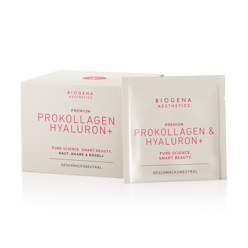
ProCollagen & Hyaluronic Acid+ Neutral
03
Skincare through external care
Skincare products such as serums, creams and toners are the classic solution for visible skin care. But how effective are they really?
+ Targeted effect: | Skincare works directly on the skin's surface (epidermis). Active ingredients such as hyaluronic acid, retinol and vitamin C specifically target wrinkles, dryness or pigment spots. |
|---|---|
+ Instant effect | Some products deliver fast results – an immediate glow or smoother skin feel can be expected. |
The downside: | These products often only treat the symptoms, not the causes. And without consistent application, the results quickly fade. |
Creams and serums typically contain:
antioxidants such as vitamins C and E
sun protection (UV filters)
anti-ageing ingredients such as retinol and hyaluronic acid
04
The bottom line: do we really have to choose?
The answer lies in the combination. Skincare offers quick results and targeted care, while dietary supplements strengthen the skin from the inside and ensure long-term improvements. The key to healthy, radiant skin? A harmonious interplay of external and internal care. With both, pay attention to the purity of the ingredients - your skin doesn't need additives, and they can also lead to a deterioration in skin health.
:quality(70))
:quality(70))
:quality(70))
:quality(70))
:quality(70))
:quality(70))
:quality(70))
:quality(70))
:quality(70))